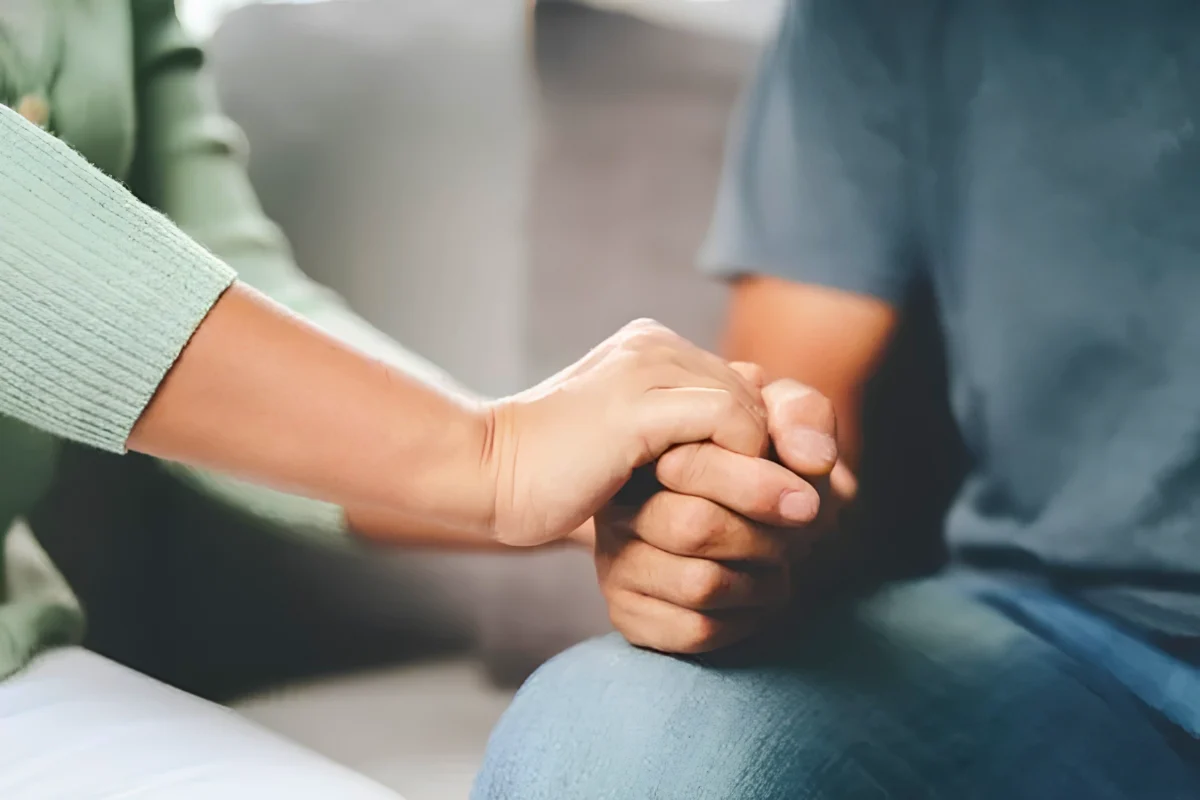
The impact of a violent crime is not limited to the immediate physical injury, as it affects not only the person who is directly harmed in the assault, but also their loved ones. This observation is not meant to undermine or distract from the victim’s experience and suffering. That should always remain the main point of concern. But we feel like it’s important to talk about how far the consequences of these traumatic events can go, and acknowledge the distress that others may feel as well.
When someone you care about, be it a family member or a friend, is harmed because of a violent crime, it can be extremely painful and frustrating to watch their struggle from the outside, feeling completely powerless and unable to help. Most people don’t know how to act or what to say in these situations. It’s certainly not the kind of scenario anyone would like to think of or prepare for, but when the unimaginable happens, you need to step up and figure out what you can do.
Understanding Trauma Response
As someone who’s never been in the victim’s position (and hopefully never will), it can be difficult to understand what they’re going through. That’s why the first thing you should do is educate yourself on how people respond to traumatic events. The emotions and physical effects are quite layered and complex – and not everyone behaves the same way.
Some may shut themselves off and refuse to talk about what happened, acting like everything is alright even if it clearly isn’t. Others may be fearful or angry, or have trouble focusing and remembering things, becoming partially disconnected from their surrounding reality.
Dealing with the legal implications can be draining for victims as well, as many find it extremely challenging to focus on technicalities such as reporting the crime or applying for criminal injuries compensation, even though these legal procedures can help a lot with their recovery. Understanding what happens in the first 24 hours after arrest can also help families prepare — know more at what happens in the first 24 hours after arrest and what rights those involved actually have.
Learning about the effects of violent crimes can help you make sense of their reactions better, so you can then find a way to bring them comfort and become a part of their support system, because that’s something all victims need.
Be There When They Need You
One of the most important things you can do for someone who’s trying to recover from an assault is simply show up when they need you. People often get flustered around victims, wondering how they can help, and fearing they might unintentionally do something inappropriate that could upset them even more. Instead of playing out all sorts of scenarios in your head, you can just ask them what you can do for them. If they want to talk about what happened, they’ll let you know.
Listen to them without interrupting and refrain from offering advice and quick fixes, or sharing your perspective, unless they ask for it. Although well-intended, unsolicited advice and opinions can make the other person uncomfortable and can even be interpreted as a form of criticism by someone who’s going through a difficult time. Be a shoulder they can cry on, if that’s what they need, instead of acting like a therapist and trying to fix them. If they’ve made it clear they don’t want to talk about their experience, don’t bring it up.
Maybe they simply want you to keep them company, so they don’t feel alone. Sometimes, your presence is enough, so you can just sit in silence, without having to talk about the event or anything else. There are other ways in which you can support them. Helping with daily tasks like grocery shopping, cooking, doing the laundry, or cleaning can mean a lot in a time like this, when even the smallest activities can feel overwhelming.
ALSO READ: Magnesium Deficiency Explained: Symptoms, Causes, Muscle Twitching, And Headaches
Give Them The Space And Time They Need To Process The Trauma
It’s normal for you to want your loved one to recover and go back to being their usual selves as fast as possible, but recovery doesn’t follow a specific timeline and looks different for everyone. Some people are able to pull through and move on faster than others, and it’s not always a linear process. Setbacks are normal, and progress may be slow, and that’s something you’ll just have to accept. You shouldn’t pressure them into doing certain things if they don’t feel ready yet, or expect them to go back to normal simply because a lot of time has passed since the incident.
Survivors need to process the trauma at their own pace and in their own way, so rushing them is not going to help. On the contrary, it can create more distress for them and cause them to pull back, especially if all they want is to be left alone to manage things on their own, without anyone’s interference.
You should also come to terms with the fact that, in some cases, no matter how much time passes, things may never go back to how they were before the assault. Traumatic events can change a lot of things about a person, from the way they feel to how they act, or how they view the world, and some of these shifts might not be reversible.
ALSO READ: Exploring Scotland Without A Car: Enjoying Scottish Highlands By Public Transport
Encourage Them To Seek Professional Help
Sometimes, the support you can offer might not be enough. You need to be aware of your limitations because no matter how much you want to help, there are certain things that are beyond your capabilities. You can’t play the part of a therapist, a doctor or a legal advisor if you’re not one, so you need to know when it’s best to step aside and encourage them to talk to a professional about their problems.
However, as we’ve mentioned previously, you shouldn’t confuse encouragement and support with insistence, as there can be a fine line between the two. It’s enough to suggest talking to other people and reaching out to support services – and offer to accompany them – and they’ll let you know when they’re ready. In the end, the most important thing is to let the person you’re supporting know that help is always available, and try to be sympathetic and encouraging as they recover.
Sources & References
- Mission Connection. (2026, June 29). Witnessing violence: Understanding secondary trauma & PTSD.
- Oleksyn‑Lamb, J. E. (2025). The long‑term psychological effects of violent crime on victims: A review of evidence and supportive interventions (Master’s thesis, Missouri State University). BearWorks Institutional Repository.
- Bureau of Justice Statistics. (2024, August). Socio‑emotional consequences of violent crime, 2022. U.S. Department of Justice, National Crime Victimization Survey.
- OpenLearn – The Open University. (2023, November 28). Introduction to the trauma‑informed investigation of rape and serious sexual offences. Centre for Police Research and Learning, Home Office project.
- Office for Victims of Crime. (2023). Victim compensation programs: Great Britain and Northern Ireland. U.S. Department of Justice.
Disclaimer: The content provided in this article is for general informational and educational purposes only and is not intended as commercial promotion. It should not be used as a substitute for professional medical, psychological, mental health, or legal advice. Readers are strongly advised to verify all facts independently and seek consultation from qualified professionals or certified support services regarding specific traumatic incidents or legal actions.