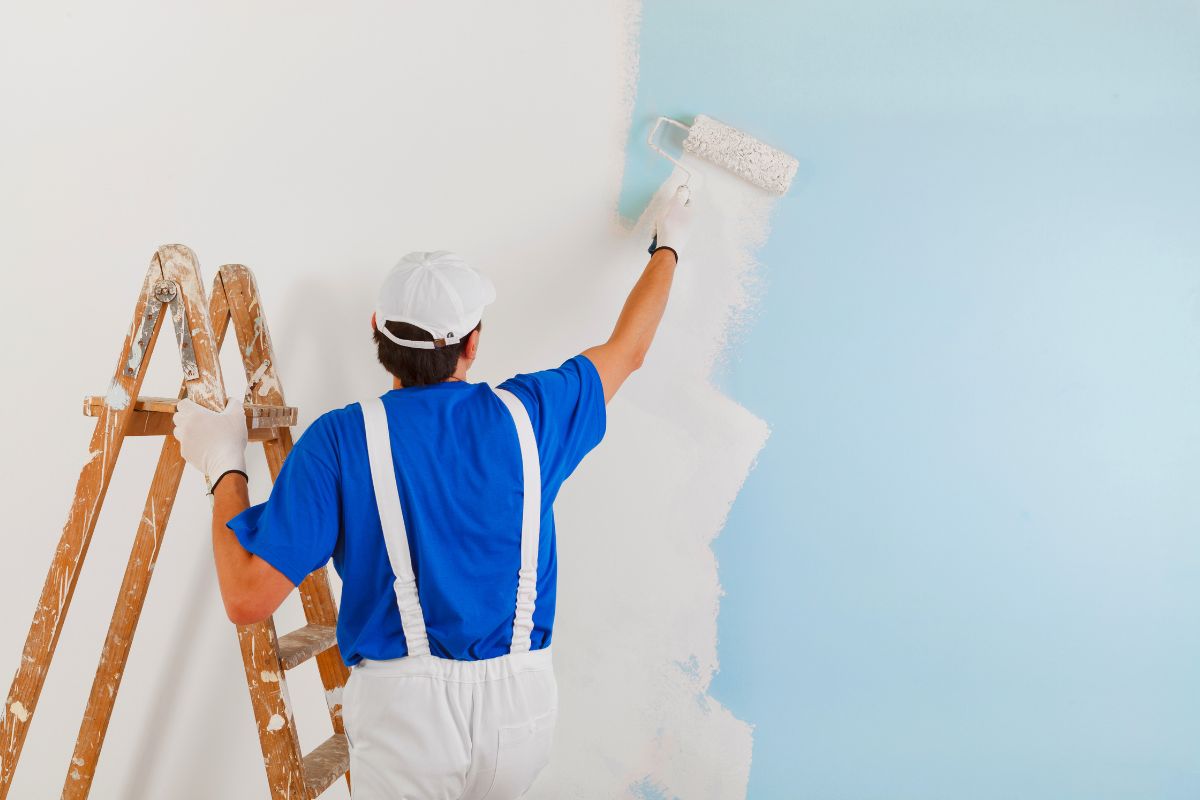
Thermal paint is worth buying only if the sums show it paying back within its own lifespan. Divide the total cost by realistic yearly savings, not the label’s promises. Independent research points to savings of under 3%, so most homes will never recoup the spend.
- Independent modelling found thermal paint cuts heating energy by just 0.4% to 2.9%.
- Manufacturer claims of 25% savings are unverified.
- A coat about a millimetre thick can’t match proper wall insulation.
- Payback is simple: total cost divided by yearly saving.
- Painting for looks or mould resistance is a different, fairer reason to buy.
What Are You Actually Buying?
Thermal paint, sometimes sold as thermal insulating paint or thermal insulation paint, is ordinary paint with tiny ceramic or glass beads mixed in. The idea is that those beads slow heat as it moves through your wall.
It sounds clever. The trouble is thickness. The Green Age points out that the coat is around a millimetre thick, and that you’d need something like 200mm of the stuff to get near building-regulation levels of insulation.
What The Evidence Says
The best independent test I found is a University of Salford study by Simpson and colleagues, published in 2019 in Energy and Buildings. You can read the summary on the Salford repository.
They found the paint’s resistance to heat flow was “not much better” than vinyl wallpaper over lining paper. Modelled energy savings ran from 0.4% to 2.9%. Payback was several hundred years.
They also found no support for claims about the beads being nano-porous or the surface being low-emissivity.
Lab figures tell a similar story. Thermtest reports a 2014 study where thermal paint scored an R-value of 0.0100 against 0.008 for ordinary paint. That’s a small gain. Thermtest also notes the paint is “not a replacement for properly insulated building construction”.
Some users do report a more comfortable room. That’s real, but comfort isn’t the same as a smaller bill. If a warmer feel underfoot is what you’re after, it’s worth checking how much underfloor heating costs to install and run before you spend on paint.
How To Judge A Thermal Paint Product
Run any tin through these questions before you pay.
Who Did The Testing?
Look for independent results, ideally from a university or a recognised test lab. A brochure doesn’t count.
What Does The Claim Measure?
“Up to 25% saving” is a ceiling, not a typical result. Ask what home, what weather and what baseline it was tested on.
Is It A Laboratory Number Or A Real House?
A small test box behaves nothing like a damp, draughty Victorian terrace.
Does It Quote A U-Value Or R-Value?
These are the numbers that matter for heat loss. If a seller won’t give one, that tells you something.
What’s The Guarantee?
Look for a clear one. Vague promises are a warning sign.
ALSO READ: Sale of Goods Act: What It Means and Why It Still Matters
The Calculation, Step By Step
You need three numbers: what you’ll spend, what you’ll save, and how long the paint lasts.
Step 1: Find your annual heating cost. Ofgem’s price cap for October to December 2026 puts gas at 7.97p per kWh. A typical home uses roughly 11,500 kWh of gas a year. That’s about £917 on unit costs alone. If trimming that bill is the aim, smart home devices such as smart thermostats, which adjust your heating to your routine, are a better-evidenced place to start than a coat of paint.
Step 2: Apply a realistic saving. Use the Salford range, not the sales pitch.
Step 3: Divide. Total cost (paint, labour, prep) divided by annual saving gives you the payback in years. To keep that total honest, ask for a line-by-line quote covering materials, prep and labour, much like the breakdown a decorator builds when working out how to quote for a cladding job.
Here’s a worked example. I’ve assumed £500 for paint and labour. That figure is my own illustration, so swap in your real quote.
| Scenario | Saving of £917 bill | Yearly saving | Payback on £500 |
| Independent low (0.4%) | 0.4% | about £3.70 | about 136 years |
| Independent high (2.9%) | 2.9% | about £26.60 | about 19 years |
| Manufacturer claim (25%) | 25% | about £229 | about 2 years |
Source: Saving percentages from Simpson et al. (2019) and the manufacturer claim as reported by The Green Age; gas rate from Ofgem. Payback figures are my own arithmetic using the assumptions above.
Even the best independent case takes about 19 years. Paint rarely lasts that long without a refresh. The 25% row looks wonderful, but nobody independent has verified it.
When It Might Still Make Sense
You’re repainting anyway, and the extra cost for thermal paint is small. Then the sums look different, because you’re only paying for the upgrade.
Or you want a slightly warmer-feeling wall and don’t mind that it won’t dent your bill.
Be careful if you’re hoping it will fix damp or a cold, solid-walled house. It won’t. Cold, solid-walled flats and terraces need real insulation, and London flat owners are increasingly weighing up mineral wool insulation for exactly that job.
Better Places For Your Money
If savings are the goal, look at proper insulation first. A wallpaper-style liner such as the Wallrock Thermal Liner takes a wall from a U-value of 2.1 down to 1.79 W/m²K, according to The Green Age. Loft insulation, draught-proofing and cavity or solid-wall insulation do far more. For a wider view of where renovation money tends to go furthest, see our guide to home improvements that add the most value. Check which grants you qualify for before paying for anything.
ALSO READ: How to Plan Waste Removal Using a Skip for a Home Extension or Renovation
FAQs
Q1. Does Thermal Paint Really Work?
Slightly. Independent modelling found savings of 0.4% to 2.9%, which is far below most marketing claims.
Q2. Can Thermal Paint Replace Wall Insulation?
No. A millimetre-thick coat can’t compete with proper insulation, and the research says as much.
Q3. How Much Does Thermal Paint Cost?
Prices vary by brand, so check current retailer prices and quotes. Add labour and preparation to the tin price.
Q4. How Long Does Thermal Paint Last?
Check the manufacturer’s stated lifespan. If it’s shorter than your calculated payback, the paint won’t pay for itself.
Q5. Is Thermal Paint Worth It For An Old House?
Rarely, for energy savings alone. Older solid-walled homes lose far more heat than a thin coating can stop. Insulate first.
Disclaimer: This article is provided for informational and educational purposes only and does not constitute professional, financial, or architectural advice or product promotion. Readers should independently verify all facts, research energy-saving claims thoroughly, and seek professional guidance before making any home improvement investments.