My feet were destroying me after work every day. A colleague said just soak them in warm water. I laughed at how simple that sounded. Tried it that evening anyway, and honestly, fifteen minutes later, I was wondering why I hadn’t done it sooner. No booking, no expensive gadget, no complicated routine. Just warm water and sitting still for a bit. The soreness backed off, my skin felt softer, and I actually relaxed properly for the first time all day. Sounds too simple – but it works.
What Foot Spa Actually Does
A foot spa is either a simple bowl or an electric device with jets and heat settings. Honestly, the basic bowl gets the job done just as well. Over time, regular soaking tackles rough, cracked heels, that deep ache after being on your feet all day, poor circulation, stress, and general hygiene. It covers a lot of ground for something so straightforward.
ALSO READ: Can a Cold Plunge Really Help You Burn Body Fat? – Explained
How To Perform Foot Spa At Home
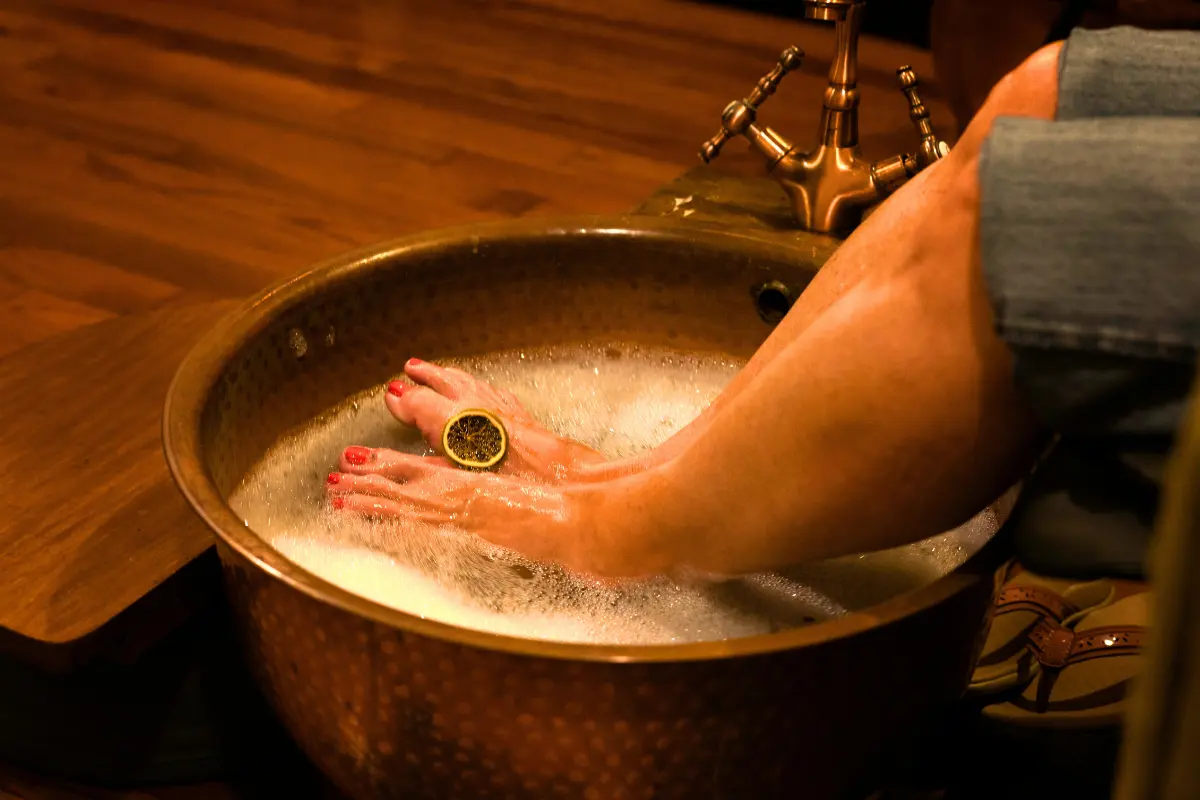
Fill your bowl with warm water – somewhere around 37°C to 40°C. Add whatever you’re using, then sit and soak for around fifteen to twenty minutes. Afterwards, run a pumice stone over the rough patches, especially the heels. Rinse off and dry properly, getting between every toe – people always skip that part and then can’t figure out where the fungal infection came from. Finish with a thick foot cream while the skin is still soft. Twice a week is the sweet spot. Every day is too much and will actually dry your skin out.
What To Add To The Water While Doing A Foot Spa
| Ingredient | What It Does | How Much |
| Epsom Salt | Relieves soreness, softens skin | ½ cup |
| Tea Tree Oil | Kills bacteria and fungus | 3–5 drops |
| Lavender Oil | Relaxing, helps you wind down | 3–5 drops |
| Apple Cider Vinegar | Kills odour-causing bacteria | ½ cup |
| Baking Soda | Deodorises, mild exfoliant | 2–3 tbsp |
Got an electric machine? Check the manual before throwing anything in – some motors weren’t built to handle salt or oil, and you’ll regret finding that out the hard way.
ALSO READ: 10000 Steps A Day: Your Complete Guide to Total Health Transformation
Can You Use Epsom Salt In A Foot Spa Machine?
Yes, and it’s worth doing. Half a cup dissolved in warm water is all you need. The swelling settles, the aching eases off, and the skin ends up noticeably softer – different to how any lotion leaves it. Just dissolve the salt before switching the machine on, and give the basin a good rinse when you’re finished. Salt left sitting in the jets over time will damage them quietly until one day the machine just stops. Diabetes or any broken skin on your feet? Skip the salt and talk to your doctor before soaking at all.
Does It Help With Foot Odor?
So, can foot spa remove foot odor? Yes, it does, more than most people expect. The smell comes from bacteria breeding in sweat – warm water washes that away. For stubborn odour, use apple cider vinegar to kill the bacteria, baking soda or Epsom salt to pull moisture out of the skin, and tea tree oil to deal with any fungus underneath it all. Do that two or three times a week, wear breathable shoes, change your socks every day – a few weeks of that and you’ll notice a real change.
ALSO READ: Korean Glass Skin Facial Trend: The Secret Behind Clear, Light-Reflecting Skin
Can You Use A Foot Spa When Pregnant?
Sore, swollen feet and ankles are basically unavoidable from the second trimester onwards – soaking genuinely helps take the edge off.
- Water temperature matters a lot. Warm is fine, hot isn’t – it raises your body temperature, which isn’t safe. If you hesitate putting your foot in, cool it down.
- Electric massagers are an uncertain territory in the first trimester. Research on early pregnancy safety is thin. High-risk pregnancy, preeclampsia, gestational diabetes, clotting problems – skip the machine completely.
- Some essential oils aren’t safe in early pregnancy. Rosemary, clary sage, and peppermint are the main ones to avoid – ask your midwife before adding anything to the water.
- If someone’s rubbing your feet while you soak, keep it light around the inner ankles. Pressure points there are thought to stimulate contractions.
The second trimester is the most comfortable and safest time for this. Any uncertainty at all – just ask your midwife.
Practical Tips
- Dry between your toes every single time without fail. It takes ten seconds and prevents fungal infections.
- Use proper foot cream after soaking, not hand cream. Shea butter is excellent.
- Rinse your bowl or machine after every use – bacteria love warm, damp surfaces.
- Twenty minutes is ideal. Past thirty minutes, your skin starts drying out, which beats the whole purpose.
- Active fungal infection or athlete’s foot? Wait until it clears before soaking – warm water makes it spread faster.
ALSO READ: Why the Japanese Head Spa Trend Is Everywhere in the UK Right Now
FAQs
Q1. How often should I use a foot spa?
Twice a week is ideal. Go daily, and your skin starts losing its natural moisture – it ends up worse than before.
Q2. Can I use table salt instead of Epsom salt?
It’s not worth it. Table salt just sits in the water doing nothing useful. Epsom salt costs very little, and you’ll actually feel it working.
Q3. Does it help with cracked heels?
This is genuinely where soaking shines. The water breaks down that hardened skin so the pumice stone can actually remove it rather than just scratching at it. Thick heel cream straight after seals it in.
Q4. What about diabetics?
Please speak to your doctor first. Reduced sensation in the feet means you might not notice water that’s too hot or something irritating your skin – and any small wound carries a much bigger infection risk.
Q5. What temperature should the water be?
37°C to 40°C is comfortable for most people. Joint pain or sensitivity? Drop it to around 33°C to 37°C instead.
Q6. Do I need a machine?
No, a bowl from the kitchen works perfectly well. Warm water, a couple of ingredients, twenty minutes off your feet – that’s the whole thing.
Sources & References
- Medical News Today. (2026). Epsom salt foot soak: Benefits and guidelines.
- Healthline. (2026). Epsom salt foot soak.
- The Float Spa. (2026). What are the benefits of Epsom salt?
- NCT – National Childbirth Trust. (2026). Beauty and wellbeing treatments during pregnancy.
- Northcote Manor Hotel & Spa Blog. (2026). Pregnancy‑safe spa treatments.
- Homes Guide UK. (2026). What to put in foot spa water.
- MomJunction. (2026). Hair & foot spa: Dos & don’ts during pregnancy.
- Upstep Blog. (2026). Do Epsom salt foot soaks help plantar fasciitis?
Disclaimer: This article is provided solely for informational and educational purposes. It is not intended to promote, endorse, or replace professional medical advice, diagnosis, or treatment. Readers should consult a qualified healthcare professional before starting any foot care routine, especially if they have underlying health conditions, are pregnant, or have concerns regarding foot health. The publisher and author assume no responsibility for actions taken based on the information presented in this article.