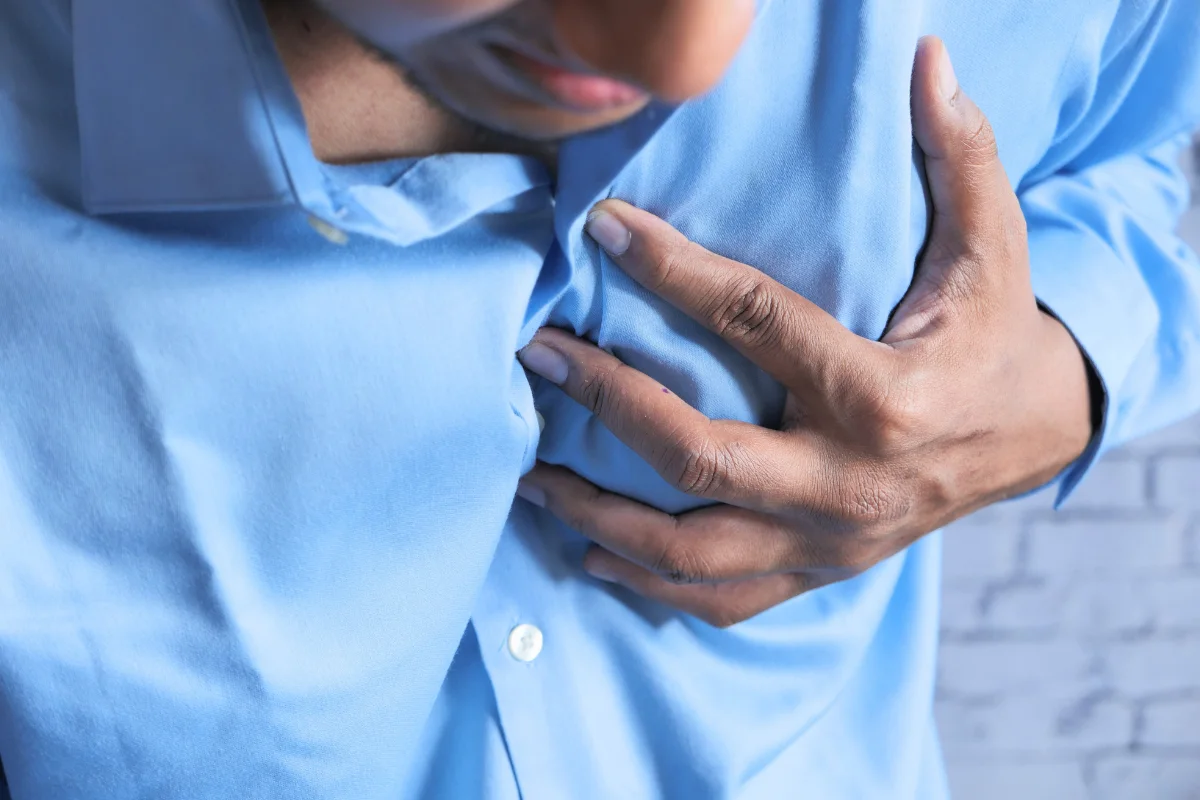
Sudden Adult Death Syndrome (SADS) occurs when someone dies suddenly from cardiac arrest with no visible heart damage. What UK families need to know is that SADS is usually caused by inherited electrical faults, often affects fit young adults under 35, and requires NHS cardiac screening for surviving relatives.
Around 500 people die from SADS in the UK every year, contributing to a broader national toll where 12 young people aged 35 and under die every week from undiagnosed heart conditions. Sudden exposure to extreme temperature stress, such as cold water immersion, is also known to place unusual strain on the heart’s rhythm. Because SADS is driven by an undetected electrical fault rather than a structural disease, post-mortems frequently show a completely normal heart.
- SADS also goes by Sudden Arrhythmic Death Syndrome. Doctors lean toward this name now because it’s the heart’s wiring that fails, not its structure.
- Around 500 UK deaths a year get linked to SADS, per the British Heart Foundation.
- It hits young, seemingly fit people the hardest. Often men under 35.
- No warning signs at all in up to 80% of young sudden cardiac death cases.
- June 2026 brought a fresh public consultation from the UK National Screening Committee on youth cardiac screening. Still open.
- After a SADS death, the NHS now screens surviving family members as a matter of course. It runs in families more than people realise.
What Is Sudden Adult Death Syndrome?
So here’s the confusing part. SADS isn’t really one disease. It’s more of a label pathologists reach for when a post-mortem comes back with nothing. No blocked arteries. No visible damage. The heart just… stopped, and nobody can say why.
That blank answer is brutal for families. Nobody wants “we don’t know” as a cause of death. According to NHS Inform, the real problem usually sits in the heart’s electrical system, not its physical shape. Something goes wrong with the signal, the rhythm turns dangerous, and the heart gives out.
That’s not the same as a heart attack. A heart attack is a plumbing problem—a blocked artery starving the heart muscle. SADS is an electrical fault triggering sudden cardiac arrest. The difference is stark and time-critical: data from the UK’s Out-of-Hospital Cardiac Arrest Outcomes (OHCAO) Registry shows that only 7.8% of people in England survive an out-of-hospital cardiac arrest to hospital discharge, highlighting how lethal electrical failure is without immediate intervention.
ALSO READ: Ultimate Healthiest Food Picks You Should Add to Your Plate Every Day
What Causes Sudden Adult Death Syndrome
Most of the time it comes down to inherited conditions called channelopathies. These mess with the ion channels controlling your heart’s electrical signals. And here’s the frustrating bit: they don’t leave any physical trace, so a standard post-mortem won’t catch them.
Inherited Electrical Conditions
Long QT syndrome. Brugada syndrome. CPVT (catecholaminergic polymorphic ventricular tachycardia). These can sit quietly in a family for generations. Nobody knows. Then something like this happens.
Structural Heart Problems
Occasionally it’s structural instead, such as hypertrophic cardiomyopathy or ARVC. Even a careful autopsy can miss subtle structural defects in a younger heart. This is why specialist family clinical and genetic evaluation is critical: clinical trials show that systematic cascade screening of first-degree relatives identifies an underlying inherited cardiac disease in 22% to 53% of affected SADS families, offering survivors a chance at preventive care.
| Condition Type | Examples | How It’s Usually Found |
| Channelopathy (electrical) | Long QT syndrome, Brugada syndrome, CPVT | Genetic testing, ECG in surviving relatives |
Structural | Hypertrophic cardiomyopathy, ARVC | Cardiac MRI, echocardiogram, specialist post-mortem review |
Unexplained | True SADS, no cause ever found | Still classified as SADS after full investigation |
Source: British Heart Foundation (BHF) & NHS guidelines on Sudden Arrhythmic Death Syndrome (SADS).
Warning Signs And Symptoms
This is the bit that unsettles people, and fair enough. Most of the time there are no symptoms whatsoever. But when signs do show up, keep an eye out for:
- Fainting or blacking out with no clear reason, especially mid-exercise
- A racing heartbeat that comes from nowhere
- Sudden dizziness
- Episodes that look like seizures but aren’t epilepsy at all
The NHS Genomics Education team flags that these fainting spells often get misread as epilepsy. Clinical studies reveal that up to 20% of SADS victims experienced prior seizure-like episodes, and 40% of those individuals were misdiagnosed with epilepsy prior to their fatal cardiac event. That mix-up can delay a correct diagnosis for years—years that matter. Runners and other endurance athletes should be particularly alert to these signs, since symptoms often first appear during intense training.
A Recent UK Case Puts SADS Back In The Spotlight
This is actually in the news right now. An inquest just confirmed Alex Hughes, son of former Manchester United and Wales footballer Mark Hughes, died from sudden adult death syndrome. He was only 38. Found collapsed at home in Macclesfield back in June 2026, as reported by ITV News. Stories like this are exactly why the push for better screening hasn’t stopped.
ALSO READ: How to Support Victims of Violent Crimes During Recovery
2026 Update: UK Screening Consultation Is Open
Now for something genuinely new. In June 2026, the UK National Screening Committee opened a public consultation asking whether the UK should start proper screening for cardiac conditions tied to sudden death in young people. Confirmed straight from the UK NSC’s own blog. Responses close 31 August 2026. A recommendation should land roughly six weeks after.
Why does this matter? Because back in 2019, the UK NSC’s position was basically “not enough evidence yet.” Charities like Cardiac Risk in the Young (CRY) have been pushing back for years, pointing to screening data showing that 1 in 300 young people (0.33%) screened carry a potentially life-threatening cardiac condition—most of which can be managed if caught early.
Can Sudden Adult Death Syndrome Be Prevented?
Not completely. Some cases just can’t be caught with what we’ve got right now. But the risk can be lowered. After a SADS death, family screening is standard practice these days. ECGs, genetic testing, the works, because these conditions travel through families far more often than people assume. Staying active safely, rather than avoiding exercise altogether, remains part of a heart-healthy lifestyle for most people.
Public defibrillators help too. Between 2023 and early 2025, the Department of Health and Social Care’s Community AED fund allocated over 3,000 new defibrillators across UK communities. The imperative is clear: applying an automated external defibrillator (AED) within 5 minutes of collapse increases survival rates to between 50% and 74%. However, regional ambulance data shows public-access AEDs are currently used in only 10.6% of witnessed out-of-hospital cardiac arrests, underlining a massive gap in public emergency deployment.
ALSO READ: How Much Deep Sleep Do You Need? The Science Behind Brain Recovery
FAQs
Q1. Is Sudden Adult Death Syndrome The Same As A Heart Attack?
No, not at all. A heart attack is a blocked artery cutting off blood flow. SADS is an electrical fault, and the heart itself usually looks fine on examination.
Q2. Can SADS Be Inherited?
Often, yes. Conditions like Long QT syndrome and Brugada syndrome run in families. That’s exactly why doctors push for screening close relatives after a SADS death.
Q3. What Age Group Does SADS Affect Most?
Mostly young adults, men under 35 in particular. Though it can strike at any age, kids included.
Q4. Should I Get Screened If There’s No Family History Of Heart Problems?
Not necessarily right now, since blanket population screening isn’t currently the UK’s policy. That said, the 2026 UK NSC consultation could shift things, so worth watching.
Q5. What Should I Do If I’ve Had Unexplained Fainting Episodes?
Go see your GP. Tell them about any fainting, palpitations, or dizziness with no obvious cause, particularly if it happens during exercise. They’ll figure out if further cardiac checks are needed.
Sources & References
- ITV News Granada. (2026, August 6). Mark Hughes’ son died from sudden adult death syndrome.
- UK National Screening Committee. (2026, June 8). UK NSC consults on screening for cardiac conditions associated with sudden cardiac death in young people.
- NHS Genomics Education. (2026). Sudden arrhythmic death syndrome knowledge hub.
- NHS inform. (2026). Sudden arrhythmic death syndrome.
- British Heart Foundation. (2026). Sudden arrhythmic death syndrome (SADS).
- Cardiac Risk in the Young (CRY). (2026). About CRY and cardiac risk awareness.
- House of Commons Library. (2025). Public access defibrillators briefing.
Disclaimer: This article is provided for informational purposes only and is not intended for promotional purposes or as a substitute for professional medical advice, diagnosis, or treatment. Always seek the advice of a qualified healthcare provider with any questions you may have regarding a medical condition. Readers should verify all facts independently and seek professional medical advice regarding any health concerns.