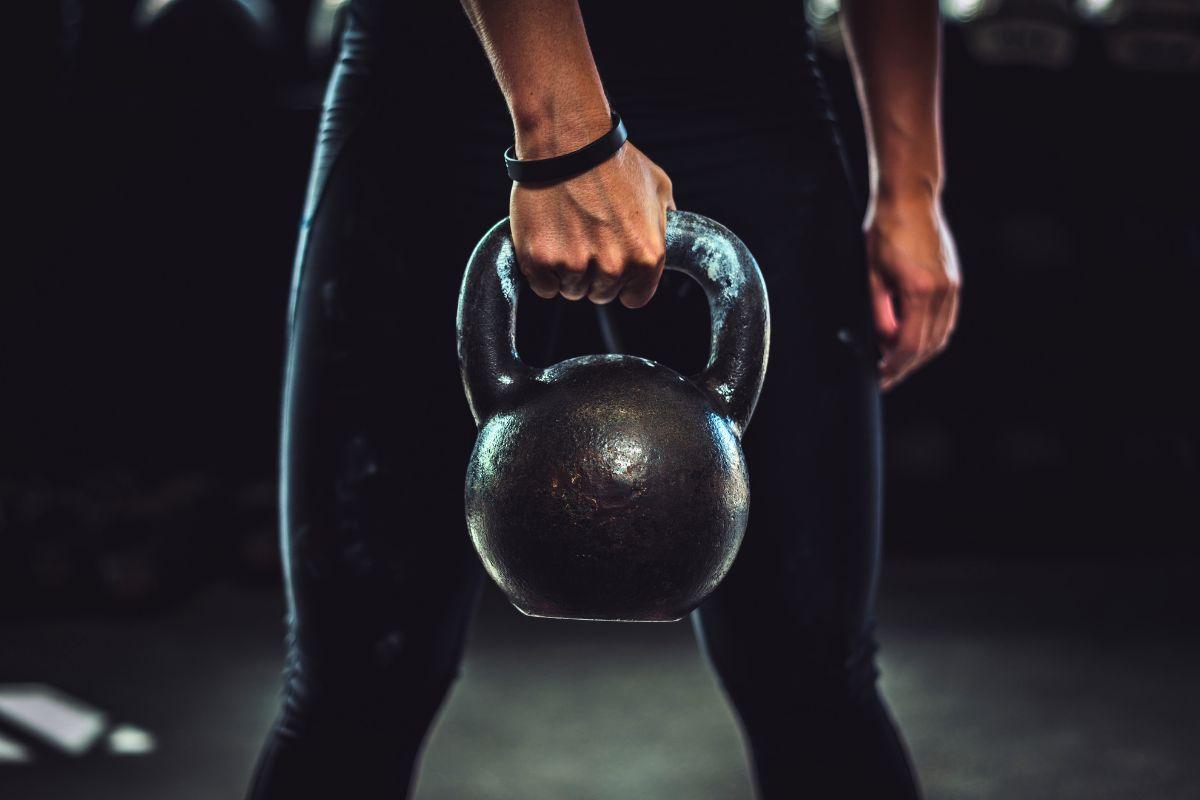
Kettlebells are cast-iron or steel weights with a handle that offer a unique combination of strength and cardio training. For beginners, understanding how to choose the right weights and master fundamental moves unlocks a highly effective, full-body workout.
Picture a cannonball with a handle welded on top—you swing it rather than lift it, building strength, power, and cardio simultaneously while engaging almost every muscle in your body. To start safely, always begin light, master the hip hinge, and focus on form.
You may have seen some people sulking in the gym corner while everyone queues for the squat rack. They look deceptively simple but trust me, they are not.
- A kettlebell is a cast-iron or steel ball with a handle on top.
- Russian traders used them to weigh crops in the 1700s.
- The swing is a hip hinge, not a squat and not an arm lift.
- Your glutes, hamstrings and back do most of the work, and two or three short sessions a week is sufficient.
What Is A Kettlebell?
Cast iron or steel, handle on top. Wikipedia states it has six parts: handle, corners, horns, window, bell and base. Sizes range from 4kg to 48kg (9–106lb).
The weight hangs beyond your hand rather than sitting in it, so it pulls. That unstable force is the point: your grip, forearms and core fight it every rep.
The Russian girya started as a market weight, sized in poods. One pood is 16.38kg, or 36.1lb. Circus strongmen took them up in the 1800s. Competitive lifting began in 1885 with the Circle for Amateur Athletics. Girevoy Sport, the 10-minute format, was introduced in 1948.
It has two styles. NZIHF credits Pavel Tsatsouline, a former Soviet special forces instructor, with the hard style: big tension, low reps, and six moves. You have to swing, clean, press, squat, snatch and Turkish get-up. Valery Fedorenko brought the second style, known as Sport Style (or Girevoy Sport style), into prominence.
Types Of Kettlebells
| Type | What It’s Like | Who It Suits |
| Cast iron | Bigger as it gets heavier, textured grip | Beginners, home gyms |
| Competition steel | Same size at any weight, colour-coded | One grip as you progress |
| Rubber-coated | Iron core, rubber shell | Quiet sets, saving floors |
Source: International Union of Kettlebell Lifting (IUKL) & National Strength and Conditioning Association (NSCA) equipment standards.
Soft-sided bells are also available, filled with sand, water, or shot. Competition colours: pink 8 kg, blue 12 kg, yellow 16 kg, purple 20 kg, green 24 kg, orange 28 kg, and red 32 kg.
Benefits Of Using Kettlebells
The research supports it, though not all agree.
- Eight weeks of twice-weekly classes improve strength, aerobic capacity, balance and core strength, per the American Council on Exercise.
- Lake and Lauder (2012) report that swing training lifted half-squat one-rep max and vertical jump.
- Hulsey’s (2012) research claims that treadmill running burns more, but swings still raise heart rate enough to improve cardio fitness.
- A 2010 study recorded a 20-minute snatch session at 13.6 calories a minute aerobically plus 6.6 anaerobically at a six-minute-mile pace.
- Otto (2012) reports that over six weeks, weightlifting raised strength 14% against 4% for kettlebells, with no body composition change.
You also get better glucose tolerance, stronger grip in older age and less inflammation. Physiotherapist Nancy Capparelli, quoted by Harvard Health, says holding weight out front makes your back work harder, so posture improves.
Proper Way To Use Kettlebells Safely
Learn the hip hinge before you touch a bell. Stand two feet from a wall, facing away, feet slightly wider than shoulders, knees soft. Keep your spine long, push your bum back to tap the wall, then drive your hips forward and squeeze.
A hinge is not a squat. There, knees bend a lot and the chest stays tall. Here, knees barely move, and the hips travel back.
ALSO READ: What Are Hip Dips? Are They Normal And How To Get Rid Of Them
The Two-Handed Swing, Step By Step
Nike’s guide, based on advice from instructor Forest Vance:
- Feet slightly wider than shoulder-width, knees unlocked, bell 45–60 cm ahead.
- Hinge, grip the handle with both hands, palms down, and tip it towards you.
- Hike it back between your legs, then snap your hips forward to shoulder height.
- Brace your abs like you are taking a punch. Breathe out on the way up.
- Let it fall, hinge as it passes your thighs, and repeat.
Tuck your chin; stop watching the bell. Use a hook grip, not a death grip. At the bottom it stops near knee height, not the floor. Russian swings finish at shoulder height. However, an American swing goes overhead and needs mobility most people lack.
What Muscles Do Kettlebell Swings Work?
Top to bottom: traps, rear deltoids, rhomboids, lats, spinal erectors, core, quads, glutes and hamstrings. As NASM states, kettlebell swings are a full-body motion.
Glutes and hamstrings drive it. Erectors hold the spine neutral; lats and core stop the bell from floating too high; shoulders work eccentrically on the way down. One-armed, the obliques fight the twist.
Sets, Reps And Choosing Your Weight
| Level | Women | Men |
| Beginner | 8-12kg (18-26lb) | 12–16kg (26–35lb) |
| Intermediate | 12–16kg | 16–20kg |
| Advanced | 24kg+ | 24kg+ |
Source: Compiled from StrongFirst (RKC) and RKC Kettlebell Training Standards.
Start ranges: 18–26lb (8–12kg) for women, 26–35lb (12–16kg) for men.
Start with 2–3 sets of 5–8 swings, then build to 3–4 sets of 8–12. Chasing endurance? Try 4–5 sets of 15–20. Chasing power? Drop to 5–10 heavy reps. Train two or three times a week after a 5–10 minute warm-up. A cup of matcha 30–45 minutes beforehand can help sharpen focus for the session without the jittery spike of a strong coffee. Trainer Dan Partridge reckons ten sets of ten without feeling wrecked means you can add 1–2kg.
Beginner Moves Beyond The Swing
Healthline’s round-up covers the classics:
- Goblet squat: In this you place the bell at your chest and sit between your knees.
- Deadlift: It starts with a hinge, a grip, standing tall, and at last, a squeeze.
- Farmer’s walk and suitcase carry: 20 feet, shoulders back, and no lean.
- Single-arm swing, clean, windmill, and Turkish get-up: Do it once you master the basics and get bored.
Risks And Injury Prevention
A 2017 study lists bruised forearms, strained wrist and hand tendons, and lower back injuries. Rotator cuff tears come from going heavy too soon, and a dropped bell will wreck your foot.
With osteoporosis or osteopenia, heavy bells may raise fracture risk, so ask your GP first. FitKit UK flags the common causes: yanking with the arms, over-gripping, loading up too fast, and forgetting to brace. Wear flat, closed-toe trainers rather than cushioned running shoes, chalk up if your hands sweat, and stop the moment pain turns sharp.
ALSO READ: Foot Spa: Everything You Need To Know About Soaking, Ingredients And Safety
FAQs
Q1. Are Kettlebells Good For Beginners?
Yes, if you start with light kettlebell training and learn the hip hinge first. One session with a skilled instructor saves months of bad habits.
Q2. How Heavy Should My First Kettlebell Be?
Most women start at 8-12 kg and most men at 12–16 kg. Too heavy to do a front raise, light enough to keep your back flat.
Q3. How Often Should I Train With Them?
Two or three sessions a week suits most people. Even 10–20 minute circuits improve muscle and cardio fitness.
Q4. Do Kettlebell Swings Burn Fat?
They push your heart rate up fast and burn plenty of calories. Fat loss still comes down to diet and daily activity.
Q5. Russian Or American Swings: Which Is Better?
Russian stops at shoulder height and is kinder to the shoulders. An American swing goes overhead and is more intense aerobic work.
Q6. Can I Build Muscle With Kettlebells Alone?
You can build real strength, power and endurance. For maximum size, barbells and progressive overload still win.
Sources & References
- Nike. (2026). Kettlebell swings: Instructor Forest Vance explains two‑handed technique.
- National Academy of Sports Medicine (NASM). (2026). How kettlebell workouts can take your fitness to the next level.
- New Zealand Institute of Health and Fitness (NZIHF). (2026). Kettlebell exercise beginners’ guide.
- Healthline. (2026). Kettlebell workout: Full‑body exercises and training options.
Disclaimer: This article is provided for general educational and informational purposes only and is not intended as medical, health, or fitness advice, nor does it promote any specific product or brand. Readers should independently verify all facts and seek guidance from a qualified healthcare professional or certified fitness trainer before undertaking any new workout program.