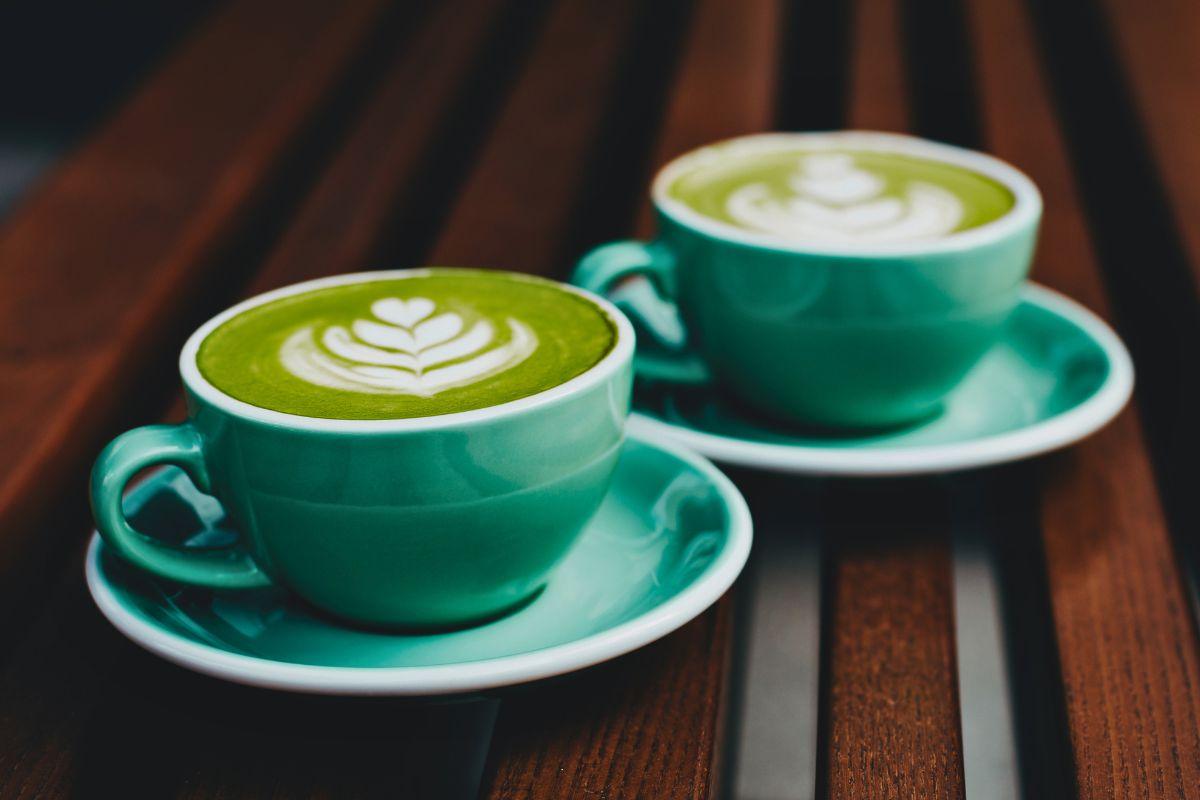
Does matcha have caffeine? It does, in a decent amount. It can be around 38 mg to 89 mg a cup, more than green tea, a bit less than filter coffee. It also depends upon the scoop size.
Four quid a cup. Bright green. Tastes faintly of the sea. Its rising global adoption is backed by market figures: according to Research and Markets, the global matcha market was valued at $4.33 billion in 2024 and is projected to grow at a 9.81% CAGR to reach $7.59 billion by 2030.
- Matcha contains 19 mg to 44 mg of caffeine per gram of powder.
- A standard 2 g serving has 60 mg to 70 mg.
- Go heavy at 4 g, and you’re at 176 mg, beating coffee.
- An amino acid known as L-theanine slows down the hit.
- Healthy adults should stay under 400 mg of caffeine a day./li>
- Pregnant women should have below 200 mg in total.
What Matcha Actually Is?
Matcha is a fine green powder made from the leaves of Camellia sinensis, the same plant that gives us black and green tea. Most of the best stuff grows in Japan. It’s the same slow, ritual-driven approach you’ll find in Japan’s traditional head spa treatments.
Growers shade the plants for three to six weeks before picking. The plant panics, and out comes extra chlorophyll (there’s the colour of matcha) plus a load of L-theanine.
Leaves are steamed, dried, and stripped of stems and veins into flakes called tencha, then stone-ground. Slowly. Bird & Blend Tea says even a quick grinder needs an hour for 100 g, as rushing heats the powder and kills the flavour.
Last bit, and it matters most: you swallow the leaf. Nothing steeps, and nothing gets binned.
What Does Matcha Taste Like?
It tastes like grassy, seaweedy, and a little nutty. Savoury in that umami way, which basically means it “reminds you of edamame”. Good matcha is smooth with a whisper of sweetness.
If it tastes like a mouthful of hedges, then the water is too hot, or there is too much powder. Use it up quickly, though. Green tea is unoxidised and turns fast once opened.
ALSO READ: Ultimate Healthiest Food Picks You Should Add to Your Plate Every Day
Does Matcha Have Caffeine? Yes, And Here’s How Much
There is no definite answer in terms of amount. Healthline’s figure is 19 mg to 44 mg per gram. Servings run from 2g to 4g, half a teaspoon up to a full one. Do the maths: 38 mg at the bottom, 176 mg at the top.
Most cups sit in between. Senbird Tea clocks a 2 g bowl at 60 mg to 70 mg. The tea makers of London say about 70 mg. Harvard Health lands on 38 mg to 89 mg per 8 oz cup.
Half a teaspoon is a gentle nudge. A heaped café scoop hits harder than your Americano.
Caffeine Comparison Table
| Drink | Serving | Caffeine |
Matcha, light | 2 g | 60–70 mg |
Matcha, strong | 4 g | 176 mg |
Green tea | 8 oz | 23–49 mg |
Filter coffee | 8 oz | 95–120 mg |
Espresso | 1 shot | 63–75 mg |
Cold brew | 8 oz | 150–240 mg |
Hojicha | 8 oz | 7–8 mg |
Source: Compiled from USDA FoodData Central and U.S. Food and Drug Administration (FDA) nutritional databases.
Coffee beans carry 10 mg to 12 mg per gram, so a 10 g cup is roughly 100 mg. Two or three cups daily puts you at 300 mg to 600 mg. Matcha rarely gets up there.
Matcha Versus Regular Green Tea
A green tea leaf has 11 mg to 25 mg of caffeine per gram. Matcha has 19 mg to 44 mg ahead already, before anyone brews.
You soak the leaves, take whatever dissolves, then chuck them out with most of the antioxidants still inside. Matcha wastes none. According to research cited by the National Institutes of Health, consuming ground matcha delivers at least 3 times higher concentration of epigallocatechin gallate (EGCG)—the primary antioxidant catechin—than brewed loose-leaf green tea.
You can see it, too. Green tea is pale and see-through. Matcha is thick, opaque, and nearly paint-like.
Why Tea Has Caffeine At All
Nobody mentions the issue in the café. Caffeine is an alkaloid, and the plant produces it as a weapon. Insects loathe it, and enough will paralyse them. Spring buds carry more than weary old leaves, since new growth needs a bodyguard.
It’s also where bitterness comes from. Hot water, a long soak, and a sharp cup. Matcha never soaks, so it stays gentle.
Why The Caffeine Feels Different
L-theanine pushes your brain towards alpha wave activity, the calm-but-alert state you get in meditation, and slows how fast caffeine reaches you. Work published in Food Research International in 2017 found caffeine and L-theanine together beat plain caffeine for sustained attention and task-switching accuracy.
You can feel it on the clock. Coffee turns up in 15 to 30 minutes and leaves several hours later, slamming the door. Matcha strolls in, and its effects last for three to six hours. Zen monks knew this practice long before oat milk existed.
Quitting coffee is no fun either: headaches, exhaustion, nausea, and aching muscles. Matcha is easier to drop. Still caffeine, mind. Have one at nine at night, and you’ll be studying the ceiling.
How Much Matcha Is Sensible To Have In A Day?
The European Food Safety Authority reckons 400 mg a day is fine for a healthy adult. Two or three servings at 1 g to 2 g and you’re nowhere near it.
Pregnant, though? The NHS draws the line at 200 mg, and tea, cola, and chocolate count towards that limit.
One upside people forget: regular caffeine is linked to a lower risk of asthma, type 2 diabetes, kidney stones and some cancers. Tolerance varies from person to person, so start with a small amount and stop six hours before bed.
How To Make Matcha
You need matcha powder, a mug, hot water, and a bamboo whisk called a chasen. Plus a sieve, unless you like lumps.
Sift half a teaspoon to a teaspoon in. Splash of hot water, not boiling, then whisk until foam turns up. Top up. Drink. Fancy a latte? Whisk the paste first, then pour steamed milk over. Half a minute, no espresso machine, no grinder, no scales.
It isn’t only a drink. Smoothies, porridge, yoghurt, dressings, brownies, and popcorn. A matcha mint shake is a great breakfast choice on a bad morning.
The Benefits Worth Knowing
Catechins, mainly EGCG, along with chlorophyll and quercetin, are the key components. Clinical data highlight these cardiovascular effects: a meta-analysis of 13 randomised controlled trials published on ResearchGate showed that green tea polyphenol consumption significantly decreased systolic blood pressure by 1.98 mmHg and diastolic blood pressure by 1.92 mmHg while reducing LDL cholesterol levels.
L-theanine isn’t just about focus. A double-blind randomised controlled trial published in Nutrients found that daily supplementation with 200 mg of L-theanine over 4 weeks yielded statistically significant reductions in depression symptoms (p = 0.019), state-trait anxiety (p = 0.006), and sleep disturbance scores (p = 0.013) among healthy adults.
Then the extras. Vitamins A, C, E and K, plus potassium, calcium and iron. Teeth do alright too, since matcha won’t stain them and its antioxidants attack the bacteria behind plaque and gum disease. The same antioxidants also turn up in skincare routines like Korean glass skin regimens.
Two things to keep in mind, though. Antioxidants hate heat, so scalding water and baking blunt them. And the “matcha burns fat” chat? Thin evidence.
Quality Changes Everything
Cheap matcha is usually plain green tea, ground down. No shading, no de-veining, so it comes out khaki and harsh. Some is padded with sugar. Some fail pesticide checks. Look for Japan, spring harvest, vivid green, and a silky feel. Ceremonial and culinary are half marketing waffles, but culinary really is coarser, made for lattes and baking.
Final Verdict
Yes, matcha has caffeine. Half a coffee in a weak cup, more than a coffee in a strong one, handed over gently rather than all at once. Start with half a teaspoon and see how you get on. And no, decaf matcha isn’t a thing, because you drink the leaf itself. Want the ritual without the buzz? Roasted hojicha gives 7 mg to 8 mg a cup, with roasting having burnt off around 80%. If you’d rather skip caffeine altogether, a mild herbal tisane like raspberry leaf tea is a completely caffeine-free option.
ALSO READ: 10000 Steps A Day: Your Complete Guide to Total Health Transformation
FAQs
Q1. Does Matcha Have More Caffeine Than Coffee?
Usually not. 2 g of matcha in a bowl gives 60 mg to 70 mg, and filter coffee gives 95 mg to 120 mg. Go heavy at 4g, and matcha wins.
Q2. How Much Matcha Can I Drink A Day?
Two or three servings suit most healthy adults and keep you under 400 mg. Stick to 1 g to 2 g per cup.
Q3. Will Matcha Keep Me Awake At Night?
It can if you have it late. Six hours before bed is fine for most, though sensitive types should stop mid-afternoon.
Q4. Is Matcha Better Than Coffee For Anxiety?
Plenty find it gentler. L-theanine keeps you alert without the jittery edge coffee brings at bigger doses.
Q5. Does Matcha Give You A Caffeine Crash?
Rarely. It releases over three to six hours, so energy fades out instead of falling off a cliff.
Q6. Is There A Decaf Matcha?
No. You drink the whole leaf, so the caffeine comes with it. Roasted hojicha is the best swap at 7 mg to 8 mg per cup.
Sources & References
- European Food Safety Authority. (2026, March). Scientific opinion on caffeine safety: Intake levels for adults and pregnant women. EFSA.europa.eu.
- National Health Service. (2026, February). Caffeine in pregnancy: Guidance for safe intake. NHS.uk.
- Wikipedia. (2026). Matcha. wikipedia.org
- Healthline. (2026). Does matcha have caffeine? healthline.com
- U.S. Food and Drug Administration. (2025, December). Caffeine content in foods and beverages: Nutritional database update. FDA.gov.
- U.S. Department of Agriculture. (2025, November). FoodData Central: Caffeine values for tea and coffee. USDA.gov.
- Harvard T.H. Chan School of Public Health. (2025, October). Matcha and green tea: Caffeine levels and health implications. Harvard.edu.
- National Institutes of Health. (2025, September). Green tea catechins and EGCG concentration in matcha vs. brewed tea. NIH.gov.
Disclaimer: The content provided in this article is for informational and educational purposes only and is not intended as medical, health, or dietary advice, nor does it serve as a commercial promotion for any specific product or brand. Individual caffeine tolerance and health reactions may vary significantly. Readers should independently verify all facts and consult a qualified healthcare professional before making health-related or dietary changes.