Visit for at least three days, if possible. Day one is the Acropolis and its museum. Day two is for the Ancient Agora, Plaka, and the guards at Syntagma. Day three: eat, climb a hill at sunset, then shoot down to Cape Sounion.
Several people land in Athens, glance at the ruins, and sprint for a ferry. Daft, really. Most travellers tick off the headline sights that put Greece on lists of the most visited countries, then leave before the city properly sinks in. The best things to do in Athens are crammed into roughly 2.5 square kilometres, so your feet do all the work and your wallet barely notices. People have lived here for about 5,000 years. It’s scruffy in places, covered in graffiti, and overrun with cats, and I’d go back tomorrow.
- Acropolis tickets are timed slots now, so book them in advance.
- Three days gives you everything. Two and you’re sweating.
- April to early June or September to October is the best time to visit Athens.
- One combined ticket covers seven archaeological sites across five days.
- Metro Line 3 runs from the airport to the city centre in about 40 minutes.
Climb the Acropolis and See the Parthenon
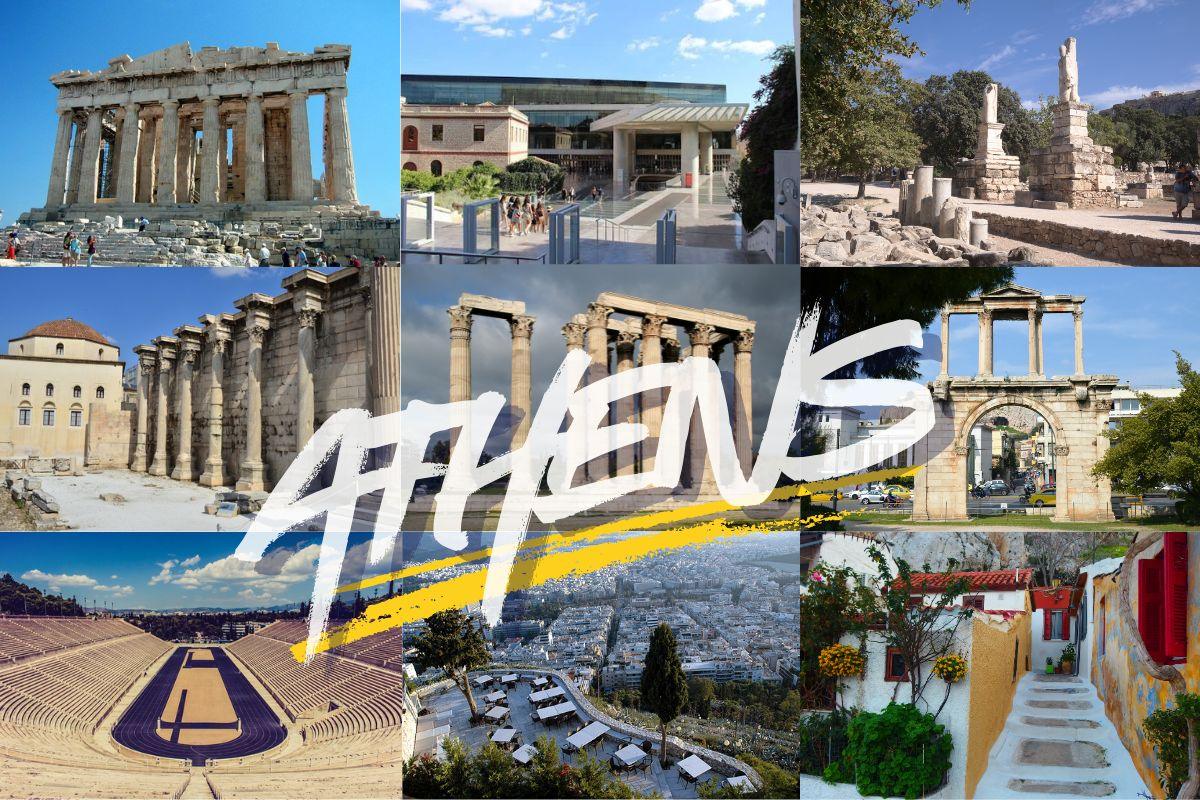
The word “acropolis” means “high city” and the rock is 150 metres above sea level. You can spot it from half the neighbourhoods below. The Parthenon was built between 447 and 438 BC for Athena, the goddess the city is named after.
Now, please don’t be the person who photographs one temple and leaves. Look for the Erechtheion with its six Caryatids holding up the roof. The little Temple of Athena Nike. The Propylaea, which is the grand gateway. And on the southern slope is the Theatre of Dionysus, reckoned to be where Greek tragedy was born.
Fahey James Travel timed the climb at about 15 minutes, with breaks included. Get there for the 8 am opening or leave it until late afternoon. Midday is punishment. One warning: that marble is a skating rink after rain.
ALSO READ: What to Do in Venice Italy: A Travel Guide to Exploring the Floating City
Visit the Acropolis Museum
It only opened in 2009, which surprises people. It’s a two-minute walk from the rock, and before you even get inside, you’re standing on a glass floor, staring down at an excavated ancient neighbourhood.
There are over 4,000 artefacts in there, too. The bit that properly lands is the Parthenon Gallery on the top floor — built to the temple’s actual dimensions, so the frieze sits at your eye level instead of miles overhead. Do the rock first, then the museum.
Everything suddenly makes sense. Also, the second-floor café has a cracking view, and you don’t need a ticket to sit in it.
Walk the Ancient Agora, Roman Agora, and Hadrian’s Library
The Agora was the engine room of old Athens. Market, courtroom, gossip central. Socrates and Plato argued on these paths, which is a mad thing to stand on. The Temple of Hephaestus here is the best-preserved Doric temple in all of Greece, and the rebuilt Stoa of Attalos holds a tidy little museum.
Then the Romans turned up. Their Agora was funded by Julius Caesar and Augustus and built between 19 and 11 BC. It’s smaller, but it has the Tower of the Winds — an octagonal marble structure that served as a sundial, a water clock, and a weather vane. Traders used it to work out when their ships were docking. Clever lot. Hadrian’s Library, from 132 AD, is round the corner.
ALSO READ: Norway Midnight Sun Summer: Why Everyone Is Choosing Arctic Coolcations
Temple of Olympian Zeus and Hadrian’s Arch
Fifteen columns standing. There were 104. Each survivor is 17 metres tall with a base 1.7 metres across, so even the leftovers are ridiculous. Building kicked off in the 6th century BC and limped along until Emperor Hadrian finally wrapped it up in 131 AD. Seven hundred years, give or take. It ended up being the biggest temple in Greece.
Hadrian’s Arch is right outside and costs you nothing.
The Panathenaic Stadium
Only one stadium on earth is made entirely of marble. Not partly. Entirely. Rec Your Trip calls it one of the city’s best stops, and they’re right — the audio guide thrown in with your ticket is worth sitting through.
First built around 330 BC, then rebuilt in gleaming Pentelic marble by Herodes Atticus in 144 AD, it held roughly 50,000 people. It hosted the first modern Olympics in 1896 and was used again in 2004. The Athens Marathon finishes here. The Olympic flame comes back here after every Games. Go sit in the marble seats for a minute. It does something to you.
Watch the Changing of the Guard
Opposite Syntagma Square, outside Parliament, the Evzones guard the Tomb of the Unknown Soldier. They wear pleated skirts and pom-poms on their shoes, and their movements are so slow that they look like a wind-up toy.
It’s not for show — the slow stepping helps get the blood moving after an hour of standing like a statue. On roasting days, another soldier wanders over to mop their faces.
It happens every hour, on the hour, and it’s free. On Sunday at 11 am, you get the full works, complete with a military band. Rock up 15 minutes early, or you’ll be behind someone’s selfie stick.
ALSO READ: Top 7 Things To Do In Scotland For A Truly Epic Adventure
Plaka, Anafiotika, and Monastiraki
Plaka is the one from the postcards. There are flowers everywhere, tavernas, leather sandals, and someone playing guitar badly. Tripodon Street is among the oldest streets in Europe still in use. Yes, it’s touristy. Go anyway.
Keep climbing, and you’ll stumble across Anafiotika. It was built in the 19th century by builders from the island of Anafi who had come over to work on the Royal Palace and ended up building themselves a village. White walls, blue doors, and bougainvillaea. It feels like someone posted a chunk of Santorini to central Athens.
Monastiraki is where the volume goes up. A flea market full of antiques, old records, handmade bits, and a fair amount of rubbish. The square frames the Acropolis beautifully.
Where to Get the Best Views
Lycabettus Hill is the highest point in central Athens, at 277 metres. Walk up from Aristippou Street in Kolonaki — it takes about 20 minutes — or take the funicular if you’ve given up. At the summit, you’ll find a little 19th-century chapel and a café.
Philopappos Hill does the best straight-on Parthenon shot. Beantown Traveller suggests going up one path and down another so you catch different angles, which is sound advice. And Areopagus Hill, right by the main gate, is the lazy option. Still brilliant.
Eat Well and Drink High
Gyros. Souvlaki. Moussaka. A Greek salad that’ll ruin every salad you eat back home. Spanakopita. Then there are loukoumades, which are honey-drenched dough balls and frankly better than doughnuts. If you’re carrying on along the Mediterranean afterwards, Croatian food leans on the same grilled fish, olive oil and fresh produce, so your appetite will feel at home.
Koulouri, the sesame bread ring, is breakfast. Varvakios Central Market on Athinas Street has been trading since the 1880s, and it’s where actual Athenians shop.
Destination Less Travel found a food tour, the quickest route into the city’s eating habits, including coffee brewed over hot sand. Over in Plaka, Brettos is the oldest distillery in Athens — it’s been going since 1909, with its walls lined with coloured bottles.
Then get some height. A for Athens, 360 Cocktail Bar and Attic Urban Rooftop all stare straight at the floodlit Acropolis. Book an hour before sunset. About €10 a glass. Worth every cent.
A Few Extras If You’ve Got Time
The Odeon of Herodes Atticus, built in 161 AD for his late wife Regilla, still packs in 5,000 people and hosts the Athens Epidaurus Festival from May to October. The National Garden, planted for Queen Amalia in 1838, gives you 15.5 hectares of shade.
The National Archaeological Museum has the Mask of Agamemnon. And Cine Thisio, open since 1935, is Europe’s oldest open-air cinema — a film under the stars with the Acropolis glowing behind the screen.
Practical Tips Worth Knowing
Metro Line 3 runs from the airport to the centre in about 40 minutes. Taxis are cheap — use FreeNow. Set up an eSIM before you fly so maps and the FreeNow app work the moment you land, with no roaming charges. Cards work nearly everywhere, but keep coins for markets. Pickpockets do operate in packed squares and on the metro, so zip up.
Summer regularly hits 35°C, which is why spring and autumn win. And if a restaurant hasn’t priced something on the menu, ask first. Learn that one the easy way.
ALSO READ: Top 10 Warm Places to Visit in Europe During UK Winter Months
FAQs
Q1. How Many Days Do You Need in Athens?
Three full days do the job properly. Two works if you stick to the Acropolis, Plaka, and Syntagma. With five days, you can also add Delphi, Meteora, or the Saronic Islands.
Q2. What Is the Best Time of Year to Visit Athens?
April to early June, or September and October. Warm, walkable, fewer crowds, and cheaper rooms. July and August are brutal. Winter’s mild and quiet, but ferries thin out.
Q3. Do You Need to Book Acropolis Tickets in Advance?
Yes. There’s a daily visitor cap and timed entry, so the good morning slots go early. Book online and turn up inside your window with the QR code ready.
Q4. Is Athens Walkable?
Extremely. The big sights are in a compact centre, connected by pedestrian streets. Just wear decent shoes — marble paving and hill paths are uneven and slippery.
Q5. Is Athens Safe for Tourists?
As safe as any large European city. Pickpocketing is the main nuisance, mostly in busy squares and on the metro. Keep bags shut and agree on taxi fares before you set off.
Q6. What Food Should You Try in Athens?
Start with gyros or souvlaki from a tiny takeaway — they’re usually better than the posh places. Then moussaka, Greek salad, spanakopita, and loukoumades to finish.
Sources & References
- Fahey James Travel. You can climb the Parthenon in about 15 minutes, with breaks included.
- Destination Less Travel. The quickest route into the city’s eating habits, including coffee brewed over hot sand.
- Rec Your Trip. Panathenaic Stadium is one of the city’s best stops.
- Beantown Traveller. Going up one path and down another on Philopappos Hill, you catch different angles, which is sound advice.
Disclaimer: This travel guide is provided strictly for informational and educational purposes and does not constitute a commercial endorsement or promotion of any venue, service, or destination mentioned. While every effort is made to ensure details are accurate, opening hours, pricing, and local regulations may change. Readers are strongly advised to independently verify facts, rates, and operating schedules and seek professional advice or consult official sources before making travel arrangements.