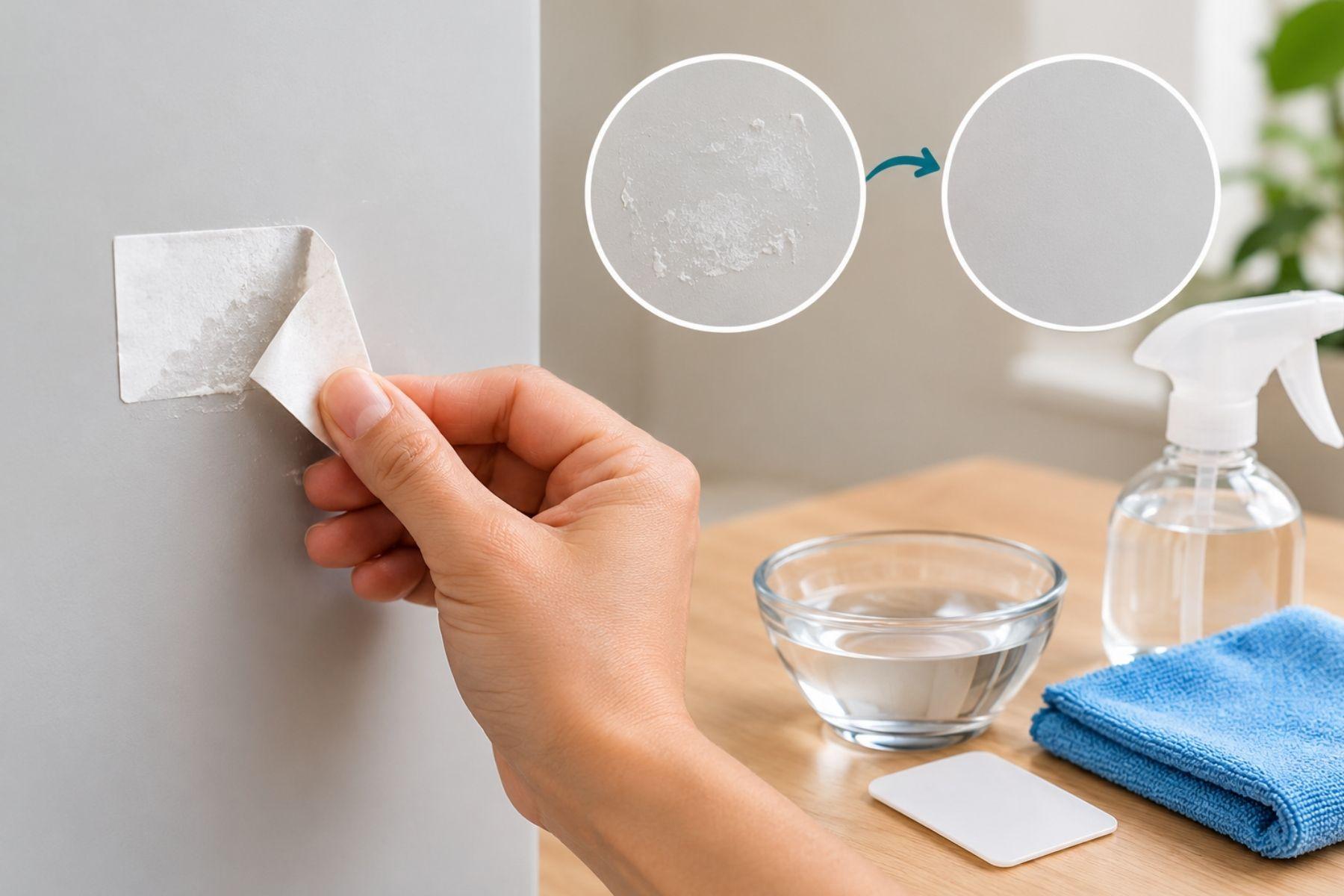
Quick Answer: Soften the residue. Don’t scrub it. Thirty seconds under a hairdryer, rub with cooking oil or citrus cleaner, leave it alone for five minutes, then try to remove it with any plastic card, like an old bank card. Solvents are the last option.
This is where it goes wrong, and why knowing how to remove adhesives is a part of school chemistry. Glue residue is oily or rubbery. Water isn’t. They never grip each other, so a damp cloth gets you nowhere while a teaspoon of sunflower oil sorts it in a minute. Like dissolves like.
- Oil is better to use than water to remove adhesives.
- First, heat the area, as this does half the job and costs nothing.
- Never use acetone on plastic, uPVC, or acrylic.
- Never use vinegar on marble, limestone, or natural stone.
- Patch test on a hidden spot, wear gloves, and open a window.
Three Ways Any Glue Lets Go
Loctite sorts the adhesive removal technique into three approaches.
Mechanical: You and a blunt edge: pan scraper, putty knife, old loyalty card, tweezers for corners, and a razor blade where the surface takes one. Keep it near-flat, 10 to 15 degrees. Rush soft plastic, and you’ve swapped sticky for scratched.
Chemical: Cooking oil works best in this case, but you can also use vegetable, rapeseed or baby oil. Peanut butter works. So does mayonnaise, which sounds like a wind-up until you watch it. Spread, wait an hour, and wipe. If it’s still there, apply Goo Gone and De-Solv-it, but read the label and test a corner first.
Thermal: Wine labels nearly fall off after a minute under the hairdryer. Glass jars can go in a warm oven, but keep it moderate, as glass cracks.
Also Read – Lawn Edging Ideas and Tips to Make Your Garden Look Amazing
What’s Worth Keeping Under the Sink
Sticky comes in three sorts. Sticker gum, gummy film on glass and plastic, and greasy residue off industrial tape. Shift the lot, as old glue stains and nothing new sticks.
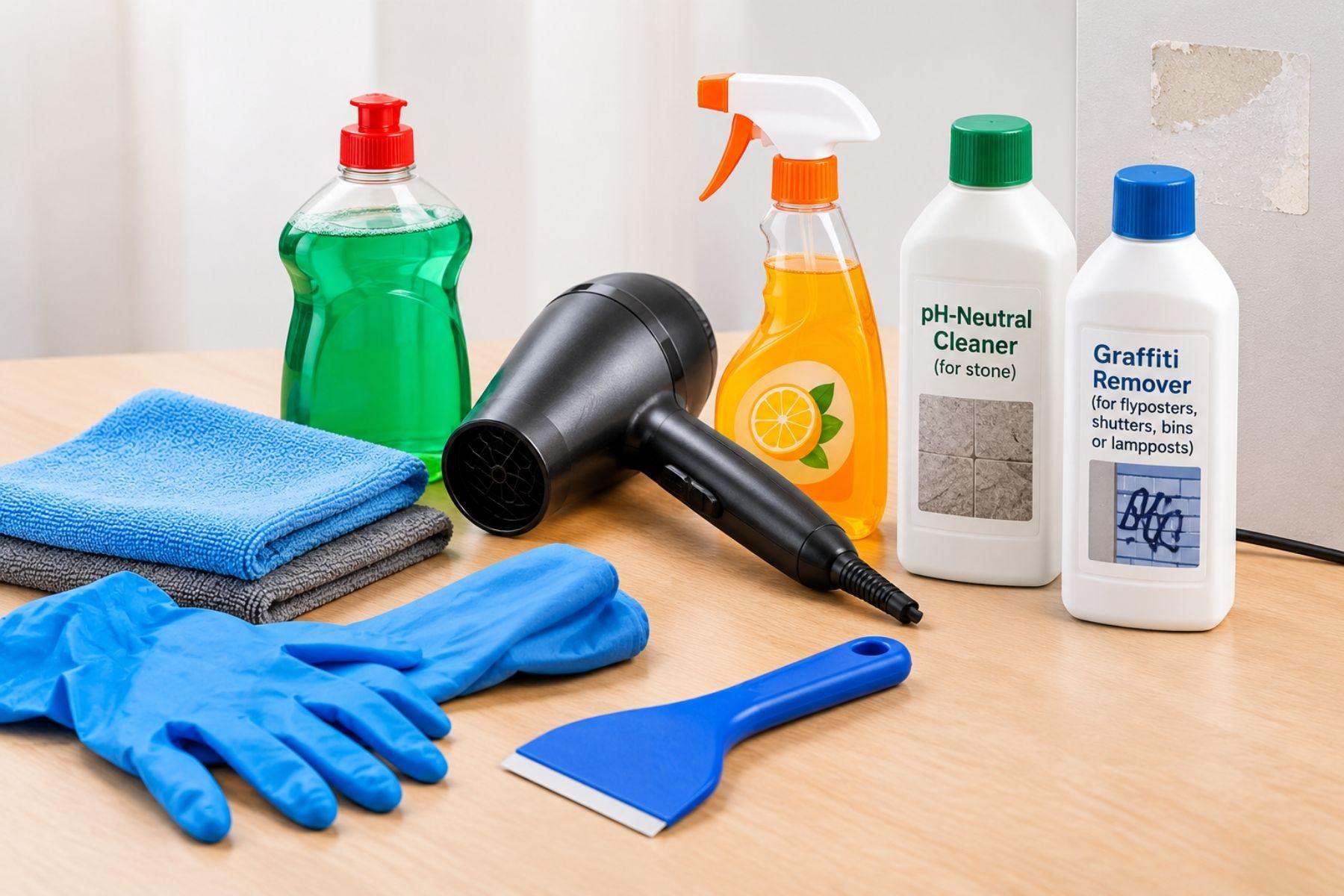
In your kit you should have a plastic scraper, microfibres, gloves, washing-up liquid, a hairdryer, and citrus cleaner. pH-neutral cleaner for stone, graffiti remover for flyposters on shutters, bins or lampposts.
How to Remove Adhesives Step by Step
- Look underneath. Glass, ceramic, and steel are hard as nails. Stone, painted wood, soft plastic, and fabric are not as hard.
- Lift the loose edges with a fingernail, card, or tweezers.
- Hairdryer on medium, 20 to 30 seconds.
- Warm soapy water and some pressure. Half the time it ends here.
- Still smirking? Oil or citrus, then wait as long as the bottle says.
- Scrape shallowly and stop when the surface complains.
- Wash the oil off, or paint and new tape won’t stick.
Surface by Surface
| Surface | Start with | Step up to | Never use |
| Glass | Heat, then cooking oil | Acetone, or spray lubricant | Metal blades |
| Metal | Surgical spirit, then dry | Baby oil, WD-40 | Bleach, acetone, wire wool |
| Plastic, uPVC | Soapy water, a card | Vinegar, a uPVC-safe remover | Acetone, metal tools |
| Painted walls | Oil on the cloth | Spirit, dabbed | Acetone, scrapers |
| Wood | Damp cloth, detergent | Lemon oil, white spirit | Soaking, acetone |
| Tiles, grout | Warm water | Acetone on a toothbrush | Abrasive pads |
| Stone | pH-neutral cleaner | Stone-safe remover | Vinegar, acetone |
| Fabric | Dry, freeze, peel | Spirit, ammonia in hot water | Rubbing it in |
Wood gets two warnings. Paper labels grip harder once wet, and water swells timber, so damp cloth only. Oil darkens bare wood. Beaten? Sand it first with 80-grit, then with 120, then with 220, and finally refinish.
Also Read – How To Measure A TV Screen: The Easiest Way
Match the Method to the Glue
Packing and duct tape leave a rubbery gum. Surgical spirit or WD-40 shifts it in two minutes. Double-sided tape is sneakier, as the foam peels and the glue stays, so warm it and work spirit over the remains. Blu-Tack and gum want the opposite: freeze, flake, and oil the smear. Silicone gets scraped, never dissolved. Contact and construction adhesive need scraping, then a specialist remover.
Super Glue, Skin, and Industrial Jobs
Thumb glued to finger? Permabond’s technical notes plead with you to put the nail varnish remover down, as acetone drags the oil from your skin and leaves it raw. Warm soapy water, then roll a pencil between the fingers. Super glue is weakest in peel, so off it comes. Clothes, same answer.
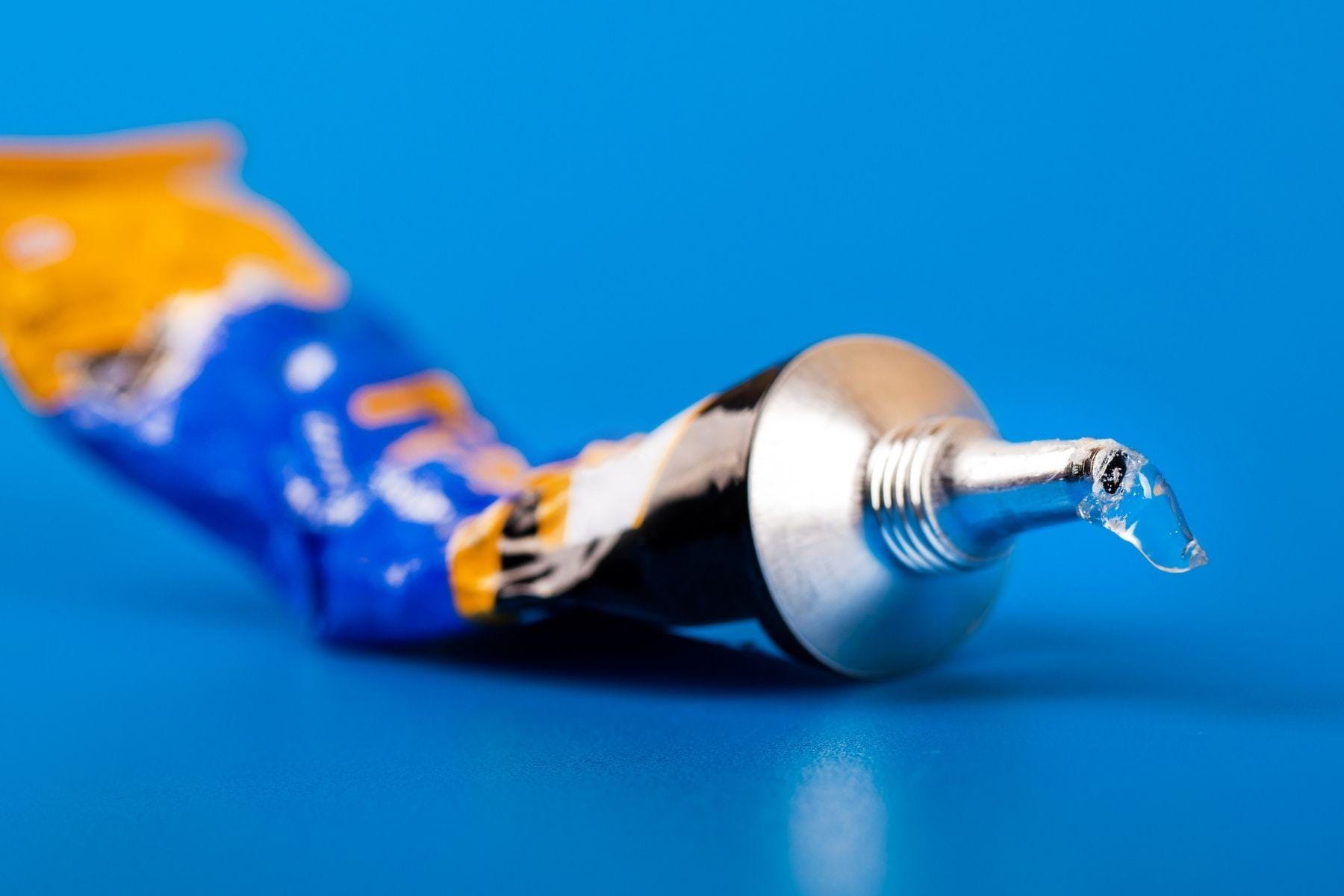
Super glue soaked into cotton can catch fire, so used towels go in a bowl of water, never the bin. Spilt a puddle? Flood it with water, and it will turn solid, making it easier to scrape up. And don’t dab wet glue with a damp cloth, or you’ll get a crusty white bloom. Isopropanol on a kitchen roll is cleaner.
Industrial jobs’ residue is different. Soak big spills into sand, flush pipework with water, keep IPA or MEK for uncured dribbles. Cured epoxy barely moves, so it is a paint stripper, and it melts plastic too. A threadlocked bolt needs 200 to 250°C before a spanner’s any use. Pipe sealant wants a wire brush; gaskets get scraped, not dissolved; UV glue sets in daylight, so dim the lights. Leave the bead beside a joint, though, as it blocks moisture.
The Kitchen Cupboard Test
Someone on Instructables snapped over spice jar labels and ran a proper trial. Six cupboard staples were used, with no xylene, as the jars held food.
Surgical spirit and vinegar flopped and baked the glue harder. Peanut butter, grand. Olive oil, hard graft. Coconut oil threw the lot and lifted a label off in one lump. The real lesson was patience. Fifteen minutes did nothing. Overnight, every lid came clean.
Also Read – How Do I Keep Flies Out of the House | Simple Fixes That Actually Works
Mistakes That Leave Marks
Rawlins Experts states that you should start mild and climb only when you must. Most ruined surfaces begin with the strongest bottle in the cupboard.
Where it goes wrong:
- Solvent sits on paintwork until it softens.
- Hairdryer held too long on vinyl, laminate, or fresh paint.
- Two cleaners mixed because one wasn’t working.
Gloves on, window open, safety data sheet read for industrial stuff.
FAQs
- What shifts sticky residue fastest?
Ans: Heat, then oil. Half a minute with a hairdryer loosens the bond, and oil does the rest.
- Does WD-40 really remove adhesive?
Ans: It does. It’s oil-based, so tape gum has no chance. Spray, wait two minutes, and wipe.
- Can I use nail varnish remover on plastic?
Ans: Please don’t. Acetone clouds and melts acrylic, polystyrene, and ABS. Soapy water or a uPVC-safe remover works.
- Is vinegar safe on sticky marks?
Ans: Yes, vinegar is safe on glass and ceramic tiles. Keep it off marble and limestone, as acid etches stone for keeps.
- How do I get a sticker off car paintwork?
Ans: Warm it, peel slowly at a low angle, lift residue with surgical spirit, then re-wax, as solvent strips it.
- Will leftover glue stop paint from sticking?
Ans: Yes. Glue and oily film block primer bonding. Clean, rinse, dry, then paint.
Sources & References:
- Loctite – Sorts the adhesive removal technique into three approaches.
- Permabond – If the thumb is glued to the finger, put it in the varnish remover, as acetone drags the oil from your skin and leaves it raw.
- Instructables – A test conducted on the kitchen cupboard.
- Rawlins Expert – You should start mild and climb only when you must.