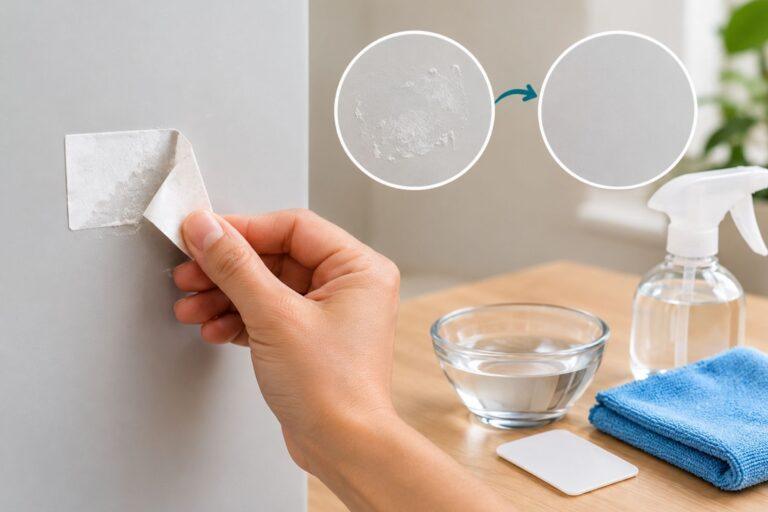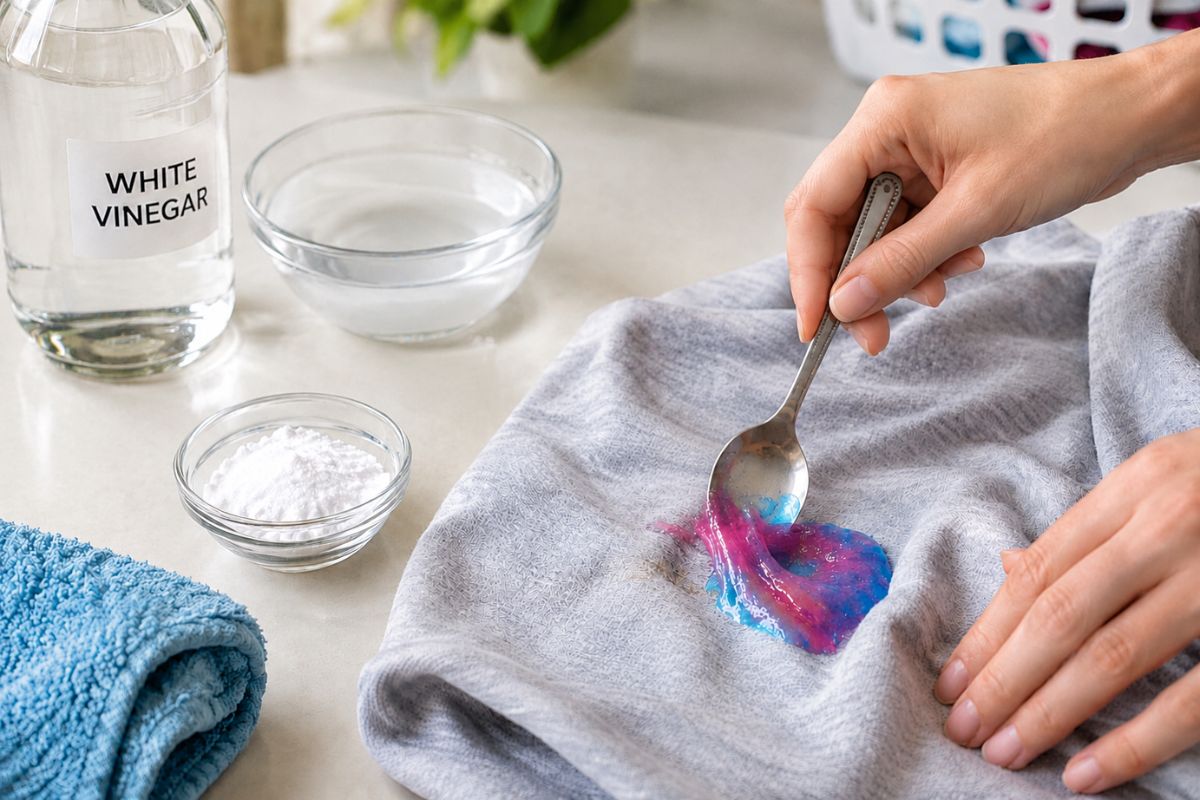
Scrape the blob off with a spoon, soak the patch in white vinegar for 5–10 minutes, scrub gently with an old toothbrush, rinse cool and wash cool. Then air-dry. Don’t heat it until the mark has completely gone.
The slime’s on the jumper. Before you panic about how do I get slime out of clothes, the best part is that the glue always comes out. What wrecks a garment is what we do next with hot water, vigorous scrubbing, and straight in the dryer.
- White vinegar is the most reliable. Its acetic acid loosens the glue’s grip on the fibres.
- Bicarbonate of soda and washing-up liquid are the backups, both in your cupboard already.
- Wet slime is much easier than dry, so minutes matter.
- Ice makes dried slime brittle, so it peels instead of smearing in.
- No hot water, no hard rubbing, no dryer until it’s spotless.
- Coloured slime leaves a dye mark to treat afterwards.
Why Slime Clings So Stubbornly
Slime is glue in fancy dress. Most recipes are PVA school glue, water and an activator like borax or saline solution, plus food colouring, glitter, shaving foam, foam beads, sometimes clay or cornflour. The result is a stretchy polymer that winds round each fibre rather than sitting on top.
Alex Varela of Dallas Maids don’t sugarcoat it: “Honestly, slime is one of the hardest things to remove from clothes. They have bright colours, a sticky texture and attract all kinds of germs.” Textile expert Guillaume Drew of Or & Zon says its glues, dyes and oils all leave residue. And Ashley Matuska Kidder of Dashing Maids warns that “dyes or glitter in the slime can add a second layer of staining and complications during removal.”
Mattel sold the first slime in 1976. A green goo in a little plastic dustbin. The homemade craze blew up in 2016, when Thai teenagers started posting glue-and-borax tutorials on YouTube. It’s a good example of how social media recommendation algorithms can turn a niche craft into a worldwide craze almost overnight.
Best Home Remedy To Get Slime Out Of Clothes
Plain white vinegar. Feathers and Stripes calls it hands-down the best thing, as their slimed tablecloth went through the wash untreated, and the mark’s still there. It’s a handy all-rounder around the house too, and some people even reach for vinegar on a bee sting, though that’s a very different job from lifting glue.
- Lay the garment flat. Lift the blob off with a spoon, butter knife or old bank card — up and away, never wiping across.
- Pour neat vinegar into a bowl and dip the stained bit in. Five to ten minutes is plenty. Still gripping? Another 10–15.
- Circle it gently with a soft toothbrush, then rinse under cool water.
- Wash cool with your usual detergent — bio, with enzymes, is best.
- Hang it up and check it in daylight before it goes near heat.
On anything thin, mix the vinegar half-and-half with water and spray it on for five minutes, the dilution The Spruce suggests for everyday clothes. And don’t bungle it in with the rest of the washing; Varela reckons that just makes a bigger problem.
Bicarbonate Of Soda And Washing-Up Liquid
Still a shadow? Lukewarm water fills the sink, and you should add a generous handful of bicarbonate of soda, stir, and then submerge the patch for 30 minutes. Laundry Sauce rates it for lifting the gunk and killing any smell at once.
The sensory-play blog Mothercould has a fizzy version: sprinkle bicarb on the mark, splash vinegar over it, wait for the bubbling to stop, then scrub gently and rinse.
Washing-up liquid is the other one to grab, especially for greasy or glittery slime. A few drops work in with your fingers or a soft brush, then rinse. Don’t write it off — Lifehacker tested the lot and found the freezer did nothing, vinegar on freeze-dried slime just smushed it in, and washing-up liquid plus proper scrubbing finally peeled it away.
Wet Slime Versus Dried Slime
Natalie Barrett from Nifty Cleaning Services says what every parent suspects: “It’s definitely easier to remove slime from clothing when it’s wet.” Her method, published by Parents: wipe the excess off with a dry cloth, dab on vinegar or two drops of washing-up liquid, wait five to ten minutes, brush gently, then rinse and wash cool.
Dried slime needs chilling first. Hold a bag of ice cubes on the patch for 10–15 minutes, or bag it up in the freezer for two to four hours — though a freezer at 5°F rather than zero may barely touch it. Tony Kantzavelos of Love Your Rug puts it neatly: “Ice cubes harden slime and allow you to clean most of it.” Once brittle, pick it off with fingernails or tweezers and treat what’s left as above.
One last trick from Kidder, clothes only: “Slime sticks to slime, so you can sometimes use another batch of slime to roll over and lift away the original slime.”
Dye Marks, Glitter And Fluffy Slime
Goo gone, is there a coloured shadow left? That’s the food colouring. Slather on a laundry stain remover, rub it in to loosen the particles, leave for 10–15 minutes, rinse and wash.
Really stubborn? Soak the garment in cool water and oxygen bleach powder for four hours or overnight — Grove Collaborative’s guides, like Molly’s Suds, are colour-safe despite the name. On whites, Barrett adds: “If the garment is white, you can use a diluted solution of bleach and water to remove the stain, but it’s wise to test the method in a small area first.”
Fluffy slime isn’t special — the only difference is the shaving foam. Glitter’s the real pest: press masking tape on, or use a lint roller.
Nothing working? Dab the surgical spirit or acetone nail varnish remover on with cotton wool. Both strip colour, so test on a hidden seam and keep them away from delicate items.
ALSO READ: How to Remove Adhesives Without Leaving Ugly Sticky Marks?
What About The Sofa And Carpet?
Same idea: scoop, ice 10–15 minutes, then a 50/50 vinegar and water spray before brushing. Check the tag — W means water-based cleaning is fine, S is solvent only, and X means ring a professional. On carpet, work edges inwards.
What Never To Do
Hot water sets slime deeper into the fabric. Hard rubbing pushes the polymer in and spreads the mark outwards — dab and blot instead. Keep household bleach off coloured fabrics.
And never tumble dry until it’s genuinely clean; Tumble Dry, whose cleaners deal with this daily, calls heat the step you can’t undo. Anything dry-clean only, or silk, velvet or suede, gets a careful scrape and a trip to the dry cleaner. While those delicate pieces are away, it’s worth protecting them at home too, since silk and wool are exactly what clothes moths go for, so you must try to get rid of clothes moths if you spot holes.
Preventing The Next Sticky Situation
One slime zone, and stick to it — craft table, or outside if it’s dry. Wear old clothes or an apron, and roll your sleeves up. Use a wipe-clean tablecloth underneath. Pick less gluey stuff like cloud slime, set a no-throwing rule, or swap it for playdough, kinetic sand, foam dough or a water tray. And if slime lands in hair, gel hand sanitiser or washing-up liquid shifts it.
FAQs
Q1. Does Slime Stain Clothes Permanently?
Hardly ever. The glue washes out with vinegar or washing-up liquid. Only the dye hangs about, and oxygen bleach sorts that.
Q2. Will Slime Come Out In The Washing Machine On Its Own?
No. Untreated, you just spread it round the drum. Scrape and pre-treat the patch first.
Q3. Can I Use Hot Water To Remove Slime From Clothes?
No. Heat bonds the slime to the fibres, making it harder to remove. Cool or lukewarm water only.
Q4. Does Washing-Up Liquid Remove Slime?
Yes, especially oily or glittery slime. A few drops rubbed in gently break the residue down before washing.
Q5. How Long Should I Soak Slime In White Vinegar?
Five to ten minutes usually does the job. Stubborn patches can sit another 10–15 minutes without harming most fabrics.
Q6. Is Surgical Spirit Safe For Slime Stains?
It works, but it fades colour and can damage delicate fabrics. Patch-test it in an inconspicuous area and use it only if nothing else works.
Disclaimer: This article is published strictly for informational purposes and is not intended for commercial promotion or endorsement. Readers should independently verify all facts and seek professional advice before attempting stain removal techniques on delicate garments or surfaces.