Do you know the answer to the question, “What Does Purple Shampoo Do To Your Hair?” Purple shampoo is a toning shampoo. It drops violet pigment onto blonde, bleached, highlighted, grey, silver or white hair to cancel out yellow and brassy tones. It doesn’t lighten anything. It sits on the surface and washes out.
- Purple is opposite yellow on the colour wheel. That’s the trick.
- It tones. It doesn’t lighten, darken or repair.
- Once or twice a week is plenty. Daily use is likely to cause problems.
- Start with two to three minutes, and set a hard ceiling of fifteen minutes.
- Overdo it and you get a lilac cast, dull ash or dry ends.
Why Blonde And Grey Hair Turns Brassy
Lighten hair and you strip it of its natural pigment. What’s left is porous, so it drinks up whatever it touches. In Britain, hard water is often the main culprit.
Healthline states that harsh minerals in hard water, fading hair dye, UV sun exposure, heat styling, bleaching or lightening hair, and bleached highlights can all contribute to this problem. Matrix adds a few you haven’t considered. Pollution, smoke and pool chlorine leave their mark, and so do your products, with shampoos, conditioners, hairsprays and waxes leaving a yellowish deposit. Even a too-hot straightener throws a warm tinge in. Scalp oils, medication and diet count too, so mention any sudden changes to your GP.
Then there’s the yellow you can’t dodge. Lifting exposes a pale yellow undertone, which your colourist keeps under control with a gloss or glaze. Skip that appointment and the yellow turns up on schedule. Grey and white hair is different: as melanin goes, a residual yellow tone hangs about and looks drab. A hat, a swim cap and a water-filtering shower head all buy you time.
What Does Purple Shampoo Do To Your Hair?
Remember the colour wheel from school? Purple is blue and red mixed, and yellow is red and green, and when they sit opposite, they cancel each other out.
So a purple shampoo leaves the faintest violet tint, and your eye reads it as neutral instead of yellow. Blonde goes soft and bright again. Silver and grey look shimmery rather than stained.
The pigment is either synthetic, like petroleum-derived Violet No. 2, or natural, from crushed violets. Some shades lean blue-violet, because blue handles the yellow-orange tones that straight purple can’t touch. A slightly acidic formula also seals the cuticle, so hair feels smoother.
Medical News Today is blunt about the limits: it doesn’t turn your hair purple, and it won’t shift existing dye or your natural colour. It layers over the top, changes the hue, then fades. Also worth knowing: silver shampoo and purple shampoo are the same product, just with different marketing.
ALSO READ: Trending Autumn Nail Designs: Give Your Fingertips A Lovely Makeover
Who It Works For, And Who It Does Not
| Hair type | What to expect |
Natural or dyed blonde | Best results. Yellow gone, tone cooler |
Bleached or platinum | Works brilliantly but drinks pigment fast. Keep it brief |
Grey, silver or white | Kills yellow and brightens. Pick a darker, indigo-ish formula |
Highlights, balayage, ombré | Tone the lightened bits only |
Fading red | Takes yellow out as it drops. Your red stays put |
Dark brown or black | Barely anything. Orange tones need a blue shampoo |
Red’s opposite is green, so cancelling red requires a green shampoo. Black can’t go darker, so purple only cleanses it. Pastels fade softly rather than going brassy, so skip it.
How To Choose The Right Bottle
Colourist Lana Grand reckons a good one is rich and properly dark purple, not see-through, so squeeze a bit onto your fingers before you buy. Almost-indigo formulas suit grey, platinum and very pale blonde, while brighter purple suits ordinary blonde.
How To Use Purple Shampoo
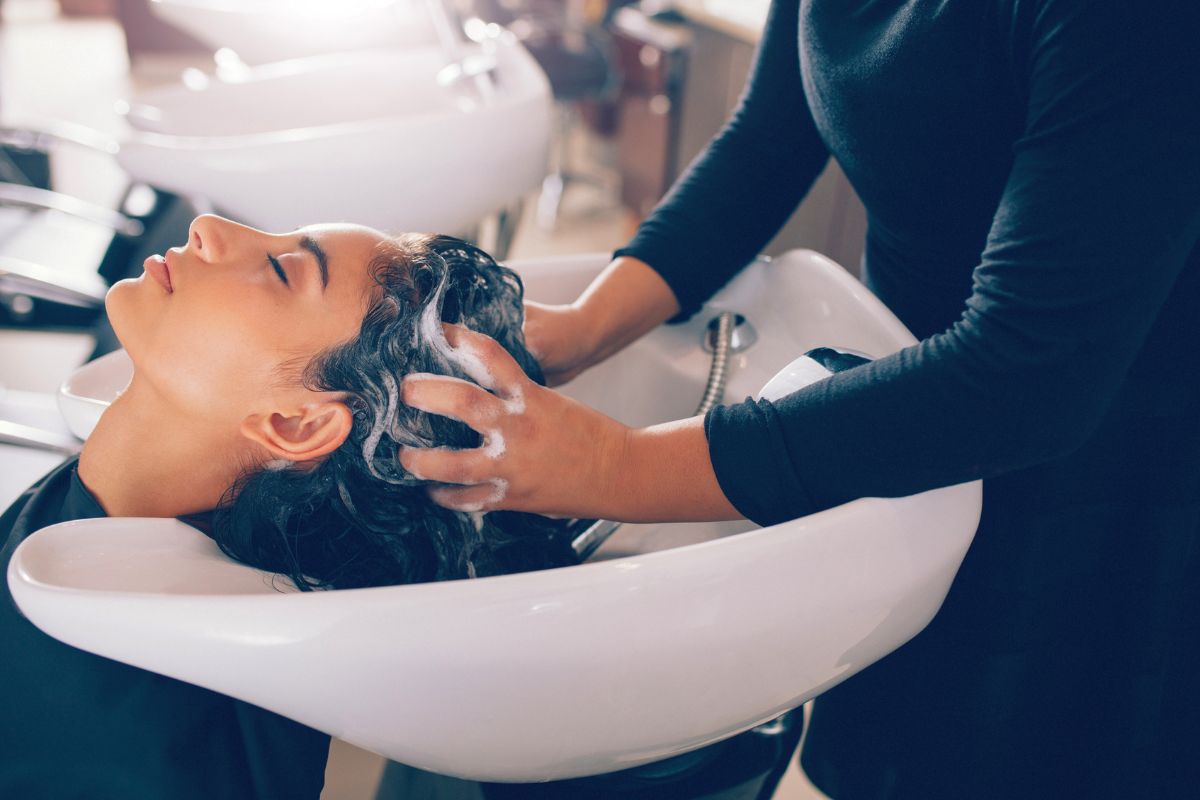
Read the label, because strengths vary wildly. Oily roots or build-up? Wash with your colour-safe shampoo first, then tone it. Wella makes a good point: work on damp hair, not soaking wet, because the water forms a barrier and pigment can’t settle evenly. Blot the excess, then go in generously from root to tip and massage it through. Patchy toning is usually a patchy application.
Rinse with cool or lukewarm water, then condition, as toning formulas aren’t designed to moisturise. L’Oréal Paris suggests a matching purple conditioner or a purple mask if your hair’s dry. And ignore the TikTok hack of using it on dry hair: dry hair is more porous, so pigment grabs unevenly and you get patches. Patch test anything new first.
How Long Should You Leave It On?
| Your hair | Leave it on for |
First go | 2 to 3 minutes |
Warm, golden blonde | 1 to 3 minutes |
Neutral blonde | 3 to 5 minutes |
Cool blonde, bleached or silver | 5 to 15 minutes |
Balayage over a dark base | 5 minutes, then 2 more if needed |
Dry, damaged or porous hair | Less than the label says |
Unless your hair is white or grey, don’t push past 15 minutes. Longer doesn’t mean lighter, just more pigment.
How Often Should You Use Purple Shampoo
Once or twice a week does it for most people. Goldie Locks says two to three times weekly, or whenever brass shows up, while Revlon Professional puts it at one to three times a week, depending on your hair and target shade.
It depends on your porosity, base colour, and how often you wash your hair. Start at once a week and work from there. Keep your colour-safe shampoo in rotation, and if a formula feels strong, mix it with a bit of regular shampoo or dilute it in a spray bottle with two parts water to one part shampoo.
Nexxus flags something useful: the more you use it, the whiter your hair gets, so build up slowly. Just been bleached? Leave your hair alone for 48 to 72 hours, then tone at your next wash.
Is It Safe? The Risks Worth Knowing
Violet pigment won’t wreck your hair, and most of what goes wrong is cosmetic. Over-toning tops the list, so if you’ve gone lilac or grey, a clarifying shampoo lifts it in a wash or two. Dryness is next, which is why Eva NYC and others pair theirs with a toning conditioner or weekly mask. Dr Shari Lipner also knocks down two myths: it won’t lighten your hair, and it won’t repair damage.
Reactions are rare. Contact dermatitis shows up as dryness, flaking, itchiness, a rash, inflammation, burning or stinging, tenderness, and blisters or hives. Rinse it out and stop using it if that happens. Once your skin has settled, a gentle hydrating option such as a hyaluronic acid body wash can help with any leftover dryness. One case study even linked a purple shampoo to chromhidrosis, or discoloured sweat, although that’s rare. Dr Debra Jaliman says to stop using it if you have persistent itching, redness, burning or excessive dryness.
FAQs
Q1. Does Purple Shampoo Lighten Your Hair?
No. It only cancels yellow. It isn’t a dye and can’t lighten dark hair, though toned sections look brighter.
Q2. Will Purple Shampoo Turn My Hair Purple?
Not if you use it in the right way. Overdo it, and very light hair picks up a purple, pink or blue tint. It washes out.
Q3. Can You Use Purple Shampoo On Brown Hair?
Yes, if you’ve got highlights, balayage or lightened strands. On solid dark brown or black, almost nothing happens.
Q4. How Long Does It Take To See Results?
Usually a few washes. If nothing’s budged, use more, leave it on longer, or try a more pigmented brand.
Q5. Is Purple Shampoo The Same As Silver Shampoo?
Yes. Both are violet-pigmented and work identically. Only the name changes.
Q6. Can I Use Purple Shampoo On Bleached Hair?
Yes, and it’s worth it. Wait 48 to 72 hours after bleaching, then use it between appointments.
Disclaimer: The content provided in this article is for informational purposes only and is not intended for promotional use or as a substitute for professional hair care or medical advice. Readers are strongly advised to verify all facts, perform necessary patch tests, and consult with a certified hair specialist or dermatologist before introducing new hair treatments into their routine.