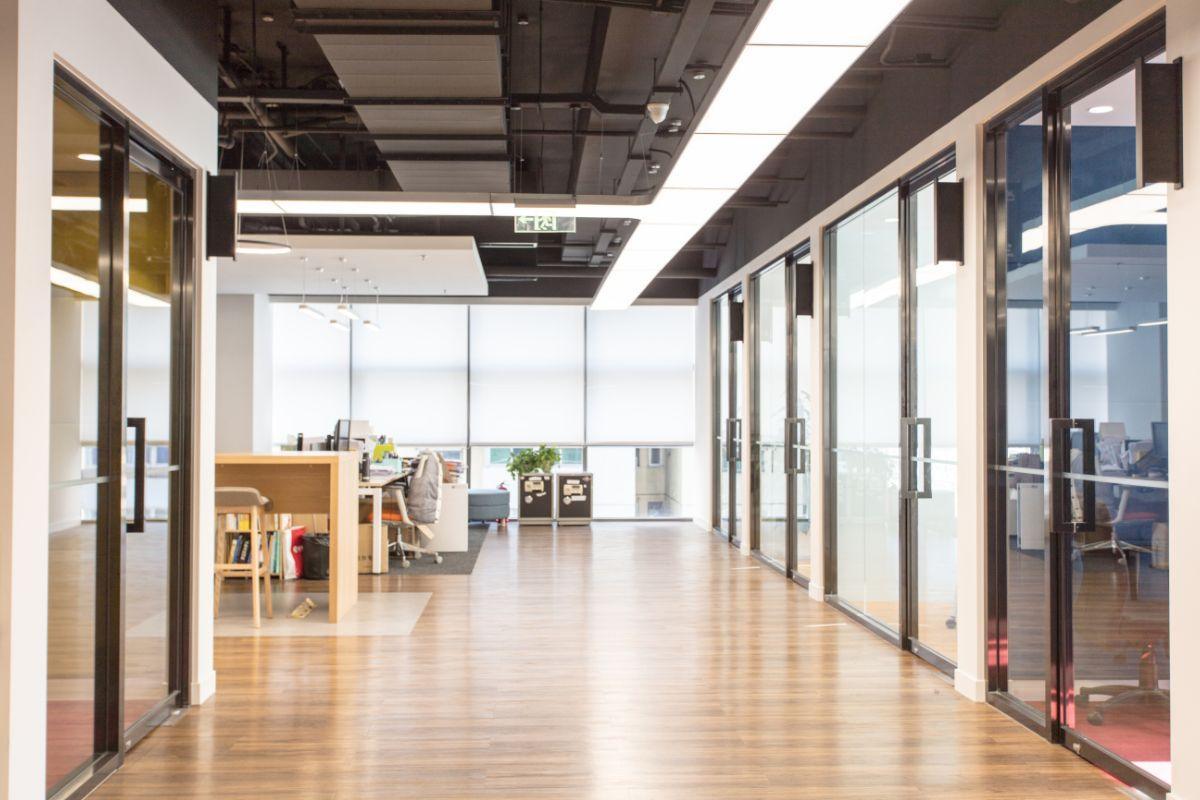
After salaries, commercial property eats up more cash than anything else for most UK businesses. That’s not news to anyone living in London. What might surprise people is just how much of that property budget pays for rooms nobody walks into.
- UK businesses waste billions each year paying rent for empty office space.
- Long-term leases force companies to pay full costs despite low hybrid attendance.
- Downsizing offices is difficult due to high lease penalties and seasonal storage needs.
- The April 2026 business rates revaluation further increased tax bills for large offices.
- Flexible offsite storage helps businesses shrink their footprint and cut overhead costs.
Office utilisation in the UK is currently at around 55%, the highest of any global market but still meaning that on any given day, close to half the desks, meeting rooms and corridors a company rents are completely empty. Physical occupancy measured through building access control is even lower, with industry data recording a UK average of just 37%.
Billions of pounds a year vanish into rent, rates and utility bills for space that does absolutely nothing productive, and most businesses have no clear plan to stop the bleeding.
The Real Cost Of Empty Desks
Even before the pandemic, large office-based firms in England and Wales were burning through £10 billion a year on occupancy costs they didn’t need to be paying. With hybrid working now deeply embedded and commercial rents higher than ever, the real figure today will be larger still.
That covers rent, business rates and all the running costs of keeping a half-empty building ticking over. And remember, that’s only companies with 250-plus employees. Smaller businesses locked into long leases face the same problem on a different scale, because a five-person company overpaying by £15,000 a year will feel that just as sharply as a corporation wasting millions.
How did it get this bad? Most commercial leases lock you in for five to ten years. Companies signed them based on headcount projections or optimistic growth targets, and then hybrid working flipped everything. Suddenly the office designed for 200 people only had 90 in it on a good day. But the landlord doesn’t care. Business rates don’t shrink because your Fridays are quiet, and neither do service charges or energy bills.
ALSO READ: SIC Code For Property Investment Explained: What You Actually Need to Know
Why Downsizing Isn’t Always The Answer
Moving to a smaller office sounds obvious. In practice, it’s a headache. Breaking a lease early can cost a fortune in penalties, and finding somewhere that’s the right size, in the right area, at the right price could take months of searching with no guarantee you’ll find it.
Then there’s the opposite problem that catches businesses off guard at certain points in the year. Seasonal stock piles up, archived paperwork needs to go somewhere, event equipment and trade show materials sit around for weeks, and overflow inventory doesn’t magically disappear just because your office is already packed.
Offsite business storage solves a problem most companies don’t even recognise they have until they’ve run out of room. A business can keep its main premises tight and lean, then store everything else externally, and only pay for the capacity it actually uses at any given time. No year-round lease on a bigger unit just to handle a few seasonal peaks.
The April 2026 Rates Bill Makes It Worse
The business rates revaluation that took effect in April 2026 updated rateable values across England and Wales to reflect rental levels as of April 2024. For offices in areas where rents climbed since the last valuation, that means higher rateable values and bigger bills.
On top of that, England moved from a two-multiplier system to five, and properties with a rateable value above £500,000 now face a higher multiplier of 50.8p. So larger office buildings in London, Birmingham, Bristol and Manchester are getting hit from both directions: a higher valuation and a higher rate applied to it.
For a business already paying rent on space it barely uses, that’s another fixed cost going up with no connection to how much of the building they actually occupy. It makes the case for reducing your footprint even stronger, because business rates scale with the size and value of the space you lease, not the number of desks you fill.
UK Prime Office Space Costs & Est. Waste per Unused Desk by Market
| City / Market | Avg. Prime Rent (£/sq ft/yr) | Est. Business Rates (£/sq ft/yr) | Total Annual Cost per Desk (£) | Est. Annual Waste per Empty Desk (£) |
| London (West End) | £140.00 | £48.00 | £11,500 | £5,175 |
| City of London | £90.00 | £32.00 | £8,200 | £3,690 |
| Bristol | £48.00 | £16.00 | £4,500 | £2,025 |
| Manchester | £45.00 | £15.00 | £4,200 | £1,890 |
| Birmingham | £44.00 | £14.50 | £4,000 | £1,800 |
Source: Commercial Property Market Benchmarks (CBRE, Savills, and Knight Frank UK Office Reports). Waste calculation based on the national average 45% office vacancy/non-utilization rate.
A Leaner Way To Manage Overheads
The maths here won’t take long to work out. Cut your leased footprint by even a modest amount, move surplus items into flexible storage, and the savings will often run into thousands per year. That’s money a business can redirect towards hiring, marketing, product development or just keeping healthier cash reserves.
UK commercial property isn’t getting any cheaper, either. Prime rents hit record levels in early 2026 across London, Birmingham and Bristol, and there’s no sign of that slowing down. Companies that keep treating their property costs as fixed, unchangeable line items will keep haemorrhaging money.
But those willing to question what actually needs to be on-site, and what can live somewhere cheaper, will have far more control over their overheads as prices keep climbing.
ALSO READ: The Role of Asset Valuation in Business Financial Planning
FAQs
Q1. What Is The Average Office Utilisation Rate In The UK?
Average office utilisation in the UK sits at around 55%, with physical occupancy measured by building access control averaging just 37%.
Q2. How Much Money Do UK Businesses Waste On Unused Office Space?
Large office-based firms in England and Wales waste over £10 billion annually on rent, business rates, and running costs for space they do not use.
Q3. Why Is Moving To A Smaller Office Difficult For UK Businesses?
Breaking long-term commercial leases early incurs severe penalty costs, and smaller offices struggle to handle temporary spikes in seasonal stock or archive storage.
Q4. How Does The April 2026 Business Rates Revaluation Impact Commercial Property Bills?
Updated rateable values and higher multipliers for properties valued over £500,000 mean larger regional and London offices face significantly bigger tax bills regardless of occupancy.
Q5. How Can Flexible Offsite Storage Help Businesses Save On Property Costs?
Offsite storage enables companies to downsize their primary office footprint and pay only for extra storage capacity when they actively require it.
Sources & References
- CBRE. (2026). 2026 global workplace & occupancy insights.
- HM Revenue & Customs & Valuation Office Agency. (2026). Business rates revaluation 2026.
- Wikipedia contributors. (2026). Hybrid work. Wikipedia.
- JLL. (2026). Global occupancy planning benchmark report 2026.
- House of Commons Library. (2025). Business rates: The 2026 revaluation.
- Remit Consulting. (2025). Highest UK average office occupancy rates for five years.
Disclaimer: The information provided in this article regarding UK commercial property, office lease management, business rates, and storage solutions is intended strictly for general informational and educational purposes only and does not constitute financial, legal, or professional real estate advice. This content is not created for promotional or endorsement purposes. While every effort has been made to ensure accuracy, market conditions and statutory regulations fluctuate; readers are strongly advised to independently verify all figures, terms, and tax revaluations, and to consult with qualified professional advisors before making any commercial decisions.