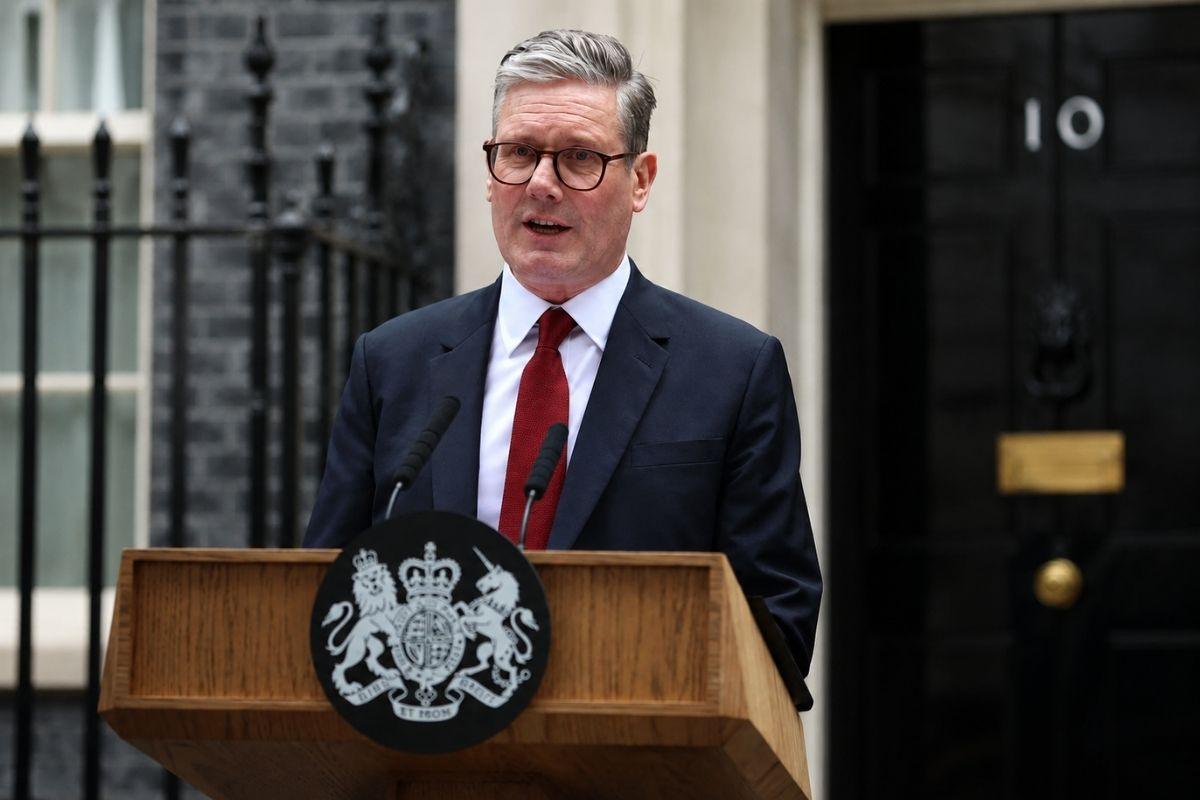
Keir Starmer has resigned as Prime Minister, stepping out of 10 Downing Street on Monday morning to deliver the news that British politics had been bracing for. Two years ago, Starmer walked into Downing Street off the back of the kind of election result Labour hadn’t seen in decades. Now, at 63, he’s walking back out — this time for good.
His wife, Victoria, stood beside him as he spoke, a quiet but visible show of support. The statement itself was measured, even dignified, though the weight of the moment was hard to miss. “Every decision I have taken is about putting the country I love first. That is why I will resign,” he told the assembled press.
The writing had been on the wall for some time. Last month’s local elections were brutal. Labour haemorrhaged council seats at a scale that left little room for spin, and the fallout inside the parliamentary party was immediate. Over 100 Labour MPs — roughly one in four of those in the Commons — publicly demanded he go, or at the very least tell them when he planned to. Starmer pushed back for weeks, repeatedly telling anyone who asked that he had no intention of leaving before the country next went to the polls. That position unravelled over the weekend, which he reportedly spent at his country retreat as the last of his internal support quietly slipped away.
Starmer didn’t dress it up. In his statement, he was remarkably straightforward about why he had reached this point — acknowledging that enough of his own MPs had simply stopped believing he was the right person to take Labour into the next election, due in 2029. “The question my party is asking now is whether I am best placed to lead us into the next general election. I have heard the answer from my parliamentary party to that question, and I accept that answer with good grace,” he said.
Despite the circumstances of his exit, Starmer used the occasion to make a robust case for his government’s record. He pointed to economic growth outpacing the UK’s European neighbours, wages rising above inflation every single month since Labour took office, and what he described as the largest expansion of workers’ and renters’ rights in a generation. He also highlighted a significant increase in defence spending — the biggest since the Cold War, he claimed — alongside falling NHS waiting lists, reduced Channel crossings, and policy changes that lifted around half a million children out of poverty.
The moment turned visibly personal as he approached the end of his speech. Starmer, a figure his opponents often criticised for appearing cold or robotic, visibly struggled to hold back tears as he spoke about his family. He told those watching that when he leaves the biggest job in the country, he looks forward to focusing on what he called the most important one — being a husband to his wife, Victoria and a father to his children.
ALSO READ: The Most Mispronounced Places In London That Sound Nothing Like They’re Spelt
What Happens Next
Starmer is not leaving immediately. He will stay on as caretaker Prime Minister while Labour runs a formal leadership contest. The party expects to open nominations on 9 July, and if things move without too much friction, Britain could have a new Prime Minister in place by September.
All eyes are already on Andy Burnham. The former Greater Manchester mayor won a parliamentary by-election just last week and is due to be sworn in as an MP later today — a remarkably swift return to Westminster that many read as a direct leadership tilt. He goes in as the clear favourite.
The endorsements are already stacking up. Wes Streeting, who quit as Health Secretary last month in a very public show of no confidence in Starmer, backed Burnham on Monday morning and urged the rest of the party to fall in behind him. Whether the contest becomes a coronation or a genuine race remains unclear, but the momentum is firmly in Burnham’s direction.
A Decade Of Instability
Starmer’s departure reinforces a deeply unsettling pattern in British political life. His successor will become the country’s seventh Prime Minister since the Brexit referendum a decade ago — a level of leadership turnover not seen in Britain for nearly two centuries.
David Cameron left after losing the 2016 vote. Theresa May spent years attempting to negotiate an EU exit before she too stood down. Boris Johnson was forced out over a conduct scandal. Liz Truss lasted just 45 days. Rishi Sunak was swept out in Labour’s 2024 landslide. Now Starmer joins that list.
The relentless churn reflects a deeper frustration among the British public — over the cost of living, struggling public services, and the unresolved aftershocks of Brexit. Whoever steps into Number Ten next will inherit those same pressures, along with a Labour Party that needs to rediscover its sense of direction before the next election arrives.
Sources & References
- CNBC. (2026, June 22). Keir Starmer resigns as UK Prime Minister.
- NPR. (2026, June 22). Keir Starmer steps down as UK Prime Minister.
- Washington Post. (2026, June 22). UK Prime Minister Starmer resigns as Labour government seeks reboot.
- Fox News. (2026, June 22). Labour revolt forces Keir Starmer out as British Prime Minister after local election losses.
- ABC News. (2026, June 22). Keir Starmer resigns as UK Prime Minister.
Disclaimer: This article is provided solely for informational and educational purposes. The content is based on publicly available information and does not constitute political, legal, financial, or professional advice. References to individuals, organizations, or external resources should not be interpreted as endorsements or promotional material. Readers are encouraged to verify information independently through official and authoritative sources.