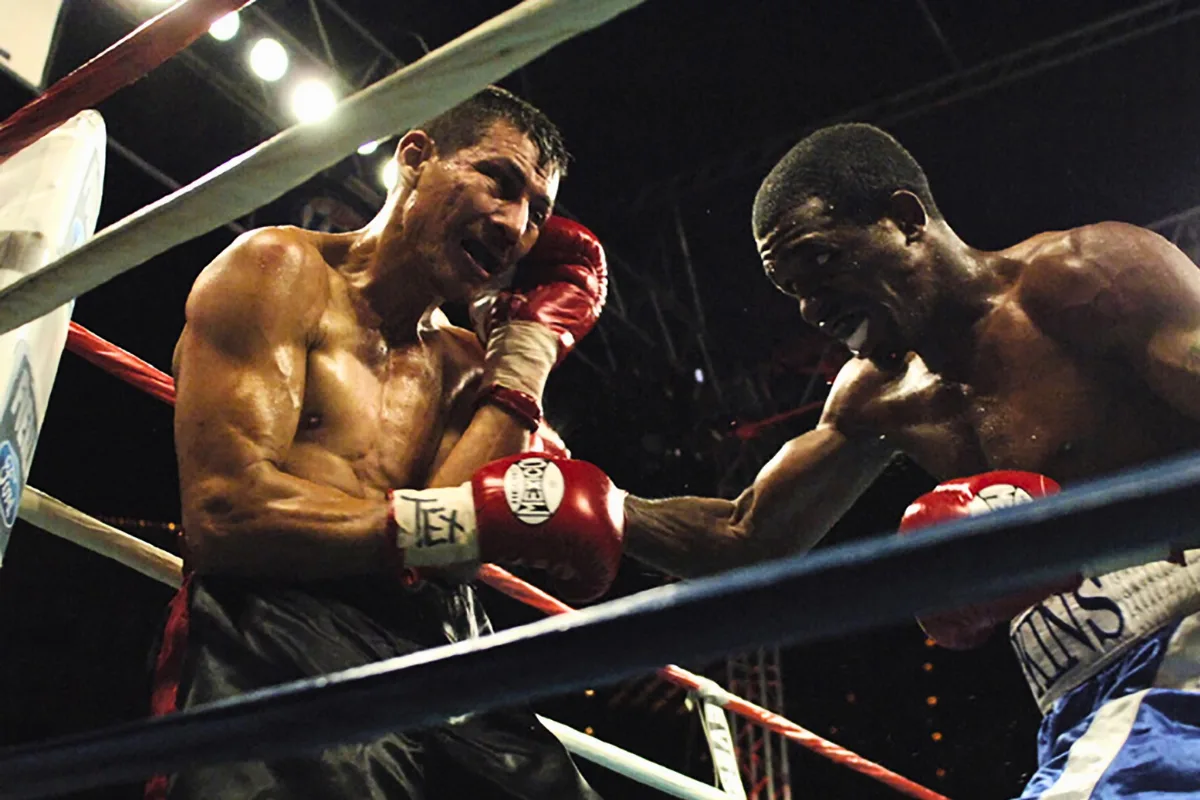
What is the hardest sport in the world? Not football. Not rugby. Not MMA. It is boxing and the numbers, the science and every battered former fighter will tell you exactly the same thing.
- ESPN ranked boxing the hardest sport out of 60 assessed across 10 athletic categories.
- Fear management scored boxing an 8.88 average among the top four sports on the entire list.
- Boxers have no teammates. Every loss lands squarely on one person.
- Weight cutting before bouts adds enormous physical and mental strain.
- Boxing carries the highest concussion rate of all contact sports.
- The sport dates back to the Ancient Olympics of 688 BC.
ESPN once put sixty sports through a forensic ranking system across ten different athletic categories. Boxing came out on top. Above hockey, above American football, above every martial art on the list. That was not a fluke.
Why Does Nobody Tell You How Hard It Actually Is?
Boxing is cruel. The punches look simple. Jab, cross, hook, and uppercut – a beginner can learn them all in just one session. But throwing them at a trained human being who is simultaneously trying to knock you unconscious? That is a different scenario.
Most people grasp the basics within a few months. Building real timing, sharp defence, and genuine ring intelligence takes years of grinding, consistent work.
Ed Latimore, a professional boxer who finished his career with 13 wins, 1 loss, and 1 draw, says that if you are keen to learn to box, the very first thing you need to understand is that it is hard.
There are no belts to mark your progress, as in Brazilian jiu-jitsu, where reaching black-belt level takes at least a decade. In boxing, the only honest measure of where you stand is what happens inside those ropes.
ALSO READ: What Is The Most Popular Sport In The United Kingdom? Here’s Everything You Should Know
The ESPN Rankings That Proved It
When Breaking Muscle examined ESPN’s comprehensive sport-by-sport breakdown, the result was clear. Sixty sports. Ten categories. Speed, power, endurance, nerve, durability, hand-eye coordination, analytic aptitude — everything you can imagine was scored on a scale of zero to one hundred.
Golf, which many people assume is brutally difficult, scored a measly 1.63 in the speed category. Football, basketball, and baseball all cracked the top ten. But boxing sat above them all, earning an overall difficulty score of 72.375 out of 100 to narrowly edge out Ice Hockey (71.750) and American Football (68.375) as the most demanding athletic endeavour on the planet.
The single category where boxing dominated most convincingly was nerve. It is defined as the ability to overcome fear. Boxing scored an 8.88 average there, placing it among the top four sports on the entire list. That figure tells you everything you need to know about why this sport is in a category of its own.
| Rank | Sport | Endurance | Strength | Power | Durability | Nerve | Total Difficulty Score |
|---|---|---|---|---|---|---|---|
| 1 | Boxing | 8.63 | 8.13 | 8.63 | 8.50 | 8.88 | 72.38 |
| 2 | Ice Hockey | 7.25 | 7.13 | 7.88 | 8.25 | 6.00 | 71.75 |
| 3 | American Football | 5.38 | 8.63 | 8.13 | 8.50 | 7.25 | 68.38 |
| 4 | Basketball | 7.38 | 6.25 | 6.50 | 7.75 | 4.13 | 67.88 |
| 5 | Wrestling | 6.63 | 8.38 | 7.13 | 6.75 | 5.00 | 63.50 |
Source: ESPN Page 2 – Sport Skills Degree of Difficulty Index
Why Fear Is The Whole Point In Boxing?
In skiing, a dangerous mountain is not trying to destroy you with intent. In rugby, a knockout is a side effect. In boxing, your opponent walks into that ring with one specific objective to hurt you.
As Breaking Muscle’s analysis put it, that singular fact makes boxing intoxicating, brutal, and barbaric all at once. It also makes it the most mentally exhausting sport that exists.
Fear burns through energy faster than any physical exertion. Champions like Muhammad Ali, Manny Pacquiao, Sugar Ray Leonard, and Mike Tyson all had to face that fear every time they climbed through those ropes.
Pacquiao grew up so poor his father allegedly ate his dog. Leonard had survived brutal personal trauma. Tyson endured a deeply troubled childhood where his mother fed him drugs from a very young age.
Tim Grover, the personal trainer of Michael Jordan and Kobe Bryant, wrote in his book Relentless that all great competitors have a dark side they must harness. A driving force that pushes them through suffering when everything else tells them to quit. Boxing demands that dark side like no other sport.
ALSO READ: Martin Bayfield: From England Rugby Star To Harry Potter’s Hagrid Double
You Are Completely On Your Own
The Sports Bank makes a point that most people never think about. In boxing, there is no team. A footballer having a nightmare can be substituted. A basketball player can pass the ball. A boxer has nobody.
When you step between those ropes, every decision, every mistake, and every moment of weakness is yours alone.
That produces something rare: real, unfiltered personal accountability. Fighters can spend months in brutal training camps only to find themselves overwhelmed the moment the bell rings. One defeat can shake a fighter’s confidence to its foundations.
There is, literally and figuratively, nowhere to hide. As The Sports Bank noted, it is a sport that forces people to grow up quickly and develop emotional resilience at a pace that most team sports simply cannot replicate.
The Physical Punishment Is Like Nothing Else
Before a boxer even throws a punch in competition, their body has already been through something extraordinary. Weight management is one of the most taxing elements of the sport. Research published in sports science journals shows that over 80% of combat athletes engage in extreme rapid weight loss, with fighters routinely shedding 5% to 10% of their total body mass within just 3 to 7 days prior to official weigh-ins.
Combine that severe dehydration and caloric deficit with an exhaustive training load and the strict diet and nutritional planning required before every fight, and you have a recipe for physical and mental strain that leaves athletes competing on the verge of physiological collapse before the first bell even rings.
Then there is the relentless damage inside the ring. Clinical studies in sports neurology show that professional bouts produce an average of 25 to 30 direct head impacts per 100 fight rounds. As a result, epidemiological data indicates that up to 20% of professional boxers develop symptoms of chronic traumatic encephalopathy (CTE) or long-term chronic traumatic brain injury during or after their careers. These are not theoretical risks.
They are documented, ongoing consequences that every boxer consciously accepts.
What Are The Tactics People Forget About?
The phrase “sweet science” exists for a reason. Boxing is not two people swinging wildly at each other. It is chess at full speed with physical consequences. Fighters study opponents, adapt mid-round, and exploit tiny openings in fractions of a second.
The legendary bout between Julio César Chávez and Meldrick Taylor showed this perfectly. Taylor boxed brilliantly on points for most of the fight, but Chávez’s relentless power and patience broke him down until the referee stopped it with just two seconds left.
That is boxing at its most intense. Brutal, intelligent, and completely unforgiving — it is the hardest sport in the world, and it is not even close.
Sources & References
- Ed Latimore. (2026). Is boxing hard to learn?
- Breaking Muscle. (2026). Why boxing is the toughest sport.
- The Sports Bank. (2026). Why boxing is hands‑down the toughest sport of all.
- Wikipedia. (2026). Boxing.
- British Journal of Sports Medicine. (2022). Combat sports and athlete health: Rapid weight loss and performance outcomes. British Journal of Sports Medicine, 56(13), 718.
- Journal of Strength and Conditioning Research. (2021, April). Rapid weight loss in combat sports. Journal of Strength and Conditioning Research, 35(4), 1028‑1036.
- ESPN. (n.d.). Sport skills ranking: Toughest sports in the world. ESPN Page 2.
Disclaimer: This content is provided strictly for educational and informational use. It does not serve to advertise, endorse, or promote boxing, any organisations, or associated products and services. Readers are encouraged to confirm details through official sources before acting upon them. Neither the publisher nor the author accepts liability for any decisions made based on the material presented.