Chicken thighs have had a proper glow-up in UK kitchens. Not because they’re trendy. Because they work. They stay juicy, they taste like actual food, and they don’t punish you if you slightly overcook them. And in a week where life’s busy, that matters.
But then the questions start. Are thighs “less healthy” than breasts? Are they too fatty? Do they still count as high protein? And what changes if you take the skin off?
So let’s tell you all about the nutrition facts chicken thighs fans should know and the bits people often miss.
Why Chicken Thighs Feel More Filling Than Chicken Breast
Here’s the simple reason: chicken thighs usually carry more fat than chicken breasts, and fat slows digestion. That tends to keep hunger calmer for longer. That “I’m satisfied” feeling after a meal isn’t just in your head. It’s how food behaves once it hits your system.
Protein helps too, of course. Thighs still give you a solid protein hit, especially if you’re eating them as the main part of a plate rather than a token garnish.
Now, before anyone panics: fat isn’t automatically bad. The issue is portion size, cooking style, and what else you pile on. Crispy skin plus buttery mash plus creamy sauce is delicious, but it’s not the same as a roasted thigh with veg and a squeeze of lemon.
The Core Nutrition Facts Chicken Thighs Offers
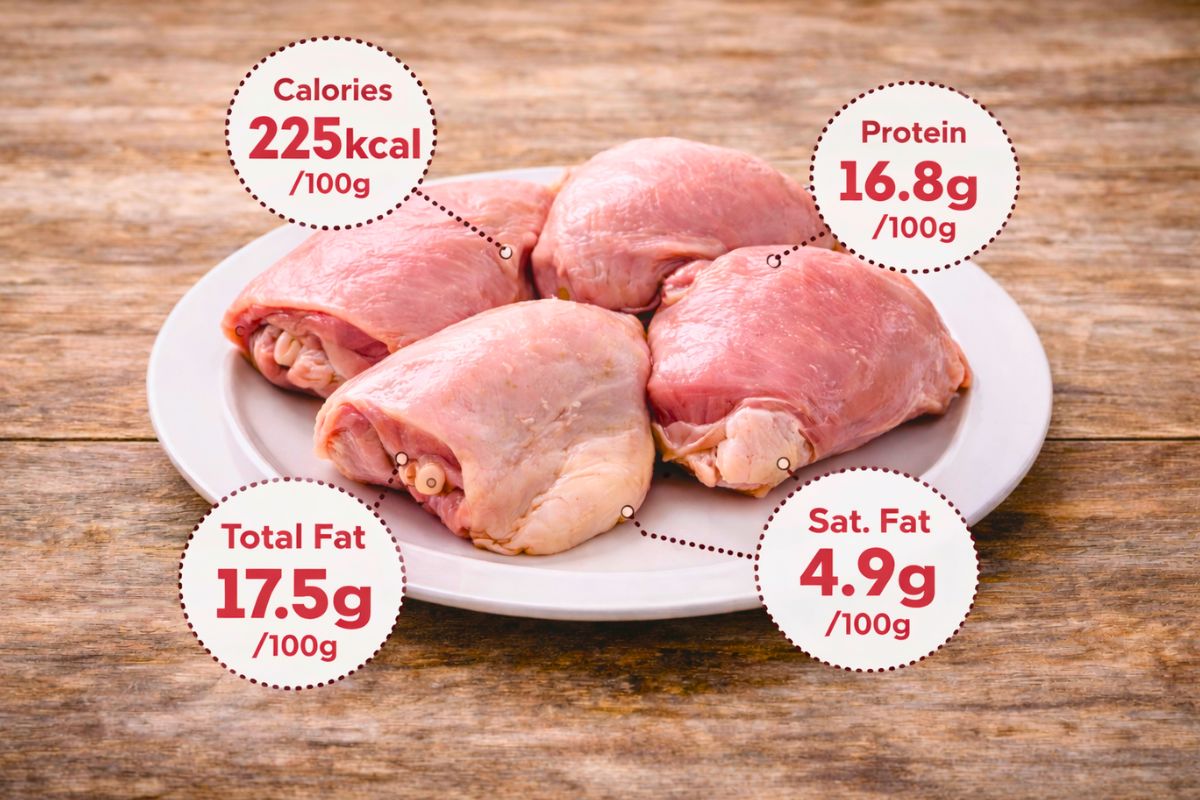
These figures represent a typical “medium” supermarket thigh sourced in the UK. Note how the “skin-on” version dilutes the protein percentage because fat takes up more of the 100g weight.
| Type (Raw, per 100g) | Energy (kcal) | Protein (g) | Total Fat (g) | Sat. Fat (g) | Health Context |
|---|---|---|---|---|---|
| Skinless Thigh Fillet | 125 kcal | 21.0 g | 4.5 g | 1.2 g | Lean & high in protein; ideal for fat loss. |
| Chicken Thigh with Skin | 225 kcal | 16.8 g | 17.5 g | 4.9 g | Higher energy; best for satiety/flavour. |
| Chicken Breast (Ref) | 106 kcal | 24.0 g | 1.1 g | 0.3 g | The baseline for “ultra-lean”. |
A small but important note: that skin-on number is calculated from the “per thigh” data on the source page, scaled down to 100 g for easier comparison.
So if your goal is lower calories, skin matters. A lot.
And yes, thighs are still protein-forward food. They’re not a salad leaf pretending to be dinner.
The 20g Protein Rule: In the UK, we often hear the term “high protein” thrown around loosely, but it actually carries weight in food labelling. In general, if a food purports to be a powerhouse for maintaining muscle or refuelling after the gym, you want a solid hit of protein per serving. A skinless thigh fillet (with around 21g of protein per 100g) comfortably hits this mark and you won’t have to stretch yourself too far.
It even suits Public Health England (PHE) guidance, so it is a good go-to for anyone aiming to hit those daily protein targets without the overprocessed, “cardboard” texture of fortified shakes or bars.
Micronutrients: The Bit People Forget
Everyone thinks of calories and protein, but thighs have useful minerals, too. Darker meat is richer in iron and zinc than very lean cuts, and that can be a big deal if you’re frequently tired, training hard or not eating much red meat.
You’ll also find B vitamins naturally occurring in chicken overall, such as B6 and niacin, which aid metabolism for everyday energy.
If you’re concerned about heart health in particular, always pay attention to saturated fat as a part of your total day. UK advice usually refers to keeping saturates down in general, not banning single foods. That’s why the cooking method and portion sizes make such a difference.
Is The Fat In Thighs Bad?
While we often focus on the minerals, the “fatty” reputation of dark meat usually leads to questions about heart health. To put it into perspective, the NHS suggests a limit of 30 g of saturated fat per day for men (20 g for women).
A single skinless thigh contains roughly 1.2 g of saturated fat, which is a tiny fraction of that limit. Even if you keep the skin on, you’re looking at about 4.9 g. It’s clear that thighs fit comfortably within a balanced UK diet, provided you aren’t deep-frying them in lard. The implications of the cholesterol in thighs are far less significant than the way you choose to cook them.
The Cooking Method Changes The Story
This is where people accidentally sabotage the “healthy protein meal” idea.
Chicken thighs can go from sensible to heavy just by what you cook them in.
Here’s a practical view:
| Cooking Style | What Usually Happens | The Nutrition Knock-On |
|---|---|---|
| Oven roast on a tray | Fat renders out, especially with skin on | Often lower than frying, but skin still adds calories |
| Air fryer | Renders fat fast, crisp finish | Great if you like skin but want less grease sitting on it |
| Pan fry in oil | Extra fat sticks around | Easy to overshoot calories without noticing |
| Slow cook in sauce | Collagen breaks down, meat gets tender | Sauce can add sugar, salt, and extra calories quickly |
And sodium is the sneak attack. Plain chicken is naturally low in salt, but pre-seasoned or “flavour-infused” packs can be a totally different situation. If you’re watching blood pressure, that label matters more than most people think.
Skin On Vs Skinless: The Honest Rule
If you love crispy skin, you’re not a villain. Just be clear about the trade.
Skin adds flavour. It also adds a chunky amount of fat and saturated fat. That’s not a moral issue; it’s maths.
A lot of people do this trick, and it actually works: cook the skin on for moisture, then remove the skin before eating. You keep the juiciness from cooking, but you don’t eat all the extra fat that came with it. Not perfect, but pretty clever.
And yes, if you’re specifically searching skinless chicken thigh nutrition facts, you’re basically aiming for that leaner row in the table above.
Thighs Vs Other Cuts: What You’re Really Choosing
Chicken breast has the reputation for being the “clean” option because it’s very lean. That’s true in the simplest calorie sense.
But thighs often win in real life because people actually enjoy them and stick to the plan. A dry breast can make someone feel like healthy eating is punishment. A well-cooked thigh feels like dinner.
If you want a straightforward way to decide:
- Trying to cut calories: go for skinless thigh or breast, and watch oils.
- Trying to stay full and stop snacky evenings: thighs often help.
- Feeding a family: thighs are usually better value and more forgiving.
That’s why the nutrition facts chicken thighs conversation always comes back to context. Not one “best” choice.
ALSO READ: Traditional Croatian Food: Is It Similar to Italian or Greek Cuisine? Find Out!
Pro Tip: The “Yellow Sticker” Trick
If you’re trying to do protein on a budget, the “Reduced to Clear” shelf is basically your best mate. In places like Tesco, Sainsbury’s, and M&S, chicken thighs show up there all the time.
A lot of the best bargains pop up later in the day when staff start clearing what won’t sell before the date rolls over. And midweek can be especially good.
If you spot decent thighs, especially organic or free-range, grab them. Go straight home, portion them out, and freeze them.
Portion Sizes That Make Sense In The UK
Most people don’t eat “100g raw” in real life. They eat a couple of thighs and get on with their day.
A useful mental picture:
- One medium thigh, cooked, gives a decent protein portion for many adults.
- Two thighs is common at dinner, especially if it’s your main protein and you’ve got plenty of veg on the side.
If weight loss is the aim, the easiest win isn’t banning thighs. It’s choosing skinless more often and not doubling fat with creamy sauces, extra oil, and cheese on top.
Sourcing And Labels: Quick UK Reality Check
If you care about farming standards, look for clear UK assurance schemes and decent labelling. And if you’re comparing packs, compare them like for like.
Bone-in thighs will look “higher calorie” per piece partly because the weight includes bone, and nutrition panels can get confusing fast. Boneless skinless packs are easier for tracking.
Also, if you see words like “seasoned”, “marinated”, or “southern fried”, just assume the sodium and calories have changed, and check the back.
ALSO READ: The Art of Cooking The Perfect Corned Beef Hotpot That Never Lets You Down
The Welfare Check: Why British Standards Matter
When you’re standing in the chicken aisle staring at packet after packet, those little logos can actually help. Red Tractor, for example, is a quick way of saying this meets UK farming and food standards.
Chicken sold in the UK isn’t raised with growth hormones. Full stop. So “no added hormones” claims are mostly noise.
A chicken thigh is still a chicken thigh. What you’re really buying is reassurance about how it was produced and tracked.
In a normal weeknight shop, peace of mind is often worth more than another flashy claim on the pack.
The Bottom Line
Chicken thighs aren’t a “cheat food”. They’re just honest. They taste good, they fill you up, and they’re flexible.
If you keep the skin on, you’re choosing more calories and fat. If you go skinless, you’re getting a leaner, still satisfying protein option.
Anyway, next time someone tells you thighs are “bad”, ask them how they cooked them. That’s usually where the truth is hiding.
Quick Reference: The Chicken Thigh Cheat Sheet
If you’re in a hurry at the shops, keep these three rules in mind:
- The Swap: Switching from skin-on to skinless chicken saves you nearly 100 calories and 13 g of fat per 100 g.
- The Prep: Air-frying or roasting chicken on a rack lets excess fat drip away.
- The Buy: Look for the Red Tractor logo.
FAQs
Q1. Are Chicken Thighs Healthy?
Chicken Thighs can be. They’re a good protein source, and they’re easy to cook without drying out.
Q2. Are Chicken Thighs Worse Than Chicken Breast For Fat Loss?
Not automatically. Skinless Chicken Thighs can fit fine.
Q3. Why Do Thighs Have More Calories?
Mostly because of fat, especially if the skin stays on.
Q4. Are Pre-Seasoned Chicken Thighs Okay?
Taste-wise, sure. Nutrition-wise, check sodium.
Q5. What’s The Best Way To Cook Chicken Thighs For A Lighter Meal?
Roast or air fry, and keep sauces simple.
Sources And References:
- Office for Health Improvement and Disparities, “Composition of Foods Integrated Dataset (CoFID),” GOV.UK.
- NHS, “Saturated Fat Guidelines,” NHS.uk.
- Red Tractor Assurance, “Farming Standards and Traceability,” RedTractor.org.uk.
- MoneySavingExpert, “Guide to Supermarket Yellow Stickers.”
Recommended