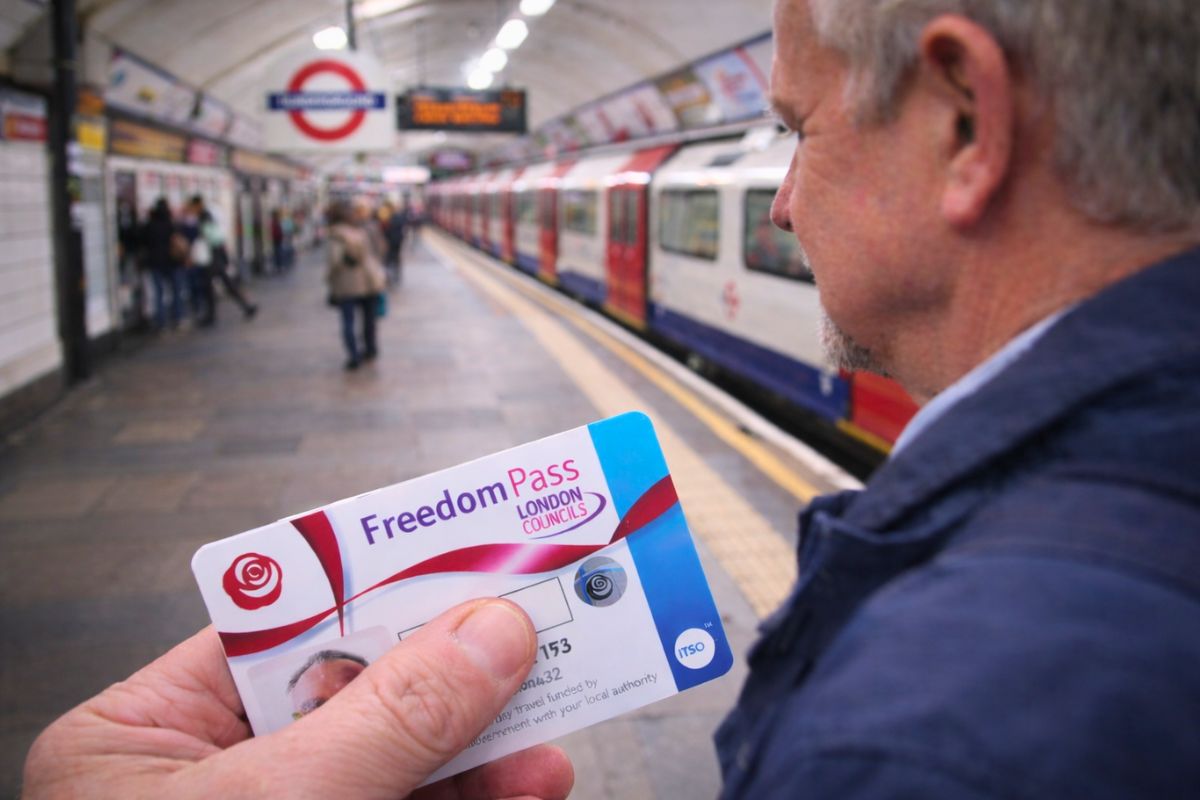
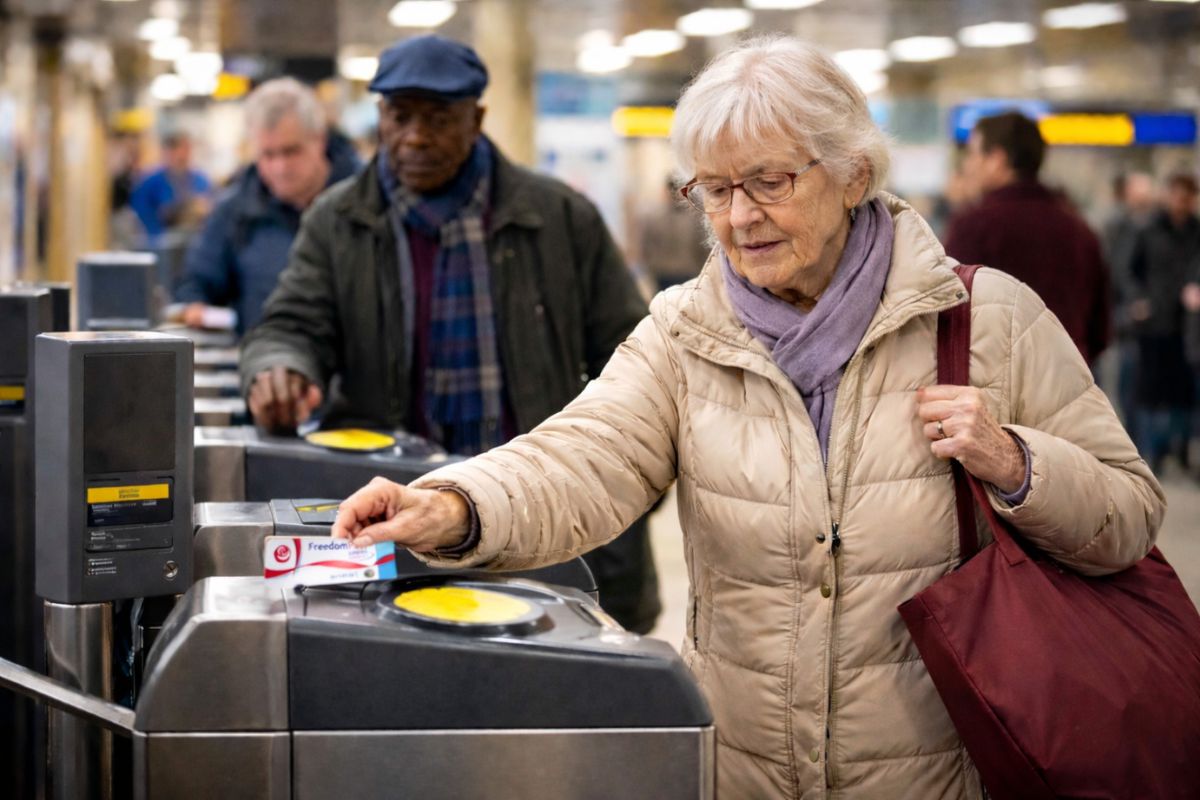
The first time you really notice the Freedom Pass London isn’t in a press release or a council report. It’s on a cold platform; when the train’s late, the wind is cutting through everyone’s coat, and a pensioner in front of you taps in with that familiar red card like it’s no big deal.
Beep. Gate opens. Off they go.
No fuss, no scramble for a top-up and no quiet panic about whether the fare has gone up again. Just movement. That’s the whole magic of it.
And in London, movement is everything. It’s hospital appointments that don’t get delayed because the trip costs too much. It’s popping over to see a mate when you’d otherwise stay home and stew in the silence. It’s grandparents doing the school run, volunteers getting to a charity shop shift, and someone with a disability being able to say yes to life without doing mental maths first.
That’s why the Freedom Pass London scheme has such a grip on the city’s emotions. It’s not just a travel perk. It’s a safety rail. And right now, in January 2026, it’s also right in the middle of a row about money, fairness, and what London can afford. The predicted cost for the scheme in 2026–27 has been widely reported at around £372 million, and it’s triggered real talk about whether parts of the benefit could be cut back.
So let’s do this properly. What it covers. Who gets it? How it works day to day. What’s being argued about? And what’s actually at stake for real people trying to get across town.
What The Freedom Pass Actually Is
Think of the Freedom Pass as more than just a bit of plastic. For Londoners, it’s the key to the city. You tap it, the gate beeps, and you’re through—no worrying about top-ups or peak-hour fares draining your bank account.
There are really two versions that matter:
- The Older Person’s Pass: This kicks in when you hit the state pension age (currently 66). It’s a “statutory” benefit, which is a fancy way of saying it’s protected by law.
- The Disabled Person’s Pass: This is for residents with specific disabilities. A big plus here? Unlike the age-based pass, this one usually works 24/7. No standing around waiting for the 9:00 AM “off-peak” clock to start before you can travel for free.
They might look similar, but the rules on where you can actually go vary wildly.
The Elizabeth Line & Rail Trap
One of the biggest headaches in 2026 is the “all passes are the same” myth. They aren’t. If you’re a Londoner with a Freedom Pass, the Elizabeth Line and National Rail (within the city) are included. But if you’re visiting from out of town with a standard National Bus Pass (ENCTS), that “Lizzie Line” trip will cost you. Your London pass is an all-access key; theirs is just for the bus.
Look For The Red Rose
Flip your card over or check the corner. See that tiny Red Rose? It’s not just a bit of English branding. It’s actually a “passport” for the rest of the country. That symbol means your London card doubles as a national bus pass. You can hop on a local bus in the Lake District or down in Cornwall and pay nothing. Just remember: outside London, it’s strictly for buses and generally only works during off-peak hours (9:30 AM to 11:00 PM).
Where You Can Use It And When
This is where people get caught out, so it’s worth being plain.
For using the pass on local buses outside London, TfL says it’s valid from 9:30am to 11pm on weekdays and any time on weekends and public holidays. Here is the Freedom Pass Boundary Map (PDF).
Within London, the Freedom Pass covers the core TfL network and also National Rail services within Greater London, with time restrictions that are especially relevant on weekdays. The Freedom Pass site spells out a key rule for National Rail use: after 9:30am on weekdays and any time on weekends and bank holidays.
In real life, that means the pass is brilliant for off-peak travel. It’s less helpful for early morning weekday journeys for older pass holders.
Disabled pass holders often have wider access, but routes and operators can still have specific rules, so it’s always worth checking the official pages before planning something tight.
ALSO READ: Ten Cracking Spots You’ve Got to See in London
Who Can Get A Freedom Pass In London
The eligibility is basically split in two.
- Older person eligibility tracks the state pension age rules, which are now aligned for men and women.
- Disabled person eligibility is based on set categories, such as being registered blind, profoundly or severely deaf, having certain mobility issues, or meeting other statutory criteria. The Freedom Pass site breaks down the “where and when” rules for disabled pass use and the National Rail limitations that can apply.
If you’re helping a parent, neighbour, or relative, the simplest safe approach is this: check the official Freedom Pass portal and TfL’s own page, because those two tend to be the cleanest source of truth when rumours start flying around social media.
How To Apply For The Freedom Pass
Applying is usually straightforward, but it’s still paperwork. Expect the usual trio:
- Proof of identity
- Proof of London address
- A photo that meets the requirements
People apply online or via their local council route, and the card gets posted out once approved. The Freedom Pass site is the main hub for practical usage rules, and the TfL page explains how it works on the network, including the national bus element.
Pro Tip for 2026: If your pass expires on March 31, 2026, check your mail. Many passes are being auto-renewed this year to save on admin costs, but you must ensure your address is correct on the portal, or you’ll be charged a £14.35 replacement fee for a new card.
If your Older Person’s pass hasn’t arrived by the end of January 2026—or your Disabled Person’s pass by the end of February—contact London Councils immediately.
Why The Freedom Pass Is In The News Again
This is the bit that’s been causing the noise. The scheme’s cost is expected to rise to around £372 million, and that number has been a headline hook for months. It’s a significant jump that has put London’s 32 boroughs under intense financial pressure.
Once that figure landed, several proposals started doing the rounds, including the idea of scaling back what the pass covers. Londonist reported that restricting the pass to “bus only” was floated as a way to save roughly £148 million annually—effectively stripping pensioners of their right to use the Tube and Overground for free.
The debate reached a boiling point in mid-January 2026. While some officials argued the current model is “more than boroughs can afford,” the proposal hit a massive political wall.
ALSO READ: Where to Throw the Perfect Party in London: A Local’s Guide to the Best Venues
The Current Standoff:
- The Block: On January 14, 2026, the Labour Group of London Councils—representing 21 of the 32 boroughs—took a stand, formally vowing to block any cuts to the pass. Mayor Sadiq Khan was quick to back them, doubling down on his view that the pass is a “vital lifeline” that simply cannot be touched.
- The “Active” Review: But here’s the catch: the review hasn’t technically hit a dead end. Because that 11.8% cost spike is a hard mathematical reality, London Councils is still quietly hunting for other ways to bridge the funding gap.
- What’s on the Table: While the nightmare scenario of losing Tube or Train access has been shelved for now, the focus has shifted to “back-end” survival. This means aggressive lobbying for central government cash and a much tighter grip on the renewal process to ensure only current residents are holding the cards.
The “bus-only” threat might be off the table for now, but the money pressure isn’t going anywhere. With local elections looming this May, the Freedom Pass has turned into a massive “doorstep issue”. Groups like Age UK London are already warning that older Londoners won’t be looking away anytime soon—they know this is a city that runs on movement, and they aren’t willing to give theirs up.
The “Allsopp-Rosen” Debate
- The Spark: In late 2025/early 2026, the Freedom Pass became a trending topic not just because of council budgets, but because of a viral social media row between TV presenter Kirstie Allsopp and beloved children’s author Michael Rosen.
- The Argument: When Rosen (79) tweeted about his faulty Freedom Pass, Allsopp argued that successful people should “stop taking things they do not need,” claiming that universal free travel for the wealthy was “bankrupting our country.”
- The Backlash: Rosen famously shot back, questioning which state provisions are “okay” to use and which aren’t, pointing out his lifelong tax contributions and use of the NHS.
- Why It Matters: This wasn’t just celebrity gossip. It reignited the serious conversation about means-testing. While councils are looking at the math, the public is now divided on whether the pass should remain a universal right for everyone over 66 or a targeted benefit for those on lower incomes.
The Part People Miss: What The Pass Pays Back
Critics tend to focus on cost. Fair enough, it’s public money, and Londoners have a right to ask questions.
But here’s the quieter truth. The Freedom Pass often saves money in other places, even if that saving is harder to put into a neat headline.
- If you can travel to medical appointments without choosing between a fare and groceries, you’re more likely to go.
- If you can see friends and family easily, you’re less likely to slide into isolation, which has real health effects.
- If you can volunteer, you keep services running that would otherwise need paid staff.
- And, bluntly, it keeps people active. A city that makes it easy for older and disabled residents to move around is one that doesn’t lock people indoors.
That’s why the arguments get heated. Because one side sees a budget line, and the other side sees a lifeline.
Comparison: Freedom Pass Vs. 60+ Oyster Vs. ENCTS (2026 Update)
London has several schemes that look identical but act very differently. Here is the definitive 2026 breakdown:
| Feature | 60+ Oyster Photocard | Freedom Pass (London) | ENCTS Bus Pass (National) |
|---|---|---|---|
| Eligibility Age | 60–65 (Londoners only) | 66+ (Londoners only) | 66+ (All England Residents) |
| Legal Status | Optional Mayor’s Scheme | Statutory Right | Statutory Right |
| Initial Cost | £35 application fee | £0 (Free) | £0 (Free) |
| Annual Fee | £18 address check | £0 | £0 |
| London Buses | Free (after 09:00) | Free (after 09:00) | Free (after 09:00) |
| Tube, DLR, Rail | YES (after 09:00) | YES (after 09:00/09:30) | NO (Buses Only) |
| Buses Outside London | NO (Full fare required) | YES (National Bus perk) | YES (National Bus perk) |
Crucial 2026 Note: If you hold an ENCTS pass from outside London (e.g., Birmingham), you can use it on London buses, but you cannot tap it. You must show it to the driver. It will not work on the Tube or Elizabeth Line. Conversely, the 60+ Oyster is useless once you step past the London boundary. Only the Freedom Pass gives you the best of both worlds.
Note on Eligibility: While “66” is the current threshold in January 2026, the State Pension age is officially beginning its phased increase to 67 starting in May 2026. If you were born after April 1960, your eligibility date will likely shift by several months. Always use the official Gov.uk calculator to find your exact date.
A Quick Bit Of History, Because It Matters
The Freedom Pass didn’t appear out of thin air. It grew out of a broader idea that mobility is part of social inclusion, not a luxury item. Over time, it became a proper smartcard system that sits neatly inside London’s tap-in travel culture.
And that history is one reason changes are so tricky. Once something becomes normal life for more than a million people, it’s politically painful to take it away.
What Might Happen Next
Nobody sensible promises certainty here. Too many moving parts.
But we can say what’s publicly being discussed. Costs are rising, and London Councils have been reviewing the scheme’s future in that context, which is why suggestions like “bus only” keep resurfacing in coverage.
At the same time, there’s real resistance to cuts, and the politics around it are already loud.
There’s also a quieter, more practical direction the system could go in, like improving renewals, making replacements easier, and eventually moving towards more digital options. Plenty of people would love a pass in a phone wallet. Plenty of others would hate it, because physical cards are simple and reliable, especially for people who don’t want to faff about with apps.
So the future is likely a mix of pressure and pragmatism. The demand won’t vanish. The bills won’t vanish either.
The Bottom Line
Picture a Kingston resident going into central London three times a week for hospital appointments. If they paid standard fares every time, it would add up quickly, especially on a fixed income. That’s not a made-up sob story. It’s the kind of everyday maths that thousands of households do.
Or a disabled pass holder who relies on public transport for independence. If access narrowed, it wouldn’t just be inconvenient. It would shrink their world.
That’s the bit worth holding onto when the debate turns into shouting about who “deserves” what.
FAQs
Q1. What Is The Freedom Pass London Scheme?
It’s a concessionary travel pass for eligible London residents that provides free travel on much of London’s public transport network, with certain time rules depending on the type of pass.
Q2. When Can I Use My Freedom Pass?
For use outside London on local buses, TfL says it’s valid 9:30am to 11pm weekdays and any time on weekends and public holidays. For National Rail within London, the Freedom Pass guidance says after 9:30am on weekdays and any time on weekends and bank holidays.
Q3. Does The Freedom Pass Work Outside London?
Yes, the rose symbol means free local bus travel across England, with the time limits TfL sets for weekday use.
Q4. Is The Freedom Pass Being Cut In 2026?
As of mid-January 2026, there’s been a public debate and reported proposals around restricting benefits, including discussion of a review and “bus only” ideas, but there’s also reported political pushback. Check official updates, because headlines move faster than policy.
Q5. How Is It Different From A 60-Plus Oyster Photocard?
The 60+ Oyster is for London residents aged 60 to 65 and has its weekday time limits, especially in the morning. TfL sets those rules separately from the Freedom Pass.
Reference & Source List
- The Standard: The Cost Report: Freedom Pass Forecast: £372 Million; The official budget alarm that triggered the 2026 review.
- The Standard: The Blockade: Labour Councils Vow to Save the Pass (Jan 14, 2026); The breaking report on the political standoff that saved the pass.
- My London News: The Mayor’s Stance: Sadiq Khan: “The Pass is a Lifeline”; City Hall’s formal backing of the scheme during the funding crisis.
- London Councils: Official Map: The Freedom Pass Boundary Map (PDF); The definitive visual guide to where your card works (and where it doesn’t).
- TFL: Usage Rules: TfL Official Concession Guidance; Direct rules from Transport for London on Elizabeth Line and Rail validity.
- Freedom Pass: Renewal Portal: London Councils Freedom Pass Hub; The only official place to update your address and avoid the £14.35 replacement fee.
- The Standard: The Viral Spat: Allsopp vs. Rosen: The Social Media Bust-up; The argument that turned a travel card into a national debate on universalism.
- Advocacy: Age UK London: Freedom Pass Campaign 2026; How the city’s largest charity for the elderly is fighting to protect your movement.
Recommended