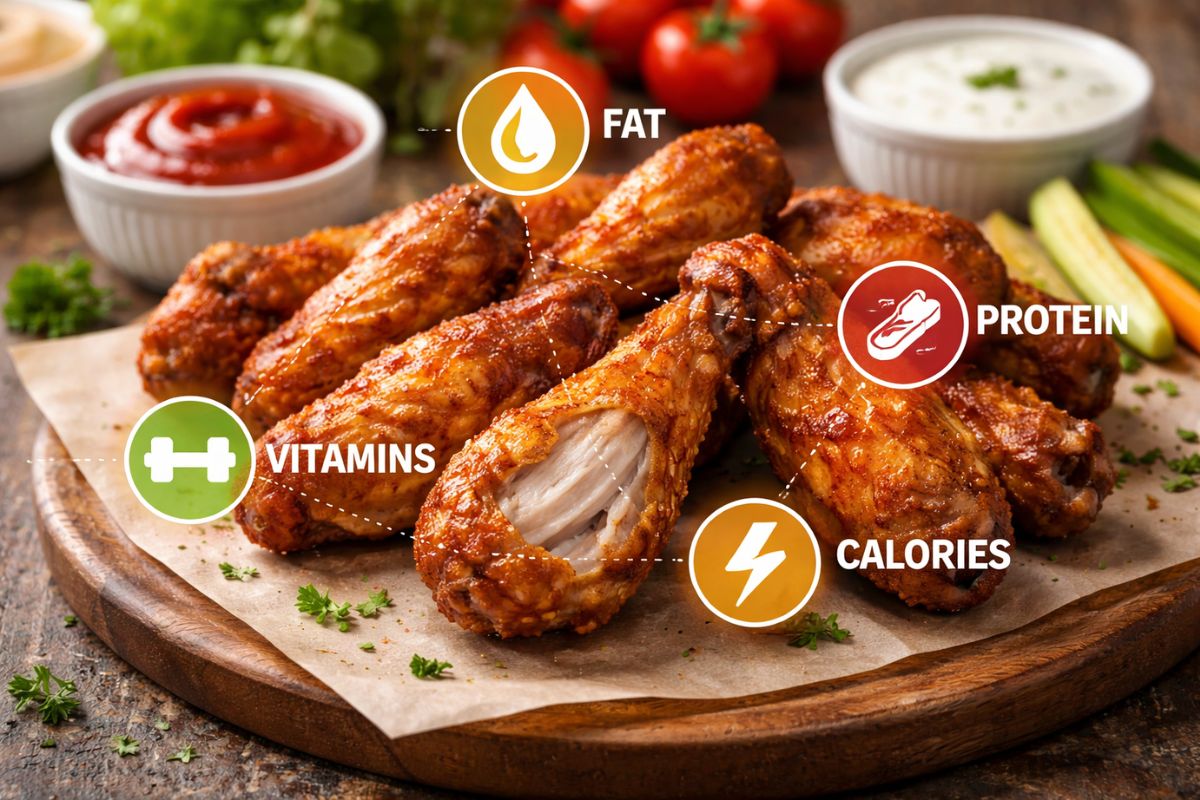
Indulging in a cheeky portion of wings at a local London pub feels like the height of indulgence, but the chicken wing has a real Jekyll-and-Hyde morbidity when it comes to nutrition. Most people think they’re simply eating “junk,” but that isn’t exactly correct when it comes to the nutrition in a chicken wing. If you scrape off the thick batters or sugary glazes that dominate British menus in March 2026, what’s left is a surprisingly high-quality source of protein. The problem?
Very few of us are prepared to eat them “raw.” We are eating them deep-fried and drenched. Just look at the raw data from places like Sainsbury’s, a plain wing is a keto dream — pure protein and healthy fats. Yet once that bird hits the fryer, the calories don’t just rack up, they take off. Finding your way through this means realising that the bird itself is pretty good for you — it’s the “extras” that do the damage.
The Raw Numbers: What’s Under The Skin?
Before the cooking even starts, the edible meat on a standard British wing is a powerhouse. We aren’t talking about the weight of the bone here—just the good stuff. A 100g portion of real meat has around 20g to 25g of protein. Relative to its size, that is a serious amount of muscle-building fuel.
Which means that the calories stay at relatively mild levels when raw, usually between 160 to 210 per 100g as a rough guideline. Fat content will be around about 10g, and since there’s no breading, carbs are pretty much zero. It’s why you find the Chelsea or Manchester gym goers hoarding those 1kg family packs. They’re looking for that high-protein hit without the bloat of processed fillers. According to the British Nutrition Foundation, poultry like this is essential for maintaining lean mass, provided you don’t ruin it in the kitchen.
Why The Chicken Wing Cooking Method Dictates The Damage
Here is the thing. The second you drop a wing into a commercial deep fryer, the nutrition in a chicken wing changes forever. Frying adds about 30 calories per wing. That doesn’t sound like much until you realise a standard “sharing” platter has ten or twelve pieces.
Boom, you’ve just slathered 360 calories of pure oxidised seed oil to your meal. And that’s before the sauce. In 2026, “Midi” food culture — the trend of consuming primal, less-processed cuts — has drawn people to the air fryer. An air-fried wing retains the crunch and hovers around 45 calories. By comparison, a battered, deep-fried “Buffalo” wing can hit 130 calories each. Frankly, it’s the difference between a healthy post-workout snack and a meal so heavy that puts you in a food coma for three hours.
ALSO READ: The Art of Cooking The Perfect Corned Beef Hotpot That Never Lets You Down
The Mineral Goldmine You’re Probably Ignoring
Most folks ignore the micronutrients, but wings are actually loaded with Selenium. This is a big deal for your thyroid and keeping your immune system from tanking. One decent portion gives you about 40% of what you need for the day.
Then you’ve got the B-vitamins—B6 and B12 specifically. These are the things that actually help your brain function and keep your energy levels from dipping at 3 PM. There is also a heap of Phosphorus and Zinc in the dark meat near the bone. And don’t get me started on the collagen. The skin and cartilage are packed with it.
While people are out here buying expensive supplements, you’re getting natural joint and skin support just by eating the wing. Just don’t overcook them until they’re dry as a bone, yeah?
The Verdict On Salt And Sugar Traps
The real “hidden” danger in 2026 isn’t the fat—it’s the salt and the hidden sugars in those sticky glazes. A lot of the BBQ or “Sweet Chilli” sauces you find in UK supermarkets are basically liquid sugar. We’re talking up to 15g per serving. That’s nearly four teaspoons of sugar on your “savoury” chicken.
Salt is another one. The NHS Eatwell Guide suggests no more than 6g a day, yet a single portion of takeaway wings can hit 3g easily. It’s why you feel so thirsty and bloated the next morning. If you want the flavour without the heart palpitations, stick to dry rubs. A bit of smoked paprika, salt, and cayenne pepper in the air fryer gives you all the kick without the metabolic mess.
Supermarket Transparency In March 2026
If you’re shopping at Tesco or checking the Open Food Facts UK database, you’ll see that the Nutri-Score for fresh wings is actually quite high (usually a B). The transparency in British labelling now means you can see exactly where the bird came from and how much saturated fat is lurking under that skin.
The move toward “natural lengths” in food means more people are buying whole wings rather than processed nuggets. It’s a smarter choice. You get better amino acids, more minerals, and zero binders or “pink slime.” It’s just proper food.
Summary Of The Chicken Wing Nutritional Breakdown
| Preparation Method | Calories Per Wing (Approx) | Protein Content | Best For |
|---|---|---|---|
| Raw / Skinless | 37 kcal | Very High | Maximum Lean Growth |
| Oven Roasted | 45-50 kcal | High | Balanced Dieting |
| Deep-Fried | 90-125 kcal | Moderate | Occasional Treats |
| Fried & Sauced | 150+ kcal | Low Ratio | Full Cheat Meals |
The numbers don’t lie. The nutrition in a chicken wing is entirely what you make of it. It’s a versatile, nutrient-dense piece of poultry that can fit into a high-performance diet or derail a month of hard work in twenty minutes.
FAQs: The Quick Breakdown
Q1. Is The Skin Actually Bad For Me?
Look, it’s where the fat lives, but it’s also where the collagen is. If you’re on a strict cut, bin the skin. If you’re just eating healthy, keep it—just don’t fry it.
Q2. How Many Wings Should I Eat?
A standard serving of meat is about 100g. Since a wing only has about 8g to 10g of meat on it, you’re looking at 10 to 12 wings for a proper meal.
Q3. Are They Better Than Drumsticks?
Wings have a higher skin-to-meat ratio, so they’re higher in fat. Drumsticks are slightly leaner, but wings win on flavour and mineral density every time.
Q4. Can I Eat These On Keto?
100%. As long as they aren’t breaded or covered in honey, they are the ultimate keto snack. High fat, high protein, zero carbs.
Well, that’s the long and short of it. The wing isn’t the enemy—the deep fryer and the sugar-laden sauces are. Cook them at home, use an air fryer, and you’ve got a high-protein, mineral-dense snack that actually does some good. Just maybe skip the extra side of salty chips?
Sources & References
Sainsbury’s. (2026). Chicken wings 1kg: Nutritional data and sourcing guide.
Open Food Facts. (2026). British chicken wings (Ashfield): UK Nutri-Score and ingredient analysis.
NHS. (2025). The Eatwell guide and protein recommendations.
British Nutrition Foundation. (2025). The role of selenium and B-vitamins in energy metabolism.
Disclaimer: This content is provided for informational purposes only and should not be considered medical, nutritional, or professional advice. The information is not intended to promote any specific product or brand. Readers should consult a qualified professional before making dietary or health-related decisions. The author and publisher are not responsible for any outcomes resulting from the use of this information.
Recommended