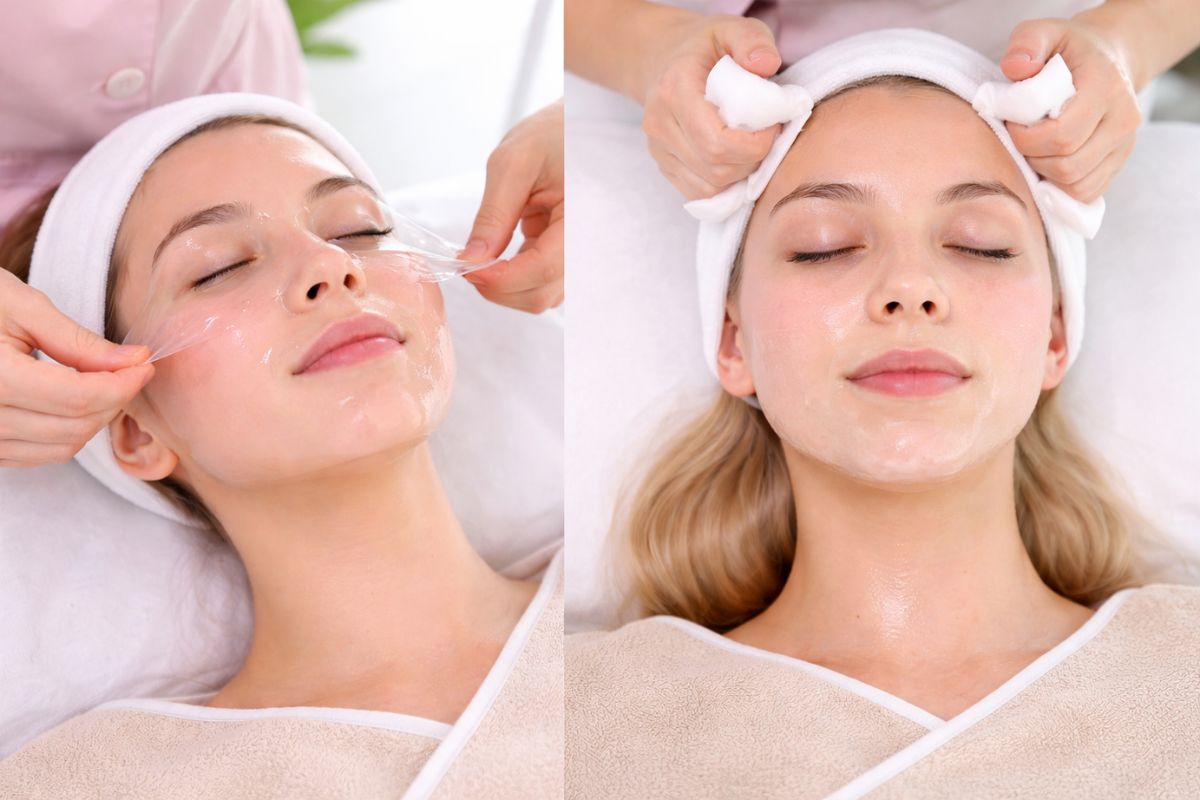
For years, the dream of skin that reflects a sheet of polished glass has haunted our social feeds. But check out any of the London or Birmingham skin clinics in 2026, and you’ll see the change. With the new Korean glass skin facial trend spreading out, the era of the “sticky shine” — that greasy, over-layered look that made everyone look like we’d just run a marathon in a sauna — is officially over.
We’ve moved into the age of Glass Skin 2.0. Or, as the industry veterans call it, “Bloom Skin.” It’s less about a temporary oily gloss and more about a deep, structural resilience that reflects light because the skin is fundamentally healthy.
We can tell you that this latest evolution is the most scientifically grounded we’ve ever seen. It’s not just about what you put on your face; it’s about how your skin metabolises those ingredients.
The Death Of The 10-Step Routine
Remember when we all spent forty minutes every night layering seven different essences? Honestly, it was a lot. In 2026, the Korean glass skin facial has undergone a radical simplification. We’ve traded “more is more” for what dermatologists are calling intelligent minimalism.
The goal now is a specific metric: 70% hydration in the stratum corneum. Research has shown that when your skin’s water content hits that sweet spot, its natural light reflectivity skyrockets. You don’t need ten products to get there. You need three or four that actually communicate with your cells.
This isn’t just theory. If you look at the latest clinical data, a healthy skin barrier can reduce the visible signs of ageing by up to 40% over time by simply keeping environmental stressors out. That’s why the “barrier-first” mandate is the new law of the land in UK skincare. If a treatment makes you peel, turn red, or feel tight, it’s not a glass skin treatment. Period.
ALSO READ: Why the Japanese Head Spa Trend Is Everywhere in the UK Right Now
Biotech: Salmon DNA And The Rise Of PDRN
The biggest news hitting the UK beauty scene this March is the shift from botanical ingredients (bye-bye, snail mucin) to high-performance biotech. The star of the show? PDRN, or Polydeoxyribonucleotide.
Now, don’t let the long name scare you. In the trade, we just call it “Salmon DNA”. It’s a fragment of DNA that is remarkably similar to our own. When applied during a professional Korean glass skin facial, it triggers what’s known as a “wound healing cascade.” It tells your fibroblasts—the little factories in your skin—to pump out up to 30% more collagen.
But here’s the clever bit for 2026: we’re seeing the arrival of Vegan PDRN derived from ginseng and yeast. It offers the same regenerative punch without the animal derivatives, making it a massive hit for the eco-conscious crowd in London. It’s the difference between a glow that lasts until your next wash and a glow that stays for three weeks because your skin is literally repairing itself from the inside out.
The “Golki” Secret: Why Your Bone Structure Matters
If you’ve been keeping an eye on high-end treatments in Harley Street recently, you might have heard of the Golki massage. This isn’t your standard, relaxing “spa” rubdown. It’s an authentic Korean technique also known as “bone-toning therapy.”
The logic is fascinating. By using deep tissue manipulation to target the fascia and even the bone structure of the face, practitioners can manually contour the jawline and lift the facial fat pads. It’s essentially a non-invasive facelift.
When you combine this structural lifting with an Ionised Oxygen Bubble Mask, the result is what we call “snatched and glassy.” You get the sharp, defined features of a V-shaped face paired with the translucent, see-through quality of well-oxygenated skin. It’s a bit uncomfortable during the process—I’ve had clients describe it as “intense but addictive”—but the immediate drainage of puffiness is unparalleled.
The High-Street Revolution: Glass Skin For A Five-Pound Note
Perhaps the most disruptive news of March 2026 is that the glass skin aesthetic has finally been “democratised.” You don’t need a £200 clinical appointment to see results anymore.
A certain high-street giant, Primark has just launched a K-Beauty range that is currently tearing up TikTok. Their Overnight Collagen Sheet Mask, priced at a measly £2.50, has been compared by beauty editors to high-performance clinical masks. It uses a hydrogel texture that turns from white to transparent as the moisture transfers into your skin while you sleep.
The results are surprisingly legit. People are waking up with that “bouncy, light-reflecting” finish that used to require a professional steamer and a bespoke serum. It proves that the “Hidden Rules” of glass skin—hydration, barrier repair, and consistency—are now accessible to everyone.
Comparison: 2024 Vs. 2026 Glass Skin
| Feature | 2024 Approach | 2026 Approach (The New Standard) |
|---|---|---|
| Philosophy | “Glazed Donut” (Surface Shine) | “Bloom Skin” (Internal Health) |
| Method | 10-Step Layering | Intelligent Minimalism |
| Key Ingredient | Snail Mucin / Hyaluronic Acid | PDRN (Salmon DNA) / Exosomes |
| Focus | Temporary Gloss | Barrier Resilience & “Slow Ageing” |
| Massage | Gentle Lymphatic Drainage | Golki Bone-Toning Therapy |
The Final Word
There have been many skincare trends over the years. But the Korean glass skin facial, as it exists in 2026, feels different. It’s no longer about chasing a filtered, poreless perfection that doesn’t exist in the real world.
It’s about “metabolic beauty”. It’s about giving your skin the tools it needs—whether that’s through a £5 high-street mask or a sophisticated V-Tox clinical treatment—to stay hydrated and strong against the elements. The “glass” is just a side effect of a skin barrier that is finally performing at its absolute best.
Anyway, that’s the state of play. The tech is better, the prices are lower, and the results are actually lasting. The only question left is: are you ready to ditch the ten bottles on your bathroom shelf and start focusing on your barrier?
ALSO READ: What Does Hyaluronic Acid Body Wash Do Actually? Explained Simply
FAQs
Q1. Is This Facial Safe For Someone With Active Acne?
Absolutely. In fact, many 2026 protocols include Omega Green or BHA spicules. These clear out congestion and kill acne-causing bacteria with oxygen, rather than stripping the skin with harsh alcohols.
Q2. How Long Does The “Glass” Effect Actually Last?
A top-tier professional session will give you an “event glow” for about 48 hours. However, because we’re now using PDRN and exosomes to stimulate collagen, you’ll notice your skin’s baseline texture and hydration stay improved for 4 to 6 weeks.
Q3. I’m Over 40. Is It Too Late For Glass Skin?
Not at all. The 2026 trend is actually better for mature skin. Because the focus has moved away from harsh peels toward “regenerative medicine,” it’s all about plumping out fine lines and restoring that lost “bounce.”
Q4. Do I Need Specialised Equipment At Home?
Not necessarily, but AI-driven diagnostic tools on your phone can now help you track your “barrier intelligence” in real-time. It’s a great way to see if your routine is actually working or if you’re just wasting money.
Sources & References
-
Cosmopolitan UK. (2026, March 10). High-street vs. Harley Street: Can a £2.50 mask really give you glass skin?
-
Dr. David Jack Clinics. (2026, March). Treatment spotlight: The evolution of the Korean glass skin facial and Golki bone-toning. Dr. David Jack Clinics Blog.
-
Refinery29 UK. (2026, March). Beyond snail mucin: Why 2026 is the year of vegan PDRN and barrier intelligence.
-
ScienceDirect. (2026). Advancements in polydeoxyribonucleotide (PDRN) for skin regeneration and barrier repair. Journal of Dermatological Science, Elsevier.
Disclaimer: This article is intended for informational purposes only and does not constitute professional or medical advice. The content is not meant to promote any specific product, treatment, or brand. Readers should consult qualified professionals before making any skincare or health-related decisions. The information provided is based on general trends and may not apply to individual cases.
Recommended