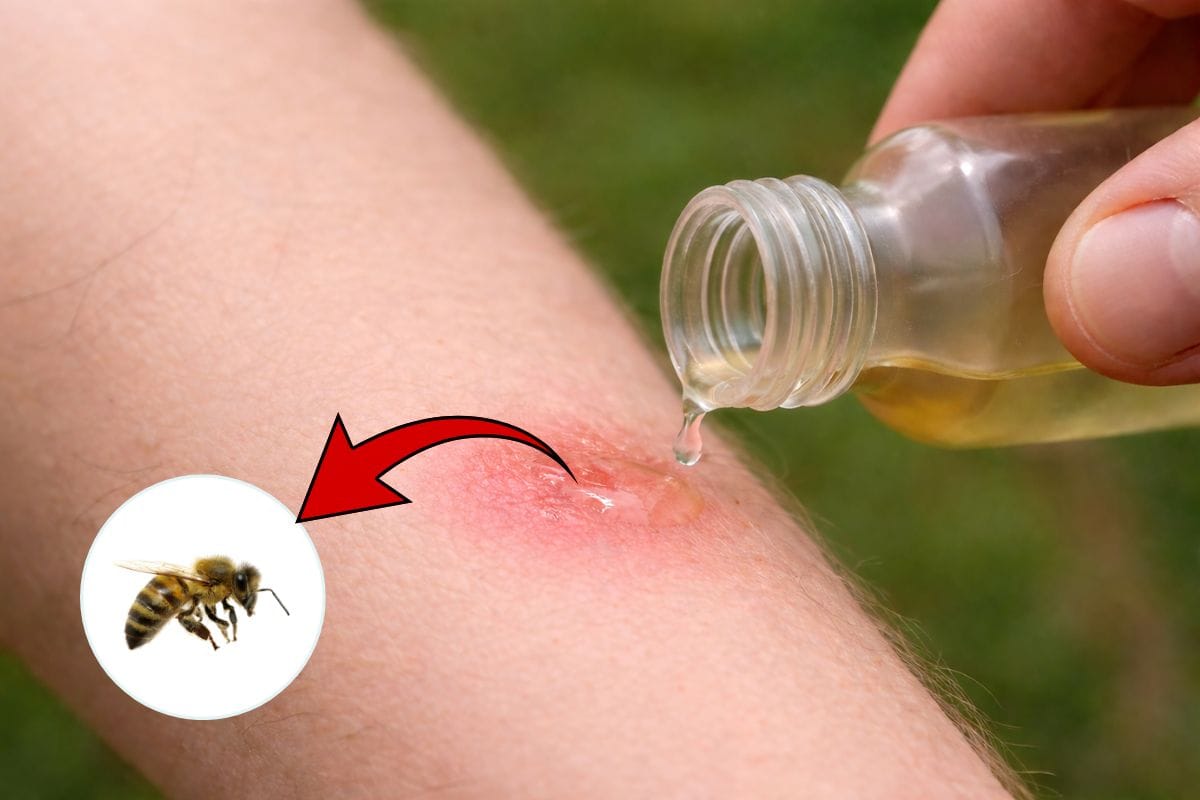
If you’ve just been stung, your first instinct is likely to rush to the kitchen cupboard. Someone, at some point, likely told you that a splash of malt vinegar is the ultimate cure. It’s one of those classic British “gran’s remedy” things that everyone just accepts as fact. But honestly? Pouring vinegar on a bee sting is typically useless. The worst part is, it will cause the whole area to pulse even harder.
The thinking generally runs: bee venom is acidic; we need to neutralise it. Or maybe it was wasps? People get the two mixed up constantly. The problem is that once that stinger goes in, the venom isn’t sitting on top of your skin waiting to be “cancelled out” by a condiment. It’s deep in the tissue. Dabbing vinegar on the surface is about as effective as trying to put out a house fire by spraying the front door with a water pistol.
The Stinger Is The Real Enemy
Before you even consider the vinegar bottle, look at the wound. Honeybees are actually quite special for leaving their hardware behind. The stinger, if you see a little black speck, is likely still pumping venom into you.
The mistake most people make is reaching for tweezers. Don’t. If you do squeeze that stinger, you’re literally just finishing the job of the bee and injecting all remaining venom into your arm. You need to scrape it. Use a bank card, a library card, or even just a long fingernail. Flick it sideways. Get that thing out of your skin in the first ten seconds, and you’ve already won half the battle. This is the official advice from St John Ambulance, and it’s the only thing that actually limits the damage.
Why Vinegar on a Bee Sting Actually Bites Back
Here’s the thing about vinegar. It’s acetic acid. If you’ve got a fresh puncture wound—which is exactly what a sting is—and you pour acid into it, it’s going to sting. Obviously.
For kids, this is a nightmare. Their skin is thinner and much more sensitive. I’ve seen plenty of “remedies” turn into localised chemical burns because someone soaked a cotton ball in vinegar and taped it to a child’s arm for an hour. It’s overkill.
And according to the NHS, these “chemistry set” home cures like vinegar or bicarbonate of soda just aren’t proven to do anything. They’re basically a placebo that carries a risk of skin irritation.
Should I Put Vinegar On A Bee Sting?
In a word: No.
Save it for your chips. If you’re looking for actual relief, you want cold. No, not a chemical reaction but a temperature change. The gold standard is a bag of frozen peas or an ice pack wrapped in a tea towel. Cold constricts the blood vessels. It prevents the venom from spreading throughout your body, and it numbs the nerves.
Ten minutes of ice will do more for the pain than a gallon of vinegar ever could.
ALSO READ: Can a Cold Plunge Really Help You Burn Body Fat? – Explained
2026 Updates: Cellulitis And “The April Spike”
There’s some super-latest news from the British Medical Journal this month. Doctors are noticing an increase in secondary infections — such as cellulitis — among those who try to mess with stings using unsterile home “cures”. When you put raw vinegar or goopy baking soda pastes onto a fresh sting, you’re essentially welcoming bacteria into the hole that bee left.
Also, various health boards have been pushing more first-aid awareness in their latest 2026 handbooks. They are moving away from these do-it-yourself fixes that could hide actual problems.
If the person who was stung begins to sound wheezy, or if their face looks like it’s swelling up, don’t bother with the ice and definitely forget about vinegar. That’s anaphylaxis. In the UK, that’s an immediate emergency call. No home remedy on earth is going to stop a systemic allergic reaction.
The Wasp Confusion
People only talk about vinegar because of wasps. Wasp venom is mildly alkaline, so the theory was that the acid in vinegar would cancel it out. But even then, the venom is inside your skin, not on it.
The “neutralisation” theory is essentially a piece of basic chemistry that doesn’t really hold true for human biology, the way we would make it out. Whether it’s a bee or a wasp, the treatment is the same: clean it up, ice it and leave it alone.
ALSO READ: How Do I Keep Flies Out of the House | Simple Fixes That Actually Works
A Better Game Plan
So, next time someone gets stung in the garden, here is the real-world sequence you should follow:
- The Scrape: Use a card to flick the stinger out immediately. Don’t pinch it.
- The Wash: Simple soap and water. You’ve got a hole in your skin; keep the dirt out.
- The Chill: Ice for 15 minutes. This is the only remedy that actually works on the swelling.
- The Watch: Keep an eye on them for half an hour. If they can breathe fine and aren’t coming out in hives, they’re okay.
Common Sense Over Old Wives’ Tales
We love a home remedy because it seems like we’re doing something “natural,” but sometimes natural is just letting the body do its job. Bee stings throb, they itch, and then they disappear. Adding vinegar to the mix only adds a smell and a potential skin rash to an already annoying situation.
So, seriously. Move the vinegar back in the pantry. If you’d like to be the hero of the garden party, just pull out an ice pack and some common sense. Old remedies may stick around, but that doesn’t mean they are effective.
FAQs:
Q1. Is Vinegar Better For Wasps Than Bees?
Actually, yes. Wasp stings are chemically distinct, and they do not leave behind a stinger. Although vinegar still won’t neutralise the venom under the skin, it is much less likely to create complications. Yet ice remains the better option for either one.
Q2. Can I Use Apple Cider Vinegar Instead?
There is no clinical evidence that apple cider vinegar does better than white or malt vinegar for stings. There are equivalent acidity levels, and the risk of skin irritation remains the same.
Q3. How Long Does The Pain Usually Last?
The cutting pain typically goes away in an hour but persists as a dull ache and itchiness that lasts for 24 to 48 hours. If the redness keeps spreading after two days, it’s more likely an infection and not the sting itself.
Q4. Does Honey Help A Bee Sting?
Ironically, people sometimes recommend dabbing honey on the wound. Honey has antiseptic properties, but it’s sticky and can attract other insects. It is better to use sterile antiseptic creams or just plain water.
Sources & References
NHS. (2026). Insect bites and stings: Symptoms, treatment, and home remedies. NHS UK.
St John Ambulance. (2026). Insect bites and stings: First aid advice and stinger removal techniques.
Allergy UK. (2025). Wasp and bee sting allergy: Spotting the difference between normal stings and allergic reactions.
British Red Cross. (2025). First aid for allergic reactions: Managing pain and swelling from insect stings.
Disclaimer: This content is provided for informational purposes only and is not intended as medical advice, diagnosis, or treatment. It does not promote any specific remedy or product. Always seek professional healthcare guidance for proper treatment of insect stings or allergic reactions. Reliance on this information is at your own risk.
Recommended