So, let’s put this issue to bed once and for all because the internet has made a real hash of what should be a straightforward kitchen staple. If you’ve ever found yourself halfway through a recipe, staring at a tub of white powder and thinking, ‘Is cornstarch and corn flour the same?’, you’re not alone. It’s the ultimate transatlantic trap. You’re following some faddish American food blogger; they tell you to get “corn flour”, and you’re standing in the baking aisle of Tesco, feeling like a berk for only spotting cornflour.
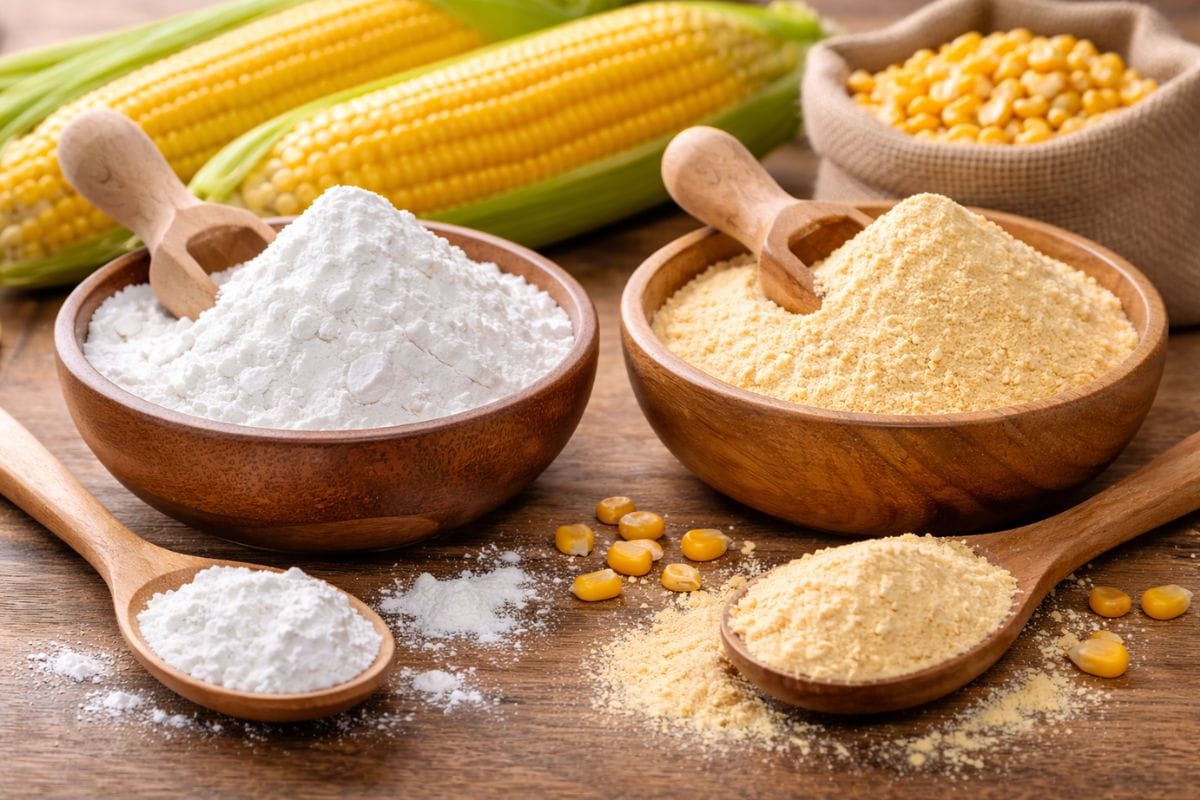
Here’s a “too long; didn’t read” version: Cornflour in the UK is precisely what the Americans call cornstarch. It’s that squeaky, bright white stuff that resembles chalk dust and works like a magic trick to thicken a beef stew. But, and this is a big but, if your recipe is American and calls for “corn flour”, they mean something quite different. They’re referring to a yellow, grittier flour made from the entire cob. Use white cornflour for that, and your cornbread will turn into a literal brick.
Why The Names Are A Total Muddle
It’s basically a language barrier without the translator. In British English, we’ve always used “cornflour” to describe the refined starch. We don’t really use the word “starch” in our cooking vocabulary much, do we? We say, “Thicken it with a bit of cornflour.”
But across the pond, they’re much more literal. According to the Gluten Free Alchemist, the US split the terms to be “accurate”. They call the pure starch “cornstarch” and the ground-up grain “corn flour.” It makes sense in their heads, but for those of us just trying to make a decent gravy on a Sunday, it’s a massive headache.
Honestly, the number of times I’ve seen someone try to bread chicken in white cornflour because they thought cornstarch and corn flour is same is enough to make a chef weep. It just doesn’t work. One is for structure; the other is for “the gloop.”
ALSO READ: Rocky Road Recipe: The Easy No-Bake Chocolate Fridge Cake
The “Squeak” Test: How To Tell What’s In Your Cupboard
If you’ve lost the original packaging (we’ve all been there, decanting things into posh jars), there’s an easy way to tell what you’ve got.
- The White Stuff: If it’s pure white and feels weirdly “grippy” or squeaky between your thumb and finger, that’s your starch. In the UK, that’s cornflour. In the US, that’s cornstarch. This stuff has no flavour. It’s just there to turn watery liquids into silky sauces.
- The Yellow Stuff: If it resembles very fine sand and is pale yellow, that’s maize flour (UK) or corn flour (U.S.). This tastes like popcorn and doesn’t dissolve.
Anyway, the crazy thing is that even in 2026, big brands still haven’t standardised their products. You can still walk into a posh deli in London and find “maize flour”, imported from Italy, sitting next to “Cornflour” from a British brand. They appear different; they feel different, and they do not behave in any way the same way in the oven.
Common Kitchen Disasters (And How To Avoid Them)
The most common mistake is the “Slurry Fail.” Look, if you’re trying to thicken a sauce, you have to mix that white cornflour with cold water first. If you just chuck the powder into a boiling pot, it’ll clump up into these nasty, chewy little nuggets that no amount of whisking will fix.
Now, if you’re following a recipe for tortillas and it asks for corn flour, and you reach for that white box of Birds Cornflour… just stop. You’ll end up with a sticky, translucent mess that looks more like wallpaper paste than food.
As Oxford Origins points out, the chemical difference is huge. The white starch is just the “sugar” of the grain, while the yellow flour has the fats and proteins that actually hold a bread together.
The 2026 Cheat Sheet For UK Cooks
| If the recipe says… | And the author is… | You should use… |
|---|---|---|
| Cornstarch | American | British Cornflour (The white stuff) |
| Corn Flour | American | Maize Flour (The yellow stuff) |
| Cornflour | British | British Cornflour (The white stuff) |
| Maize Flour | British | The yellow stuff |
The thing is, most of us just want the dinner to taste good without a chemistry degree. So, just remember: White = Thickener, Yellow = Baking.
ALSO READ: What You Should Know About Nutrition In A Chicken Wing Before Your Next Meal
Frequently Asked Questions
Q1. Can I Use One For The Other?
Honestly? No. If you use starch where you need flour, your cake won’t rise. If you use flour where you need starch, your gravy will be gritty and taste like raw cereal.
Q2. Is It All Gluten-Free?
In theory, yes. Corn doesn’t have gluten. But—and here’s the catch—lots of factories pack wheat flour on the same lines. If you’re properly coeliac, you’ve got to check that little “GF” symbol on the back. Don’t just assume.
Q3. Why Does My Cornflour Go Watery After A While?
That’s usually because of an enzyme in your spit if you’ve been “double-dipping” your tasting spoon. Or, you’ve overcooked it. Starch bonds actually break down if they boil for too long. Give it a minute to thicken, then get it off the heat.
Closing Thoughts
The confusion over whether is cornstarch and corn flour the same isn’t going away anytime soon. Language is a stubborn thing. But for anyone standing in a kitchen in April 2026, the best way is to ignore the name on the front of the packet and examine what’s actually inside. If it appears as white chalk, it’s a thickener. If it resembles yellow sand, it’s for baking.
So, the next time you’re scrolling through a recipe and come across those terms, don’t panic. Just feel the “vibe” of the dish. Is it a liquid that needs a body? Reach for the white powder. Is it a dough or a crust? You want the yellow.
At the end of the day, it’s just some pulverised veg that had a bit of a branding crisis. Just remember the two are separate in your head: you will be fine. Well, who has time to worry about linguistic shifts when the sauce is starting to burn?
Sources & References
- Oxford Origins. (2026). Unveiling the differences: Why the UK and US split on corn terms.
- Gluten Free Alchemist. (2025). The ultimate guide to corn flour, corn starch, and maize flour: Regional differences for gluten‑free cooking.
- BBC Food. (n.d.). Cornflour recipes and usage guide.
Disclaimer: This content is provided for informational purposes only and is not intended as professional or culinary advice. While efforts have been made to ensure accuracy, regional differences and product variations may affect outcomes. Readers should verify details independently before use. This article does not promote or endorse any specific brand or product.
Recommended