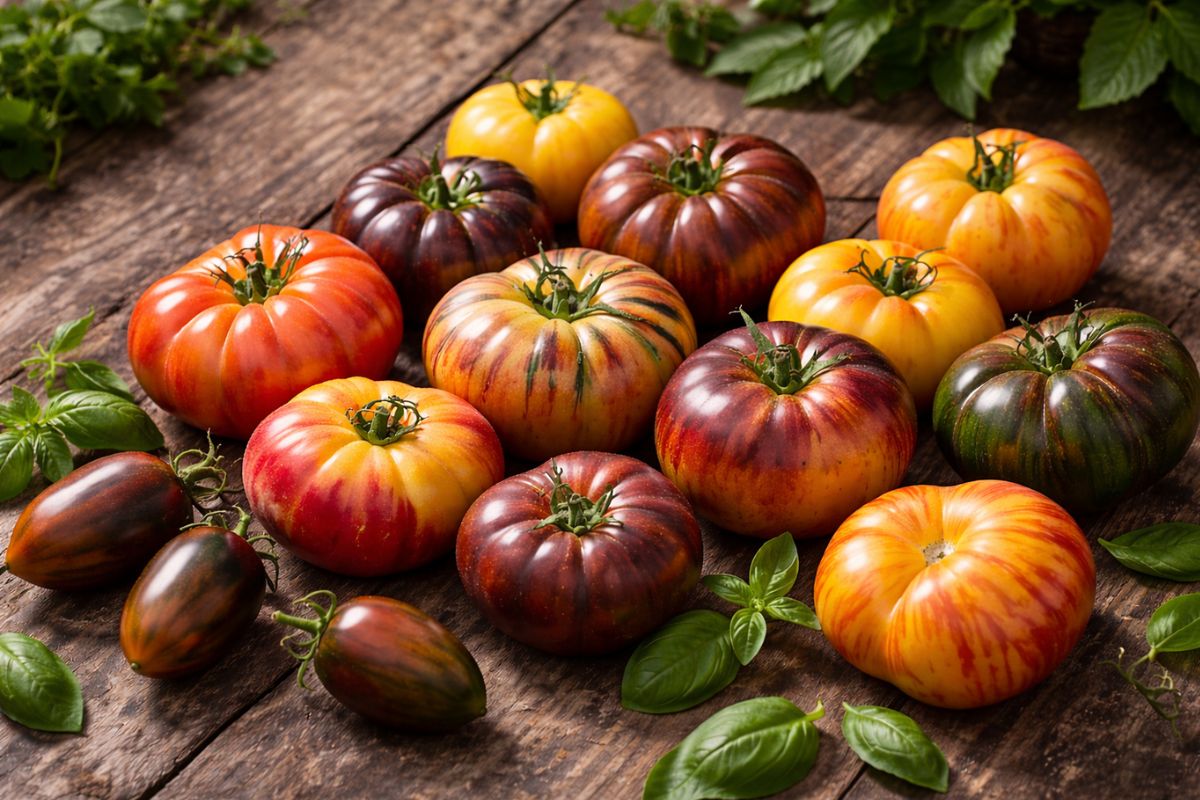
Listen, if you’d told me five years ago that I’d be obsessing over the “facial features” of a lumpy, purple fruit on my windowsill, I’d have laughed you out of the garden centre. But here we are. It is February 2026 and the British gardening world has lost its soul to heritage tomatoes. I’m not just talking about a handful of foodies in London; I’m talking about everyone from allotment veterans in Sheffield to balcony growers in Bristol.
The crazy part is, we’ve spent decades being force-fed those perfectly round, waterproof grocery store red balls—the ones that taste like wet cardboard and last as long as a nuclear bunker.
But something shifted. Maybe it was the searing, bone-dry summer of 2025 that did in our classic runner beans, or maybe we simply grew tired at last of “standard”. Whatever it is, the Royal Horticultural Society (RHS) has officially declared 2026 the “Year of the Tomato”, and honestly? It’s about time.
I’ve enjoyed trialling these “antique” beauties over recent seasons, and I’ve had to learn the hard way that a heritage tomato is not just a vegetable but its history that you can eat. They don’t look perfect. They’re ribbed, they’re scarred and some of them look as though they’ve done ten rounds with a heavyweight boxer. But the flavour? It’s like hearing music in colour for the first time.
The Great British “Ugly” Revolution of Heritage Tomato
So, what are heritage tomatoes exactly? Ask a botanist and you’ll hear they’re open-pollinated varieties, many of them handed down for at least 50 years. But if you ask me over a fence, I’ll say that they are the tomatoes that haven’t had the soul bred out of them.
Commercial growers require tomatoes that can withstand a three-day lorry journey and resemble one another in a plastic punnet. To achieve that, they traded away the thin skins and the complex sugars.
Heritage types are the opposite. They’re bred for one thing: the moment they hit your tongue. Because they’re open-pollinated, you can actually save the seeds from your best plant this year and grow the exact same thing next year. It’s a middle finger to the corporate seed giants, and there’s something deeply satisfying about that.
The RHS recently pointed out that as our UK climate gets weirder—hotter, drier bursts followed by sudden deluges—these older varieties are showing a surprising amount of grit.
While the high-yield hybrids sometimes struggle when the mercury hits 30°C, some of these old-school strains, like the Sart Roloise (which just scooped the 2026 Tomato of the Year title), seem to thrive on the drama.
ALSO READ: The British Spud U-Turn: A No-Nonsense Guide on How to Grow Sweet Potatoes
2026’s “Must-Grow” List: A Comparison
If you’re standing in a garden centre right now looking at a wall of seed packets, don’t panic. I’ve made all the mistakes, so you don’t have to. Here’s a quick breakdown of what’s actually worth your time this season:
| Variety | Type | Best For | Personality Trait |
|---|---|---|---|
| Gardener’s Delight | Cherry | Beginners | Reliable as a rainy bank holiday; sweet and prolific. |
| Black Krim | Beefsteak | Salads | Dark, smoky, and loves the sun; a real heavy-hitter. |
| San Marzano | Plum | Cooking | The king of pizza sauce; meaty and barely any seeds. |
| Sart Roloise | Beefsteak | Foodies | Glowing yellow with purple splashes; 2026’s “it” fruit. |
| Maskotka | Bush | Balconies | Tiny but mighty; perfect for hanging baskets or small pots. |
- The Crowd-Pleaser: Gardener’s Delight. Yes, it’s the “obvious” choice but there is a reason why it is the gold standard for UK gardens. It’s a cherry tomato that actually bears fruit even when the British weather is making the best impression of a rainy Tuesday in November.
- The Showstopper: Black Krim. This one comes from Crimea, and it loves the sun. It’s a dark, smoky purple-red beefsteak. I grew these last year and they were so rich I didn’t even bother with dressing. Just a bit of sea salt. Job done.
- The 2026 Trend: Sart Roloise. This is the “it” tomato this year. It’s a beefsteak from Belgium that literally glows yellow with deep purple “splashes” on the shoulders. It’s dramatic, it’s meaty, and it’s surprisingly resistant to the heatwaves we’ve been seeing lately.
- The Small Space Hero: Maskotka. If you’re restricted to a balcony, this is your best friend. It’s a bush variety that tumbles over the side of a pot. No pinching out “suckers,” no complicated staking. Just water it and get out of the way.
ALSO READ: The Art of Cooking The Perfect Corned Beef Hotpot That Never Lets You Down
The Truth About The “Tabletop” Trend
There’s a massive shift happening right now. The latest 2026 trends from the RHS show that we’re moving away from massive, 6-foot vines and toward “tabletop” veg. Because let’s be honest, most of us don’t have a 40-foot greenhouse. We have a patio or a windowsill.
New varieties like Tomato BadaBing! (an All-America Selections winner for 2026 that’s making waves here too) only grow to about 40 inches. They’re compact, they’re tough, and they don’t require you to be a structural engineer just to keep them upright. It’s making heritage tomatoes accessible to people who previously thought they could only grow a spider plant.
How Not To Kill Your Heritage Tomato Plants (A Realist’s Guide)
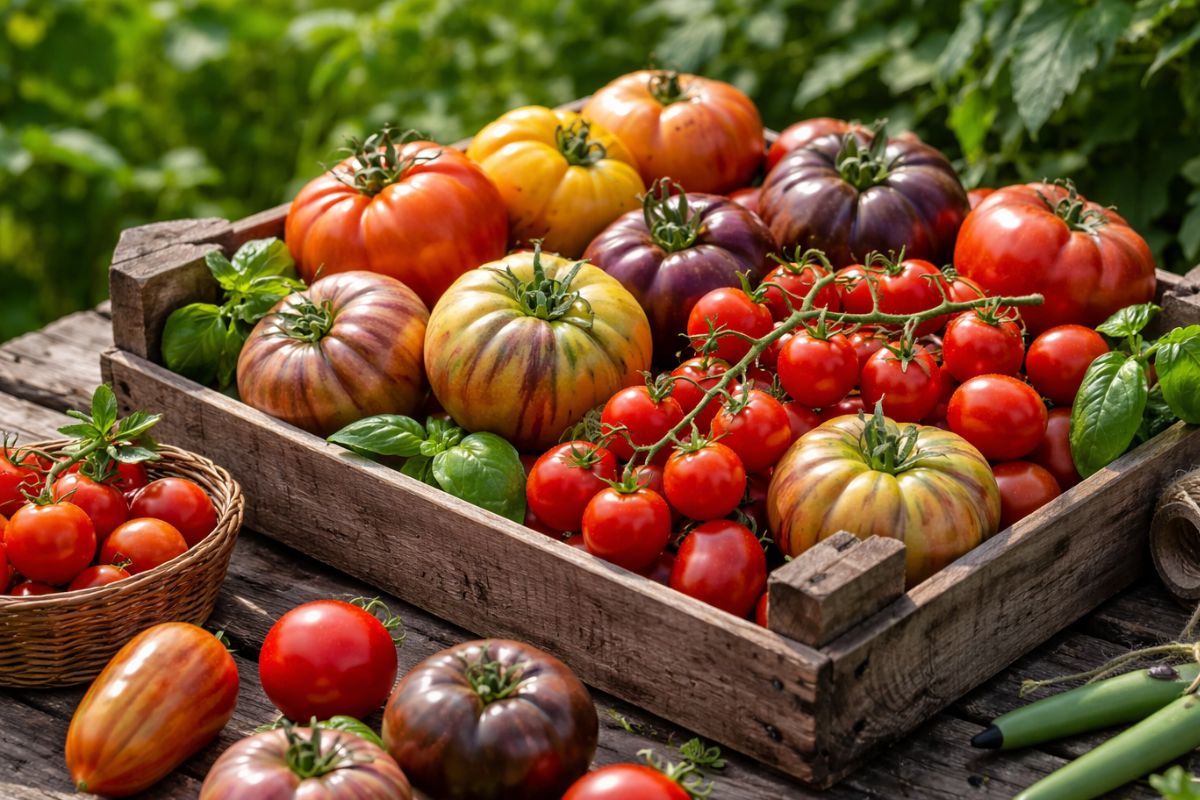
Look, I’m not a professional horticulturist. I’m a bloke who likes a good salad. But I’ve killed enough plants to know where the pitfalls are. Growing these in the UK can be challenging, but there are ways to improve your chances.
- Don’t be a hero in April. I know the sun comes out for ten minutes and you want to get them in the ground. Don’t. Wait until the end of May or even early June. One night of frost will turn your £5 heritage seedling into a pile of black mush.
- The “Armpit” Rule. If you’re growing a “cordon” (vine) type, little shoots will grow in the V-shape between the main stem and leaves. Roll or pinch them out with your fingers. It sounds cruel, but if you don’t, you will get a huge bush of green and not one tomato.
- Consistency is King. This is the big one. If you allow the soil to become bone dry and then drown it, the skins will crack. Heritage skins are thin but fragile. Aim for “damp sponge” consistency.
Why This Actually Matters
The crazy thing about this “Year of the Tomato” isn’t just the fruit. It’s what it says about us. As reported in the Fresh Produce Journal recently, more Brits are growing their own not just for the hobby, but to save money on the weekly shop. But when you grow a heritage tomato, you’re also supporting biodiversity. You are keeping a lineage alive that had survived the world wars and changing climates.
Anyway, isn’t the world a bit of a mess right now? But there’s something so marvellously tangible about seeing a Yellow Brandywine sprout from a tiny seed in February and grow to a giant, golden fruit in August. It’s slow, it’s quiet and it tastes like summer.
Heritage Tomato FAQs
Q1. Why Are They So Expensive In The Shops?
Because they don’t travel well. They have thin skins and “bruise if you look at them funny.” When you buy them, you’re paying for the fact that a farmer had to handle them like they were made of glass.
Q2. Can I Grow Them From Supermarket Seeds?
Usually, no. Supermarket tomatoes are almost always F1 hybrids. If you save those seeds, you’ll get a “Frankenstein” plant that won’t look or taste like the parent. Stick to buying proper heritage seeds from places like Kings Seeds or Natoora.
Q3. What Is “Blight” and Should I Be Scared?
Blight is a fungus that loves warm, wet British summers. It can wipe out a crop in 48 hours. The best defence is to water the soil, never the leaves, and try to grow them under a bit of cover if you can.
Q4. Do They Really Taste That Much Better?
In a word? Yes. A supermarket tomato has about 3-4% sugar. A good Gardener’s Delight can hit 10%. It’s basically nature’s confectionery.
So, are you going to give it a go this year? Even if it’s just one pot on the back step, I promise you, once you’ve had a sun-warmed tomato straight off the vine, there’s no going back to the supermarket stuff. You’ve been warned.
Sources & References
- The Royal Horticultural Society (RHS): 2026 Plant Trend Predictions
- The Guardian Environment: Tabletop Tomatoes & Drought-Resistant Trends
- Garden Organic: The 2026 Heritage Seed Library List
- Natoora Stories: The British Heirloom Tomato Project
- Seed Sovereignty UK: Resilient Crops and Tomato Trials
Disclaimer: This article is provided for informational purposes only. It is not intended as, and should not be construed as, advertising, endorsement, sponsorship, or promotion of any individual, company, brand, product, or service mentioned. All references are included solely for editorial and informational context.