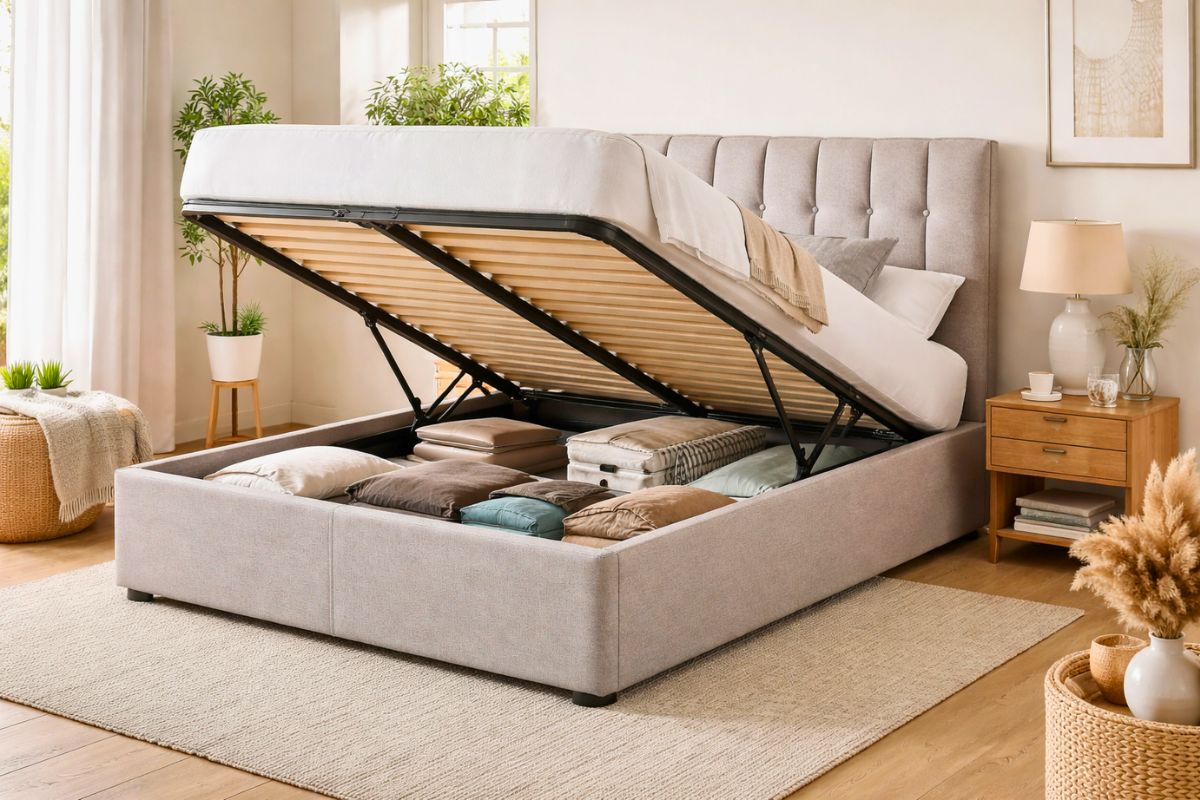
Storage beds have evolved, too, out of just compartments that are hidden, to smooth, multi-purpose, centrepieces that help to make a bedroom look more relaxed, spacious, and tidy. The designs of today are not only more about additional space, but smarter living: room planning to the fullest, visual clutter minimisation, comfort, and practicality.
In this blog, we will discuss how storage beds have developed over the years, what designs have influenced the category, and how the current storage beds have adapted in relation to how we live today.
Why Storage Beds Exist (And Why They’re Still Growing In Popularity)
Bedrooms are used as storage rooms. There is clothing, extra bedding, footwear, seasonal toys, boxes, and this can lead to clutter in small houses or common areas. Storage beds help with:
- They do not require additional floor space.
- They minimise the visual clutter (do not need large drawers or additional wardrobes).
- They are able to enhance the movement in the rooms (fewer obstacles = movement is easier).
- They perfectly fit the new lifestyle (smaller rooms, multipurpose areas, flexibility of the rental).
A storage bed like a bed with drawers is among the limited furniture additions that may instantly make a bedroom appear bigger, without altering the room.
A Quick Timeline: Major Milestones In Storage Bed Design
| Era | Common Storage Concept | Materials & Style | What Drove The Change |
|---|---|---|---|
| Early eras | Chests Platforms Built-in compartments |
Timber Heavy frames |
Valuables storage Limited furniture |
| 17th–19th century | Drawer-based beds and box beds | Wood craftsmanship Ornate details |
Growing homes More textiles Private bedrooms |
| Early 20th century | Under-bed drawers Basic lift storage |
Simpler frames Practical builds |
Urbanisation Smaller rooms |
| Mid–late 20th century | Divans Ottoman bases |
Upholstery Mass production |
Convenience + affordability |
| 2000s–today | Ottoman gas-lift systems Modular storage Premium upholstered frames |
Modern aesthetics Engineered components |
Space-saving + design + comfort |
The Earliest “Storage Beds”: Hidden Spaces & Practical Living
Prior to storage beds being an actual product line, they were an expedient solution to a lack of space and a lack of furniture. The bed was among the most significant pieces of furniture in most households, and of course, people used the area surrounding it.
Early storage practices were:
- Chests placed on the foot of the bed (linen, valuables, clothing).
- Beds in the wall, or against an alcove with some shelving.
- Frames and platforms with compartments that were hidden.
- Straw mattresses or padded bedding which were kept up in the daytime in cramped living quarters.
Sleeping quarters had to be neat and versatile in smaller houses, namely in houses where rooms had multiple uses. Storage was not a bonus, but survival level organisation.
ALSO READ: How Do I Keep Flies Out of the House | Simple Fixes That Actually Works
Drawer-Based Beds: The First Recognisable Storage Bed Design
Beds became more organised as homes became more private, with the bedroom becoming more intimate. In the 17th–19th centuries, it was possible to have such skilled woodworking to create the frames that either contained drawers or were enclosed compartments.
Here’s why the divan base with drawers gained popularity:
- Bedding was made thicker and more covered (blankets, quilts, linens).
- Individuals had an increased number of textiles and garments.
- Bedrooms were converted to special rooms as opposed to sharing sleeping
- By crafting furniture, it became a symbol of quality to have built-in storage.
- People have additional storage in the room to actually store those essentials.
Classic drawer-based storage bed traits:
- Sliding out-side under-bed drawers
- Wooden runners or plain rail systems
- Heavy frames, strong, but not portable
- Durable, where folded goods such as bedding and clothing are applied
The 20th Century: Smaller Homes, Bigger Need For Space-Saving
With urbanisation and modern houses, bedrooms got smaller, apartments increased, and furniture had to do more with less space.
Storage bed characteristics of the early 20th century:
- Drawers under the bed became more common.
- Beds were being produced in large quantities.
- Storage designs changed towards elaborate workmanship to everyday functionality.
- Raw materials were directed to engineered metal frames and wood.
The period resulted in making storage beds more accessible, a bespoke luxury, and more intelligent day-to-day furniture.
The Rise Of The Divan Base: Practical, Affordable Storage
The popularity of the divan base, a plain, box-like bed base, commonly upholstered and sometimes divided into two parts, was one of the largest transformations in the history of storage beds.
Divans changed everything in that they:
- Were easier to mass-produce
- Provided massive support for mattresses.
- Included in-built under-bed storage
- Furnish a contemporary bedroom (less cluttered, straight lines)
Typical divan storage designs:
- Two drawers (one on each side)
- Four drawers (two on each side)
- End drawers (for tight rooms)
- No drawers (for minimalism)
If you’re looking for divan beds or any other type of storage bed, your one and only choice should be like Sonno beds, as they offer the best competitive price, range, and personalisations that help you create a space that is clean, modern, and clutter-free.
ALSO READ: Norway Midnight Sun Summer: Why Everyone Is Choosing Arctic Coolcations
The Ottoman Revolution: Lift-Up Storage Becomes The Modern Standard
Drawers turned storage beds into high-performance in the event that they were converted into ottoman lift storage.
Ottoman storage beds rely on a lift mechanism (usually gas-lift hydraulics) to lift up the mattress and open up a large open storage compartment below.
Why Ottoman beds took over:
- They offer a large storage space.
- When you are unable to open drawers due to a tight space, they work.
- Storage space is uninterrupted (good with large products).
- Lifting mechanisms were made in modern times and were very easy to operate.
The Ottoman beds are convenient for storing:
- Duvets and spare bedding
- Seasonal clothes
- Suitcases
- Storage boxes
- Child accessories / excess house storage
Sources & References
- Bensons for Beds. (2025–2026). Ottoman beds: Single, double & king size ottoman bed frames.
- Moore, S. (2025, October 14). Space‑saving furniture trends in UK homes: Storage beds and beyond. Furniture Today UK.
- IKEA. (2024). Bedroom storage solutions: The rise of multipurpose beds. IKEA Group.
- Wikipedia contributors. (2023). Ottoman (furniture). In Wikipedia.
- Cranz, G. (1998). The chair: Rethinking culture, body, and design. W. W. Norton & Company.
Disclaimer: This article is provided for informational purposes only and is intended to offer general insights about storage bed designs and their evolution. It does not constitute professional advice, endorsement, or promotion of any specific brand, product, or service mentioned. Readers are encouraged to conduct their own research before making purchasing decisions. The publisher assumes no responsibility for actions taken based on the information presented in this content.