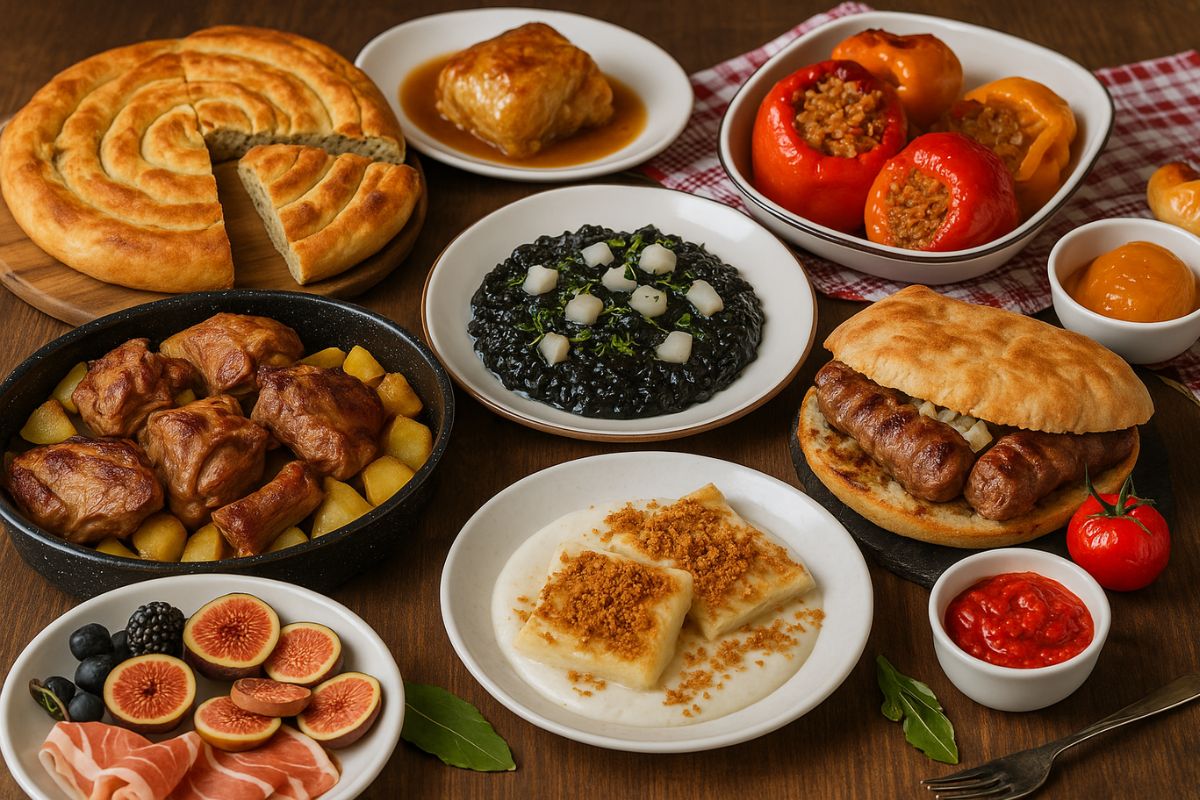
My first proper meal in Croatia was black risotto in Split. The waiter didn’t warn me my teeth would turn black. I looked like I’d been eating coal. My date couldn’t stop laughing. But the taste? Absolutely brilliant. I’ve been going on about Croatian food ever since.
Most people think Croatia is beaches and Game of Thrones. The food, though? Nobody talks about it. They should.
Is Croatian Food Similar To Italian?
The coast definitely is. Dubrovnik, Split, and Istria: centuries of Venetian rule did their thing. You get fish stew, olive oil everywhere, and loads of pasta. Istria especially feels Italian.
But then it doesn’t. My mate went there expecting Italy-lite. Got truffle pasta that tasted nothing like Rome. Pršut (their ham) that made prosciutto look average. Local wines he’d never heard of. Is Croatian food similar to Italian food? Yes. The same? Not even close.
Croatian cooking pulls from everywhere: Mediterranean, Austrian, Hungarian, and Turkish. It all makes sense when you consider its historical background.
Is Croatian Food Similar To Greek?
The coast has Greek and Roman bits in it, such as olive oil, herbs, and seafood. The island of Vis was Greek in the 4th century BC. You can still taste it in stuff like viška pogača (fish pie).
Greek food’s lighter, though. It has more herbs and is less heavy. Croatian cooking gets heartier inland. Austrian and Hungarian influence creeps up north. More meat. More paprika. It sticks to your ribs.
Traditional Typical Croatian Food – What You’ll Actually Eat
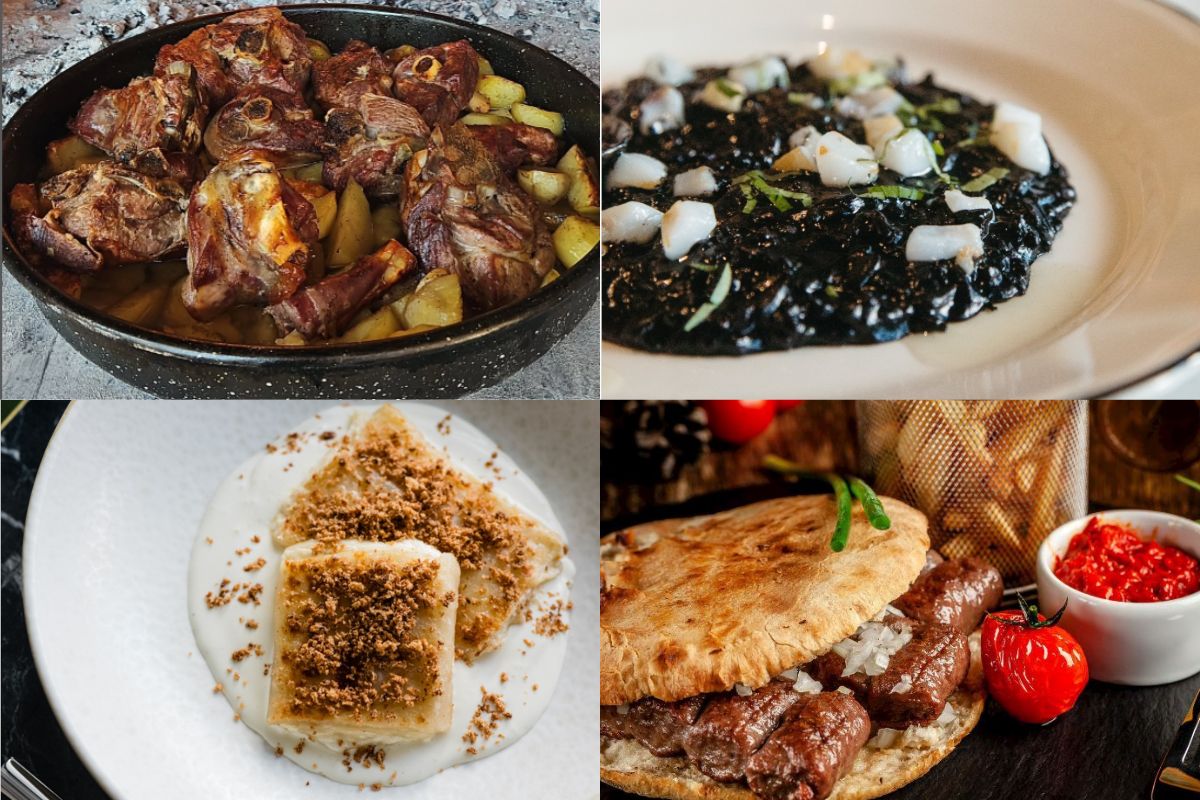
Peka might be the most Croatian dish there is. It is cooked in an open fireplace under a metal lid. Takes hours. You have to book ahead because even lighting the fire takes time. Usually lamb or octopus with potatoes, carrots, and onions. Everything cooks together.
I had lamb peka on Pag. Waited two hours. Seemed ridiculous. Then I tasted it. Would’ve waited longer.
Black risotto photographs well because it looks mad. Squid ink makes it black. Squid and other seafood are in there. They usually make it in the morning and heat it up, so at least you don’t wait forever. Goes perfectly with Pošip wine.
Štrukli is a Zagreb thing, a pastry filled with cottage cheese and sour cream. You can get it boiled or baked. Sounds weird. Tastes amazing. There’s a restaurant called La Štruk that only serves this. Nothing else on the menu.
Ćevapi is everywhere. These are little fat sausages; a beef and lamb mix is ideal. Street food. Restaurant food. Doesn’t matter. Come in threes, fives, sevens, tens. They are always served with flatbread (lepinje). Turkish influence is obvious. Though Bosnians insist theirs are better. Probably are, honestly.
Different Places, Different Food
- Dalmatian Coast – seafood. Fresh fish, olive oil, lemon. Simple. Buzara means shellfish in wine sauce. Tastes like the sea.
- Istria – truffles. Fuzi pasta with truffles costs half what you’d pay anywhere else in Europe.
- Zagreb and North – Central European. Roasted turkey with mlinci (crispy flatbread). Winter food. Warming.
- Eastern Croatia – paprika. Slavonia especially. Čobanac stew – beef or pork, dumplings, potatoes, hot paprika, onions. Cooked in massive cauldrons.
The National Dishes
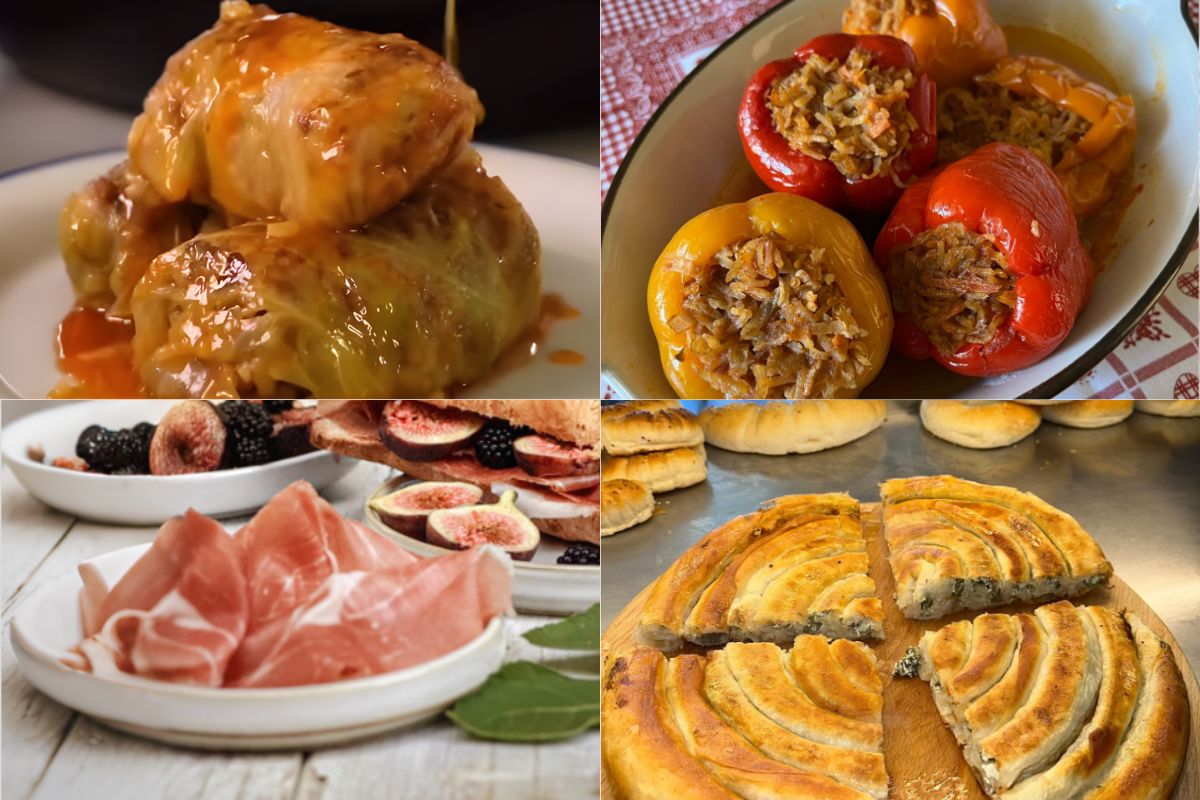
- Sarma comes out in winter. Stuffed sauerkraut rolls. Minced meat, rice, and spices inside. The word ‘sarma’ comes from the Turkish ‘sarmak’ (wrapped). Proper comfort food.
- Punjene Paprike – stuffed peppers. Minced meat, rice, spices, tomato sauce. Every family makes it differently.
- Pršut starts most meals. Dry-cured ham. Salted and air-dried for months. Best in Dalmatia, where the weather’s perfect for it. Thin slices, cheese, olives, bread.
- Burek is breakfast. Flaky pastry with cheese, apple, or meat inside. The hotel doesn’t do breakfast? Get burek. It’s cheap, filling and available everywhere.
The Overlooked Stuff
- Desserts barely get mentioned. Fritule are fried dough balls with raisins, schnapps, and lemon zest. They go exceptionally well with coffee.
- The wine is criminally unknown outside Croatia. Plavac mali (big red grape, supposedly Zinfandel’s ancestor). Malvazija (white, all over Istria). Cheap as chips.
- Coffee culture is massive. There are traditional coffee houses everywhere. Sitting for ages over coffee isn’t laziness. It’s what you do.
Turkish And Hungarian Bits
Ottoman rule left marks. Ćevapi, sarma, and grilled meat are all Turkish. More spices. More paprika. Different complexity.
Hungarian influence is huge in eastern Croatia. You get goulash variations. The whole vibe leans Central European instead of Mediterranean.
What Surprised Me
The prices are insane. Top-quality fish, local ingredients, home cooking. Doesn’t cost a fortune like Paris or London.
No pretension either. Restaurants cook what their grandmothers cooked. Passed-down recipes. You taste the authenticity.
Regional pride runs deep. Istria loves their truffles. Dalmatia swears their peka is best. Everyone’s local pršut beats everyone else’s. Keeps standards high.
Before You Go
Lunch is the big meal. Restaurants packed 1-3pm. Make sure to book the peka ahead of time, as it takes a long time to cook.
Breakfast is huge. Sandwiches stuffed with cream cheese, ham, salami, and spicy sausages. None of that continental croissant rubbish.
Try the local wines. Nobody back home knows them. Makes you sound sophisticated at dinner parties when you go on about Croatian malvazija.
Why Bother
Croatian food deserves more attention. It’s not trying to be Italian, Greek, Turkish, or Hungarian. You can taste all of them in there, but it’s its own thing. Centuries of different rulers and neighbours made something new.
Seafood’s as good as anywhere in the Mediterranean. Meat dishes hit like Central European cooking should. Wine’s exceptional and cheap. Everything’s fresh because it was caught or picked that morning.
Real food. Not tiny Instagram portions. Actual meals that fill you and taste proper.
Next time someone asks about food destinations in Europe, say Croatia. They’ll look confused. They’re thinking beaches. That’s when you mention black risotto that stains your teeth, peka worth waiting hours for, and wines they’ve never heard of that taste better than the famous ones.
Don’t believe you? Their problem. More pršut and plavac mali for us.
Recommended