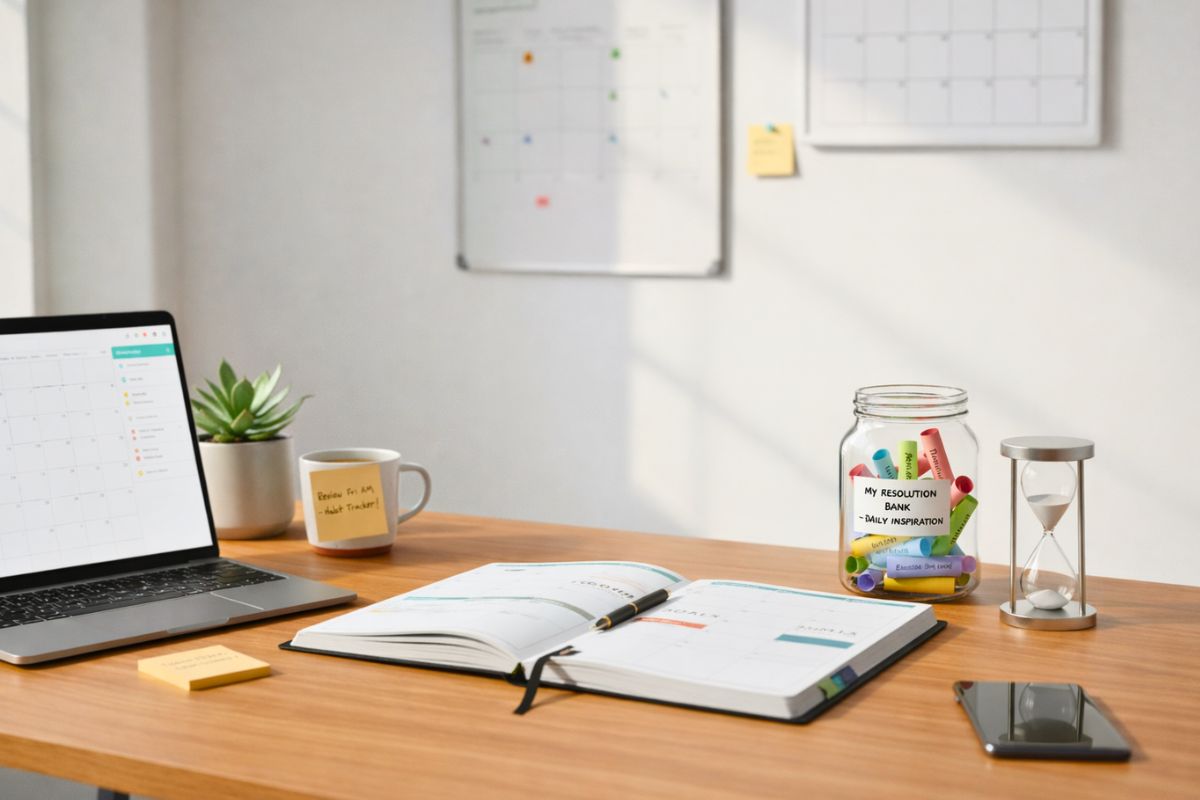
Every January, a lot of us sit down and set resolutions. Usually with the best intentions, obviously. The idea here is use productivity hacks inspired by New Year resolution planning—and honestly, that burst of motivation you feel in January doesn’t have to disappear by February. It usually does, sure. But it doesn’t have to. With the right mindset and some genuinely practical tools, you can stretch that “fresh start” energy into every single month. Or at least most of them. Let’s be real.
Why New Year Planning Works
There’s something oddly powerful about the New Year. It’s psychological. Research from the University of Scranton shows that around 45% of people set resolutions each year. Sounds promising. But then comes the drop-off—only 8% actually achieve them. Ouch. The main issue? Motivation spikes in January, then slowly fizzles out when there’s no system holding it up.
The real trick is borrowing the bones of New Year planning. Reflection. Goal-setting. Habit-building. Then using those ideas all year long. Think of it less like a once-a-year reset and more like a rolling one. Mess up? Reset again. No drama.
Hack 1: Quarterly Goal Reviews
Waiting until next January to rethink your goals is a long wait. Too long, honestly. Instead, split your year into quarters. Businesses do this for a reason. And surprisingly, it works just as well for personal productivity, especially when paired with smarter planning around money.
| Quarter | Focus Area | Example Goal |
|---|---|---|
| Jan–Mar | Health & Routine | Exercise 3 times a week |
| Apr–Jun | Skills & Learning | Complete an online course |
| Jul–Sep | Finance | Save £500 for a holiday |
| Oct–Dec | Relationships | Plan monthly meet-ups with friends |
When you review goals every three months, you dodge that heavy “resolution fatigue.” You know the one. It’s also way easier to change direction when something clearly isn’t working. And something usually isn’t.
Hack 2: Micro-Resolutions
Big, sweeping resolutions sound impressive. They also fail a lot. Mostly because they’re overwhelming. A better option is micro-resolutions. Small changes. Very doable ones. The kind that quietly build momentum.
For example:
- Drink one extra glass of water each day.
- Spend 10 minutes tidying up before bed.
- Write down three wins at the end of every week.
These tiny habits add up. Slowly, but surely. James Clear, the author of Atomic Habits, points out that 1% improvements each day can turn into massive gains over a year. It’s simple. And kind of amazing.
Hack 3: Use Seasonal Energy
The UK seasons naturally come with different energy levels. Pretending they don’t exist is exhausting. Instead, lean into them.
- Spring: Perfect for fresh starts. Decluttering. New projects. That buzz.
- Summer: Energy tends to peak. Focus on social goals. Get outside when you can.
- Autumn: A quieter time. Great for reflection and learning.
- Winter: Slow things down. Consolidate. Plan ahead without pressure.
Working this way makes productivity feel natural. Not forced. And that matters more than people admit.
Hack 4: The 80/20 Rule
The Pareto Principle—better known as the 80/20 rule—suggests that 80% of results come from 20% of effort. When you apply this year-round, you start spotting which tasks actually move the needle. And which ones don’t. At all. This mindset is also useful when filtering digital tools, including deciding where artificial intelligence can genuinely add value versus where it simply creates noise.
| Task | Impact | Keep/Drop |
|---|---|---|
| Checking emails constantly | Low | Drop |
| Weekly planning session | High | Keep |
| Networking coffee chats | Medium | Keep selectively |
| Endless meetings | Low | Drop |
Cutting low-value activities frees up time. And energy. Both are limited, whether we like it or not.
Hack 5: Accountability Systems
One big reason New Year resolutions fail is because they’re private. Hidden away. Sharing goals changes that. A study by the American Society of Training and Development found that people are 65% more likely to hit a goal if they share it with someone. That’s not nothing.
Some easy ways to build accountability:
- Join a local club or an online group.
- Pair up with a “goal buddy.” Slightly cheesy. Very effective.
- Use apps that track progress and send reminders.
Hack 6: Reflection Rituals
Reflection doesn’t get enough credit. It’s the quiet engine behind productivity. At New Year, we naturally look back over the last 12 months. So why only do it once?
A simple monthly ritual:
- Write down three things that went well.
- Note one thing you’d like to improve.
- Choose a single focus for the next month.
This keeps you grounded. It also stops that slow, aimless drifting that sneaks up on you.
Hack 7: Build Flexibility Into Plans
Rigid resolutions sound strong. They usually crumble the moment life throws a curveball. And it always does. Instead, aim for flexible frameworks. Swap “I’ll run 5km every day” for “I’ll exercise three times a week, however that looks.”
This kind of flexibility makes goals stick. It also cuts down on guilt when things don’t go perfectly. Which they won’t.
Hack 8: Reward Systems
Celebrating wins isn’t indulgent. It’s necessary. Dopamine—the brain’s reward chemical—reinforces habits. Small rewards help keep motivation alive. A good coffee. A film night. Even a spontaneous day trip.
Think of rewards as fuel stations along the way. Skip them, and burnout isn’t far behind.
Hack 9: Digital Detox Intervals
Every New Year, people swear they’ll “cut back on screen time.” It rarely sticks. Instead of a one-off detox, schedule regular breaks. Something realistic. Like one screen-free evening a week.
Ofcom reports that UK adults spend an average of 4 hours online every day. Even cutting 30 minutes can free up space for reading, exercise, or just being present with family. Small shift. Big difference.
Hack 10: Annual Themes
If rigid resolutions feel suffocating, try an annual theme instead. For example:
- 2026: The Year of Health
- 2027: The Year of Learning
- 2028: The Year of Connection
Themes act like a compass. Not a checklist. They guide decisions without boxing you in.
Final Thoughts
New Year planning works because it taps into our craving for fresh starts. That feeling is powerful. But the real win comes from using those same ideas all year long. Quarterly reviews. Micro-resolutions. Seasonal energy. Accountability systems. Together, they keep productivity alive well past January.
The goal isn’t perfection. It never was. It’s progress. And with these hacks, that “New Year feeling” doesn’t have to fade. It can last all 12 months. Or close enough.
Recommended