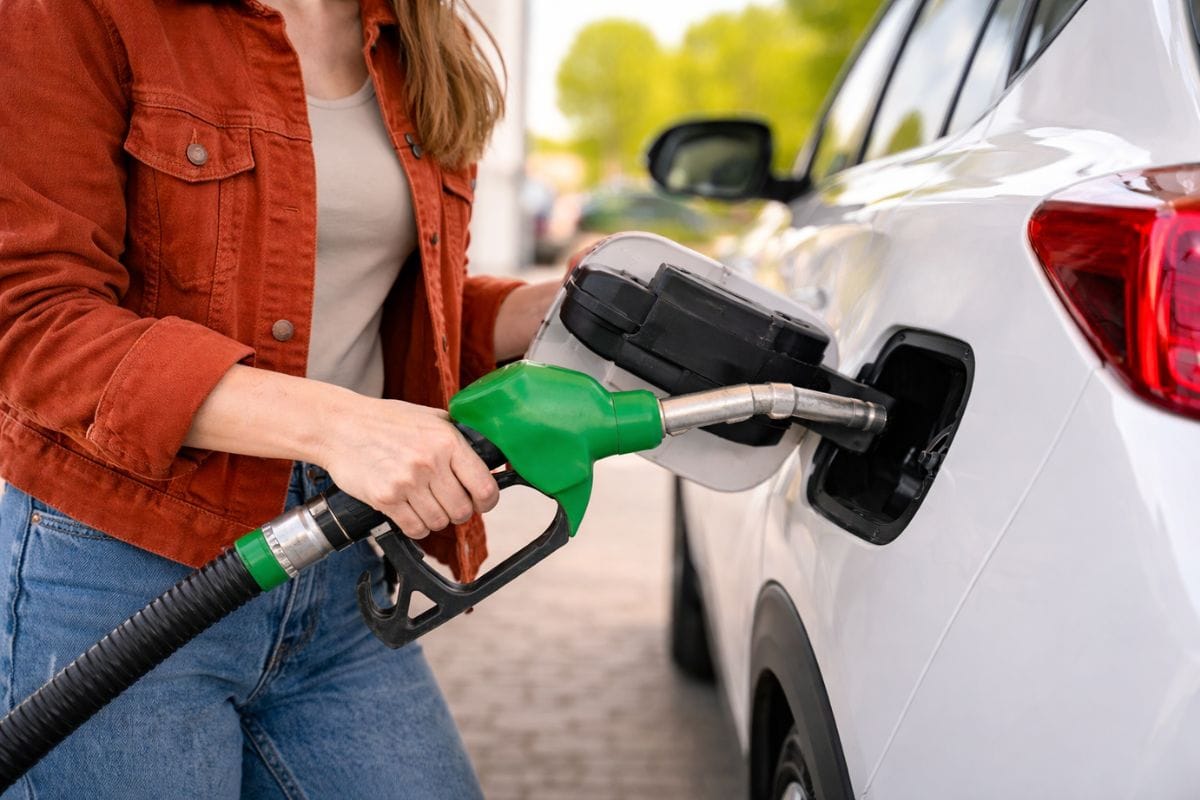
The sight of petrol prices hovering around 165p per litre at UK forecourts this spring has turned a Sunday drive into a luxury for many. With the cost of living still biting hard in 2026, every drop of fuel counts. It isn’t just about the environmental impact anymore; it’s about the brutal reality of the monthly bank balance.
Most drivers are essentially burning money through outdated habits or simple mechanical oversights that are incredibly easy to fix. Understanding how can you avoid wasting fuel isn’t some secret science, but it does require looking at the car as a precision tool rather than just a metal box on wheels.
The 30mph Rule And The Air Con Myth
There’s a massive debate that happens every time the British weather decides to be slightly warm: windows down or air conditioning on? In 2026, the data from motoring groups is clearer than ever. It all comes down to the 30mph threshold. When crawling through city traffic in Bristol or Manchester, keep the windows open. At low speeds, the engine doesn’t struggle much with wind resistance, so the air con is just a needless drain on the battery and fuel pump.
However, once the car hits the motorway, the physics change. An open window at 60mph creates a “parachute effect,” dragging the car back and forcing the engine to work overtime. In these scenarios, it’s actually cheaper to roll up the glass and hit the climate control button.
According to recent RAC Motoring advice, using air conditioning at high speeds is far more efficient than the massive aerodynamic drag caused by open windows.
The Stealthy Fuel Thief In The Boot
Weight is the enemy of efficiency. It’s easy to treat the car boot like a secondary garden shed or a locker for gym gear that hasn’t been used since January. But the maths is unforgiving. For every extra 50kg of weight carried, fuel economy drops by about 2% in stop-start traffic. It might not sound like much, but over a year of commuting, that’s a couple of full tanks literally wasted on carrying junk.
Even worse than weight is the “permanent” roof rack. Even an empty rack can increase fuel consumption by a staggering 15% to 20% due to the way it breaks the airflow over the roof. If it isn’t being used to carry a bike or a kayak this weekend, take it off. It’s a ten-minute job that pays for itself within two trips to the supermarket.
ALSO READ: What Is the Driver Number on a Driving Licence? A Simple Breakdown
Why Your Gearbox Is The Key To Savings
One of the most effective answers to how can you avoid wasting fuel lies in the tachometer—that little dial that shows the engine’s RPM. Most drivers overstay in low gears for way too long, making the engine scream and guzzle petrol. The objective here is to try and select the highest gear possible without the engine becoming strained or “labouring”.
For the majority of petrol vehicles, it is best to shift up prior to 2,500 rpm. It’s even lower for diesels, about 2,000 RPM. Modern cars often have a gear-shift indicator on the dashboard. Ignoring that little arrow is basically choosing to pay more at the pump. Staying in 4th gear when you could be in 5th or 6th at 40mph is one of the quickest ways to drain a tank prematurely.
The Controversial Stop-Start Button
There’s a specific button in most modern UK cars that causes a surprising amount of annoyance: the automatic stop-start system. Many people deactivate it the moment they get into the driver’s seat because they dislike the shudder of the engine restarting at a red light. However, the AA recently urged drivers to keep this system active.
The logic is simple. If the car is stationary for more than ten seconds, it uses more fuel to idle than it does to restart the engine.
In heavy London or Birmingham traffic, where a commute might involve fifteen minutes of total standing time, that stop-start system can save roughly 7% to 10% on total fuel costs. If the car doesn’t have this feature, manually turning off the engine at a long railway crossing or a known “red-light trap” is a smart move.
Maintenance: The Pressure Under The Car
Check the tyres. Honestly, it’s the most boring bit of car maintenance, but under-inflated tyres are a massive fuel drain. When a tyre is soft, it has a larger “footprint” on the road, which increases rolling resistance. The engine has to fight harder just to get the wheels to turn.
A drop of just 5 or 6 PSI—which is barely visible to the naked eye—can increase fuel consumption by 3%. Most petrol stations have air pumps, and it takes less than five minutes to ensure the pressures match the manufacturer’s recommendations.
This small habit, performed once a fortnight, ensures that the vehicle moves as lean and mean as possible.
Smart Momentum And The Art Of Anticipation
Braking is a sort of waste of energy. Every time you slam the brakes, you will be turning the kinetic energy that the fuel just bought into heat and dust. In flowing traffic, the most efficient drivers on the road barely touch their brakes. They use anticipation.
By scanning 10 or 15 seconds ahead, a driver can spot a red light or an upcoming queue from far away. Rather than keeping the foot on the accelerator until the last possible second and then braking as hard as you can, simply lifting off the pedal allows the car to coast. Most modern fuel-injection engines feature a “fuel cut-off” switch.
When the car is in gear but the foot is off the accelerator, the engine uses virtually zero fuel. Mastering this “eco-driving” momentum is the ultimate answer to how can you avoid wasting fuel.
ALSO READ: Freedom Pass London: The Little Card That Keeps The City Moving
Fuel Saving Quick Reference Table (2026 Estimates)
| Action | Potential Fuel Saving | Ease Of Implementation |
|---|---|---|
| Correct Tyre Pressure | 3% | Very Easy |
| Removing Roof Racks | 10% – 15% | Moderate |
| Driving At 60mph Vs 70mph | 15% | Moderate |
| Emptying The Boot | 2% | Easy |
| Using Stop-Start Systems | 7% | Very Easy |
Frequently Asked Questions
Q1. Is Premium Fuel Worth The Extra Cost For Efficiency?
In general, no—at least not for a regular family hatch. Although high-octane fuels have cleaning additives, the “efficiency gain” is rarely worth the 10p-15p per litre cost increase. Use the regular (unleaded) unless you’re driving a high-performance sports car that explicitly requires it.
Q2. Does Cruise Control Save Petrol?
On flat motorways, yes. It maintains a constant pace and avoids the “surging” that occurs as a human foot tires. But on hilly roads, cruise control can be wasteful: it maintains its speed uphill by injecting extra fuel instead of allowing a natural slight deceleration.
Q3. Does A Cold Engine Use More Fuel?
Yes, significantly more. A cold engine is hugely inefficient for the first five miles or so. It’s always better to combine several short errands into one long “round trip” where the engine stays warm, rather than doing three separate cold starts throughout the day.
A Final Thought On Road Habits
The reality of 2026 is that the days of cheap, limitless fuel are in the rearview mirror. We can’t control what happens at the global refineries, but we can control how much of that liquid gold we let slip through our fingers. It isn’t about driving like a snail; it’s about driving with a bit of “mechanical sympathy.”
Whether it’s taking five minutes to check the tyre pressure or finally removing that heavy bike rack from last summer, the savings are there for the taking. Look at the road, keep the revs low, and stop paying for fuel that you don’t actually need to use. Your bank account will certainly thank you by the end of the month.
Sources & References
- TyreSafe. (2026, March). Underinflated tyres could be quietly driving up your fuel bill as pump prices climb: Tyre pressure impact study.
- INRIX Data Science. (2026, March). Fuel price and motorway speed report: Are drivers slowing down to save fuel?
- RAC Motoring. (2026). Ultimate fuel saving guide: Motorway speed efficiency and air conditioning vs. open windows.
- The AA. (2025). Stop‑start technology: How it works and why deactivation wastes fuel.
- Energy Saving Trust. (2025). Quick tips to save energy: Efficient driving and gear‑shifting thresholds.
Disclaimer: This content is provided for informational purposes only and should not be considered professional or technical advice. The information presented does not promote any specific products or services and may not apply to all vehicles or driving conditions. Readers should verify details independently and consult relevant experts where necessary. The publisher is not responsible for any actions taken based on this information.
Recommended