If you’re sitting in an office in Birmingham or a warehouse in Manchester today, 15 March 2026, looking at a shipping quote that looks like a phone number, you’re not alone. The world changed on 28 February. When the first missiles of “Operation Epic Fury” hit their targets, the boring, back-office world of logistics turned into a high-stakes poker game.
Some of you might not know about freight insurance meaning. The term ‘freight insurance’ used to be something you’d gloss over in a contract. It was just a tick-box. But right now? It is the difference between your business staying afloat or sinking alongside a container ship in the Gulf of Oman. We are currently living through a “War Economy” where a standard policy is about as useful as a chocolate teapot unless you’ve got the right riders attached.
Here is the truth about what you’re paying for, why the prices have gone mental, and how the Israel-Iran conflict has rewritten the rulebook for anyone moving goods across the water.
What Freight Insurance Actually Is (And Why Carriers Lie To You)
Let’s get the basics out of the way before we dive into the chaos. Freight insurance meaning at its core is a “gap” policy. Most shippers think that if a carrier (the shipping line or the trucking firm) loses their gear, the carrier pays for it.
That is a dangerous myth.
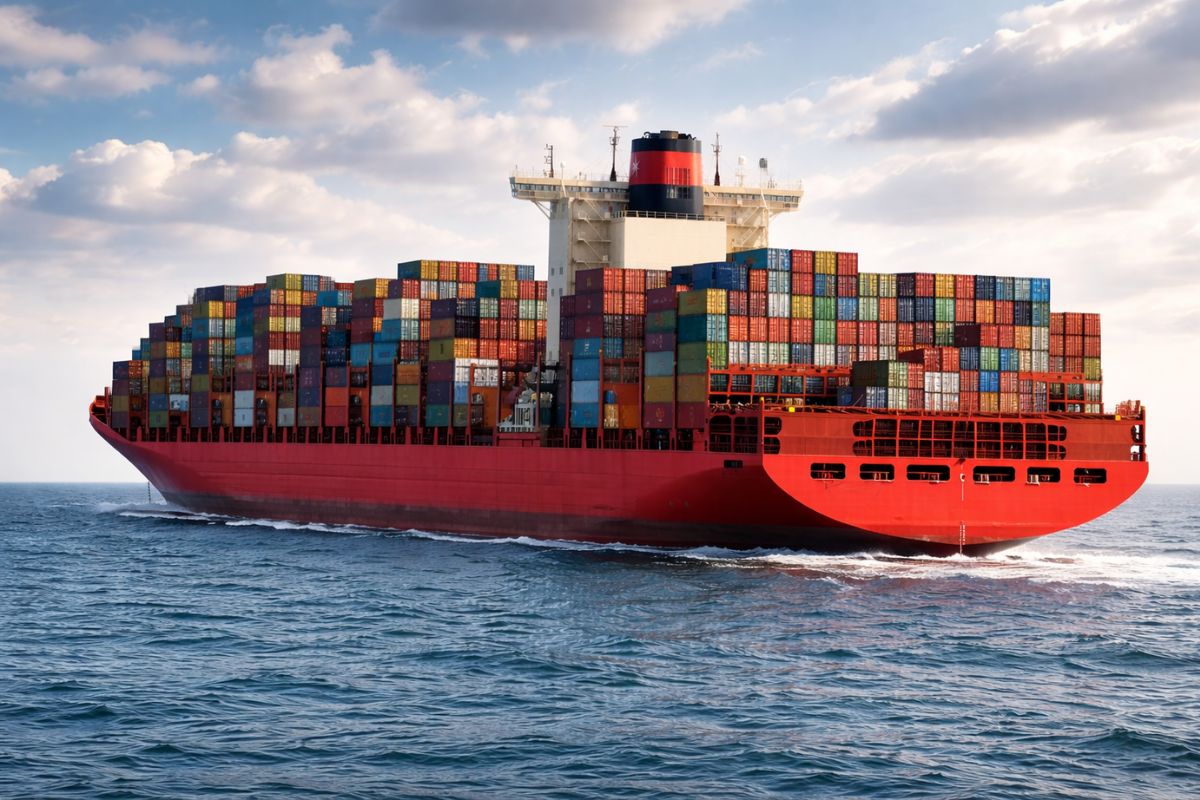
Under international maritime law, carriers have “limited liability.” If a ship is struck by an Iranian drone or hits a mine, the carrier might only be liable to pay you by weight—sometimes as low as £2 per kilo. If you’re shipping high-end electronics or specialized machinery, that payout won’t even cover the cost of the cardboard boxes they came in.
Freight insurance (also called cargo or shipping insurance) bridges that gap, covering the full declared value of your goods so you aren’t left holding a massive bill for something that’s currently sitting at the bottom of the ocean.
ALSO READ: What Is Mosaic Defence Warfare? Inside Iran’s Army Decentralised War Tactics
The 1,200% Spike: The Price Of A “Missile Magnet”
If you think your car insurance renewal was bad, have a look at the maritime market. Since the escalation in late February, war-risk premiums for the Strait of Hormuz have jumped by as much as 1,200%.
Before the strikes, you’d pay maybe 0.1% of the cargo value. Now? Rates are being quoted between 1% and 3% for a single voyage. If your ship has a “US or Israeli nexus”—meaning it’s owned by a company from those countries or heading there—underwriters are calling them “missile magnets.” In those cases, rates have reached as high as 7.5%. For a vessel carrying £100 million in cargo, that can mean a £7.5 million insurance bill just to pass through the Strait.
The biggest problem right now is the “72-hour” rule.
The 72-Hour Cancellation: Stranded At Sea
In mid-March 2026, the trending nightmare for UK importers is the “Notice of Cancellation.” Most war-risk policies have a clause that lets the insurer cancel your cover with just 48 to 72 hours’ notice if the situation on the ground (or water) escalates further.
Right now, hundreds of ships are anchored off Fujairah or drifting in the Indian Ocean because their insurance was cancelled while they were mid-voyage. They technically cannot enter the Gulf because they have zero protection the moment they cross the “high-risk” line. As reported by Lloyd’s of London in their latest briefing, the London market is attempting to create a “backstop” for these vessels, but for many, the cover has simply disappeared.
What Impact Israel-Iran War Has On It: The Three Big Changes
The conflict is not only increasing costs; it is changing the fundamental structure of freight insurance policies.
- Exclusion Zones: The Joint War Committee (JWC) has essentially designated the entire Persian Gulf as a high-risk area. Ships entering the zone must pay an “Additional Premium” for every 24 or 48 hours spent there.
- GPS Jamming And Spoofing: This has emerged as a major issue in 2026. There is widespread GPS interference near the Iranian coast. According to Windward Maritime AI’s latest data, more than 1,600 vessels have experienced spoofed or jammed signals, raising legal questions about whether such incidents count as war damage or technical failure.
- General Average: This historic maritime rule means that if cargo must be sacrificed or costly actions are taken to save the vessel, every cargo owner shares the expense. Without proper insurance, businesses may receive large contribution invoices before their goods are released.
Quick Summary For Shippers (The “Cheat Sheet”)
| Policy Feature | Standard (Pre-War) | March 2026 Reality |
|---|---|---|
| Premium Rate | ~0.15% | 1% to 7.5% |
| War Risk | Included/Cheap | Separate & Essential |
| Notice Period | 7 to 30 days | 48 to 72 hours |
| Target Areas | Limited | Entire Persian/Oman Gulf |
The Bottom Line: Trust Nothing, Insure Everything
The 2026 Iran War has demonstrated that global just-in-time supply chains rely heavily on stable shipping routes and affordable insurance. When conflict disrupts those assumptions, the financial consequences ripple through global trade.
Costs are ultimately passed to consumers through higher prices on fuel, electronics, and everyday goods. Businesses moving cargo today must focus less on the cheapest insurance quote and more on securing reliable coverage that will remain valid during volatile geopolitical conditions.
For companies operating in international logistics today, the decision is simple: pay the war-risk premium now or risk far greater losses if a shipment is caught in a conflict zone.
ALSO READ: Micro Retirement vs Mini Retirement: Which One Actually Fits Your Life More?
FAQs
Q1. Does Standard Cargo Insurance Cover Missile Strikes?
No. Most “All-Risk” policies explicitly exclude war, strikes, and terrorism. You must have a specific “War Risk” rider. In the current environment, assume you are not covered unless the certificate explicitly includes war-risk coverage.
Q2. What Happens If My Ship Is Diverted Around Africa?
Rerouting around the Cape of Good Hope can add 10–14 days to the journey and approximately £1 million in extra fuel costs per ship. Insurance premiums often increase as well because the vessel remains at sea longer.
Q3. Can I Still Get Insurance For The Strait Of Hormuz?
Yes, but currently it is usually offered on a per-voyage basis. Annual policies covering that area are extremely rare, meaning each trip must be negotiated separately with insurers.
Q4. Why Is Everyone Talking About “General Average” Now?
Due to the rise in drone attacks and emergency manoeuvres by ships. Under General Average rules, the cost of saving the vessel and voyage is shared among all cargo owners, which can result in significant financial contributions.
Sources & References
-
Manchester Evening News. (2026, March 13). Six ways the Middle East war will hit UK household bills. Manchester Evening News.
-
The Guardian. (2026, March 11). Lloyd’s of London stresses it is still insuring shipping in Strait of Hormuz – at a price. The Guardian Business.
-
Windward Maritime AI. (2026, March 8–15). Data report: GPS spoofing and shadowing in the Persian Gulf. Windward Maritime AI Blog.
-
Modern Diplomacy. (2026, March 6). How maritime insurance rates reflect a widening Middle East war. Modern Diplomacy.
-
Joint War Committee. (2026, March 2). Official circular: Revised areas of peril. JWC via FA‑Maritime.
Disclaimer: This article is provided solely for informational and educational purposes. It does not constitute financial, legal, insurance, or professional advice and should not be interpreted as a promotion of any service, organisation, or policy. Readers are encouraged to consult qualified professionals before making decisions related to shipping, insurance, or international trade. The publisher assumes no responsibility for actions taken based on the information presented.
Recommended