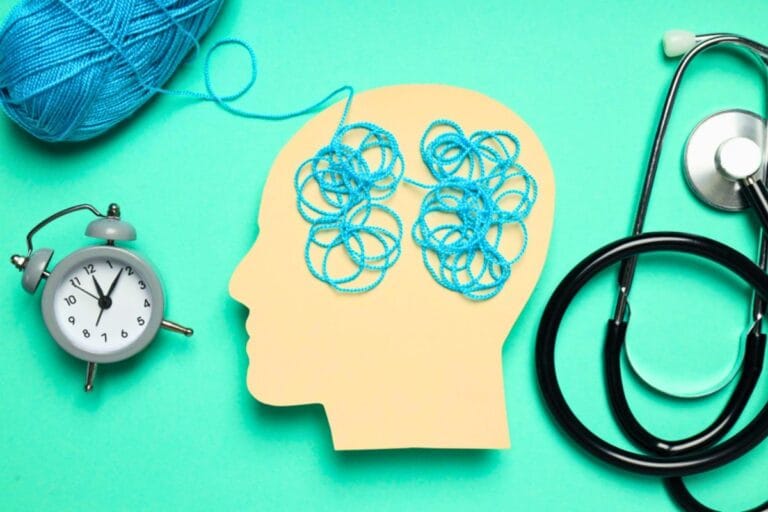
There is a specific kind of exhaustion that sleep cannot fix. You know the one. You hit the sack at 11 PM, wake up at 7 AM, and yet you feel like your brain is made of wet cotton wool. The reality is that the clock is a liar. You don’t need “sleep” in a general sense; you need a very specific, heavy-duty stage of rest called N3. So, how much deep sleep do you need exactly? Let find out!
In the medical world, we call this slow-wave sleep. It is the only time your brain actually takes out the trash. If you aren’t hitting this stage for long enough, you are essentially waking up with yesterday’s mental debris still floating around your skull. By early 2026, the data from the NHS has become crystal clear: our modern habits are literally shaving minutes off this vital recovery window every single night.
The Brain’s Midnight Cleaning Crew
When you’re dead to the world, your brain’s glymphatic system opens. It is a drainpipe for your grey matter. Cerebrospinal fluid flows through the crevices between your neurones, cleaning out proteins such as beta-amyloid. If those proteins linger for too long, they clog the works.
But here is the catch. It is during this level of deep sleep that this cleaning crew comes into action. It does not appear during light sleep or REM. So if you’re tossing and turning, or if it’s too warm in your bedroom, the “plumbing” never turns on. You wake up with a dirty brain. That’s where the brain fog is coming from. It’s not just a feeling; it’s a metabolic fact.
Age and the Vanishing Deep Sleep Cycles Window
The big question is always: how much deep sleep do you need? For most of us in the 18 to 64 bracket, the sweet spot is roughly 90 to 120 minutes. But that number is a moving target.
As we get older, the architecture of our sleep starts to crumble. It is one of the cruellest parts of ageing. How much deep sleep do you need at different ages depends entirely on your brain’s developmental stage.
- Infants: They are deep sleep powerhouses. They spend about half their night in this stage because their brains are physically growing.
- Teens: They need about two hours, which is why they are so famously impossible to wake up for school. Their bodies are quite literally under construction.
- Adults: We aim for 20% of our total sleep time. If you get seven hours, you need about 84 minutes of the deep stuff to feel human.
- The Over-65s: This is the danger zone. The brain’s ability to stay in N3 drops off. Many seniors only get about 30 to 45 minutes, which is why cognitive decline often accelerates when sleep becomes fragmented.
| Life Stage | Total Sleep Needed | Deep Sleep Target (15–25%) |
|---|---|---|
| Newborns | 14–17 Hours | 3.5 – 4.5 Hours |
| School-Age Kids | 9–11 Hours | 1.5 – 2.5 Hours |
| Teens | 8–10 Hours | 1.5 – 2 Hours |
| Adults (18–64) | 7–9 Hours | 1.5 – 2 Hours |
| Seniors (65+) | 7–8 Hours | 1 – 1.5 Hours |
The Alcohol Sabotage
Let’s be honest about the “nightcap”. A lot of people in the UK think a glass of red helps them sleep. It doesn’t. It sedates you. There is a massive difference between sedation and sleep. Alcohol is a deep sleep killer. It keeps you in the lighter stages of rest and triggers “micro-awakenings” that you don’t even remember.
You wake up feeling like you’ve been in a fight because your brain never got its cleaning cycle. If you want to fix your deep sleep, the wine has to go. Or at least, move it to lunchtime.
ALSO READ: The Evolution Of Storage Beds: From Hidden Drawers To Modern Designs
The 2026 “Pink Noise” Trend
This year, something new has been sneaking into clinical sleep trials. Researchers are abandoning “white noise” in favour of “pink noise.” It is a richer, more organic frequency — imagine it as the sound of a constant, heavy rain in the woods.
The Sleep Foundation says playing these frequencies at a low volume can even synchronise with your brain’s slow waves, “stretching” the time spent in deep sleep. It’s one of the few “hacks” that appears to have some actual decent data behind it.
Practical Tips for the N3 Stage
- Drop the Temperature: Your brain must drop in temperature to activate N3. The optimal temperature is approximately 17°C and if you sleep in a warm room with a heavy duvet, then you are in light sleep.
- The Morning Light: To slide into deep sleep by 11 p.m., you’ll need to see the sun at 8 a.m. That first real sunlight hits your eyeballs and sets the “timer” for your melatonin production.
- Magnesium: It’s the trendy nutrient of late, and for good reason. Magnesium soothes the nervous system. A few nuts, such as almonds, or a supplement an hour before bed can put your twitching muscles to rest and allow your brain to descend.
Quick Stats: Deep Sleep Targets
| Group | Target Minutes | Why? |
|---|---|---|
| Kids | 120 – 180 | Physical growth & brain mapping. |
| Adults | 90 – 110 | Memory consolidation & detox. |
| Seniors | 45 – 60 | Maintenance (often harder to achieve). |
Frequently Asked Questions
Q1. Can I track deep sleep with a watch?
Look, those wrist trackers are okay for trends, but they aren’t perfect. They guess based on your heart rate and movement. They often over-estimate deep sleep. If you feel great, trust your body over the app.
Q2. What happens if I totally miss out on deep sleep?
Short term: You’ll be irritable, clumsy, and hungry for sugar. Long term: It’s linked to high blood pressure and increased risk of dementia. Your brain needs a wash.
Q3. Does caffeine affect deep sleep?
Absolutely. Caffeine has a half-life of around six hours. That afternoon, espresso is still blocking your deep sleep receptors at midnight. Try to stop by 2 PM.
Q4. Is it okay to sleep in on weekends?
Not really. Your brain thrives on rhythm. “Catch-up sleep” is something of a myth. Sure, you may feel better for an hour, but now you’ve upset your internal clock for Monday morning.
Q5. Can supplements help?
There is some evidence that magnesium and glycine can help improve sleep quality. But they won’t do much if you’re staring at a bright phone or TV screen until 11:30 p.m.
The bottom line is simple. We have spent too long worrying about the quantity of sleep and not enough on the quality. If you want to protect your brain as you age, you have to protect your N3 window. It is the most important appointment you have every day.
Sources & References
Cohen, R. (2026, January 25). Stage N3 sleep: Deep sleep, physical restoration, and biological recovery [Video]. YouTube.
- National Health Service (NHS). (2026, January). Sleep and ageing: How deep sleep declines across life stages. NHS Sleep Health Report.
- Sleep Foundation. (2026). Slow‑wave sleep: An overview.
- The Better Sleep Clinic. (2025). Deep sleep: What is Stage 3 sleep?.
Walker, M. (2024). Why we sleep: Unlocking the power of sleep and dreams (Updated ed.). Penguin Books.
Disclaimer: This article is intended solely for informational and educational purposes. The content presented does not constitute medical advice, diagnosis, or treatment and should not be interpreted as professional guidance. Readers should consult qualified healthcare professionals for personalised medical recommendations. The inclusion of references or links is not intended as a promotion or endorsement of any organisation or service.
Recommended